- Details
- By Elyse Wild
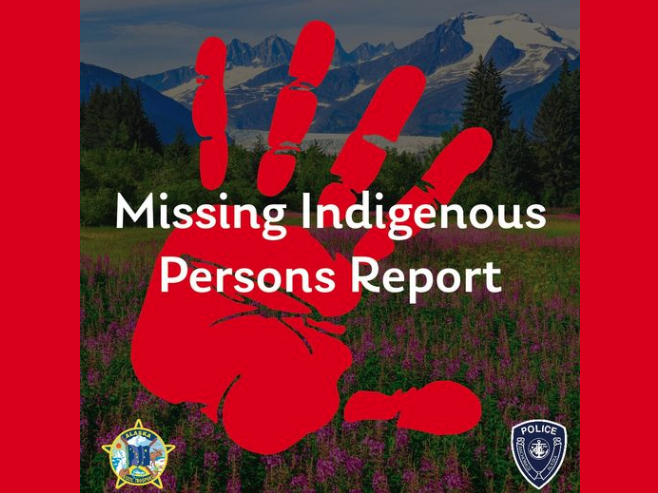
The Alaska Department of Public Safety (DPS) and Anchorage Police Department (APD) have released the state’s first quarterly Missing Indigenous Persons Report.
The 13-page report includes information on people who are Alaska Native, American Indian or of an unknown race who were reported missing in Alaska as of July 14, 2023, and whose cases are being investigated by the DPS and APD.
Along with race, sex, and date of last contact, cases in the report are categorized by circumstance, including “suspicious,” “not suspicious,” “environmental,” or “unknown.” According to a statement from the DPS, each case was reviewed by DPS and ADP to determine the circumstance.

The report shows that from April 1, 2023, to June 30, 2023, 199 people who are Alaska Native, American Indian, or of unknown race were reported missing, with 174 located during that same time period.
“We hope that with DPS and APD having information at their fingertips, that we see it translate into meaningful action,” Charlene Apok, Executive Director of Data for Indigenous Justice, told Alaska’s News Source.
The report, according to the DPS, is a result of the state’s People First Initiative, a working group launched in 2021 to focus on five policy areas that affect Alaskans, including the MMIP crisis.Earlier this year, DPS added additional data points to the Alaska Missing Persons Clearinghouse, a public database meant to track all missing persons cases reported in Alaska. The new data points include the race and sex of every person listed in the Clearinghouse, which allows for users to see how many Alaska Natives are missing statewide.
According to data from the Centers for Disease Control and Prevention, Native women living on reservations are murdered at a rate ten times higher than the national average. Layered jurisdiction, lack of collaboration between law enforcement bodies, and systemic apathy have led to thousands of unsolved cases in Indian Country. The Bureau of Indian Affairs estimates there are 4,200 unsolved MMIP cases.
According to the Urban Indian Health Institute, Alaska is among the ten states with the highest number of missing and murdered Indigenous people.
More Stories Like This
Native News Weekly (August 25, 2024): D.C. BriefsUS Presidents in Their Own Words Concerning American Indians
Native News Weekly (January 18, 2026): D.C. Briefs
Federal Judge Orders ICE to Halt Use of Pepper Spray, Arrests of Peaceful Protesters in Twin Cities
Tunica-Biloxi Cultural Leader John D. Barbry Walks On
Help us defend tribal sovereignty.
At Native News Online, our mission is rooted in telling the stories that strengthen sovereignty and uplift Indigenous voices — not just at year’s end, but every single day.
Because of your generosity last year, we were able to keep our reporters on the ground in tribal communities, at national gatherings and in the halls of Congress — covering the issues that matter most to Indian Country: sovereignty, culture, education, health and economic opportunity.
That support sustained us through a tough year in 2025. Now, as we look to the year ahead, we need your help right now to ensure warrior journalism remains strong — reporting that defends tribal sovereignty, amplifies Native truth, and holds power accountable.
 The stakes couldn't be higher. Your support keeps Native voices heard, Native stories told and Native sovereignty defended.
Stand with Warrior Journalism today.
Levi Rickert (Potawatomi), Editor & Publisher