



- Details
- By Native StoryLab
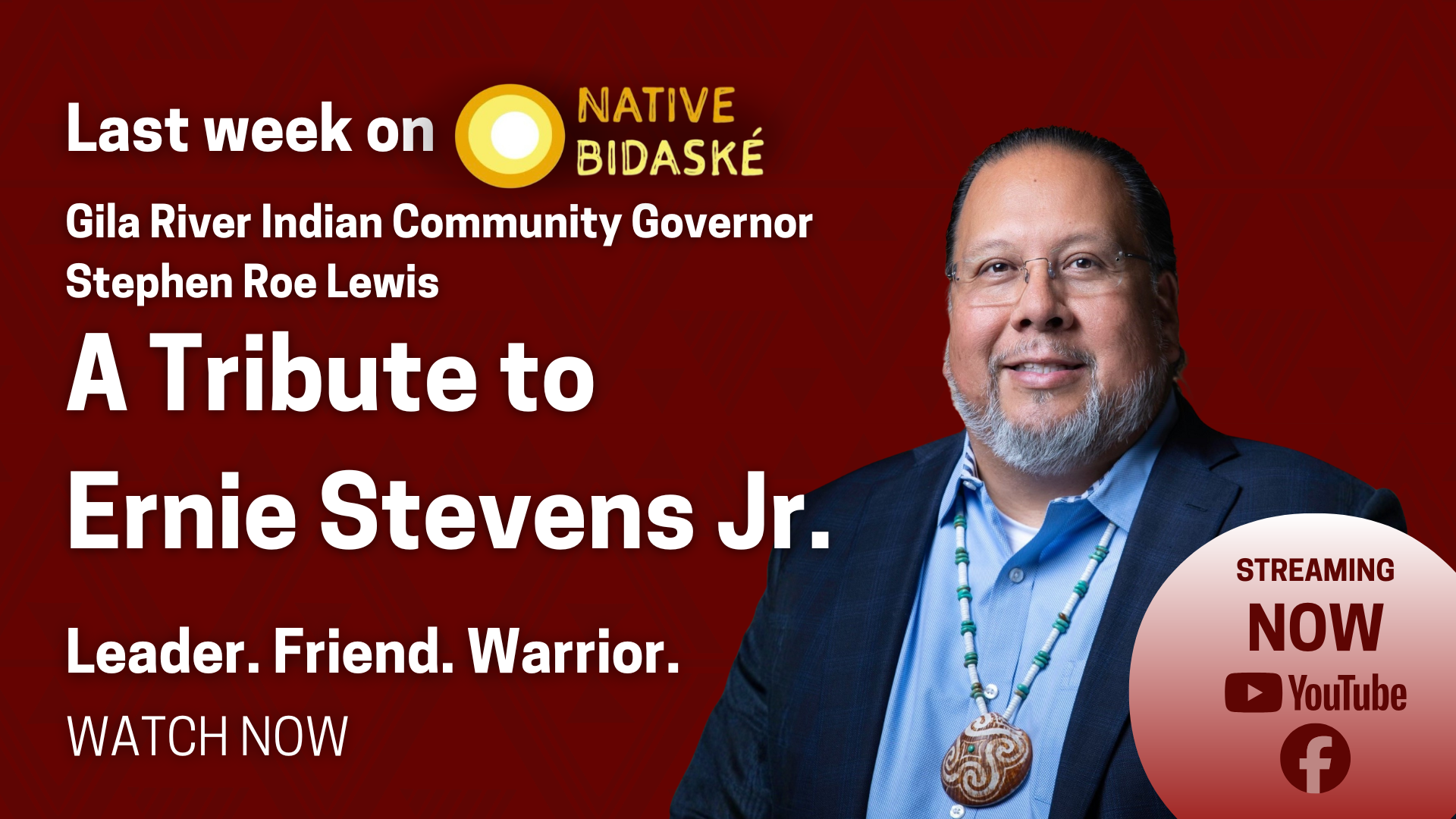
Last week, Native Bidaské featured Governor Stephen Lewis of the Gila River Indian Community in Arizona. During the episode, Governor Lewis spoke about his community's work on Indigenous Peoples Day, the consequential nature of the Native American vote in Arizona, and shared heartfelt remembrances of his friend, the late Chairman Ernie Stevens Jr..
Instead of taking a holiday, Governor Lewis was working on Indigenous Peoples Day. He attended the Arizona Tribal Leaders Energy Summit hosted by Governor Hobbs, along with other tribal leaders like the Chairman of the Hopi Tribe and President Buu Nygren from the Navajo Nation. The summit focused on collaboration opportunities between the state and the 22 tribes in Arizona.
Governor Lewis detailed the Gila River Indian Community’s efforts, which he frames as a “blue-green economy” rooted in culture and tradition. Blue Part: Water Rights - This refers to the ongoing fight for water. Governor Lewis referenced the Gila River water settlement in 2004, the largest water settlement in US history. The community is working to ensure tribes are "at the table" in policy decisions regarding the Colorado River Basin. Green Part: Energy Innovation - The community is focused on energy self-sufficiency. This includes implementing solar panels over canals. Governor Lewis noted the Gila River Indian Community has over 200 miles of canals. "We're the first tribe in the western hemisphere to do solar on this scale and in this way," he said. The projects are already "surpassing" expectations to create green energy and protect water against evaporation.
Governor Lewis also spoke about how the community's name, the "Akimal O’odham," means "the people of the river," underscoring the importance of being connected as relatives, as a tribal nation, and to natural resources.
The conversation briefly touched on Arizona politics, specifically the delayed swearing-in of Congresswoman-elect Aliyyah Grijalva. Governor Lewis stressed the importance of the Native American vote in Arizona, calling it "so consequential".
He expressed concern that every day Grijalva is not sworn in, constituents, including members of the Tohono O’odham Nation and the Pascua Yaqui tribe, "are going without representation in the house". The lack of representation has immediate consequences due to issues like potential health care and the ongoing government shutdown. He noted that "direct service tribes" that get resources and services from the federal government, such as the BIA, are being affected the hardest.
Remembering Ernie Stevens Jr.
A significant portion of the interview was dedicated to honoring Ernie Stevens Jr., the former Chairman of the Indian Gaming Association (IGA), who passed away unexpectedly on September 26. Governor Lewis, a current member of the IGA Board of Directors, called the news "shocking".
Governor Lewis noted the legacy of service runs deep, sharing that his own father, Rod Lewis, secured his first job in the federal government with assistance from Ernie Stevens Sr. in the early 1970s. Governor Lewis and Ernie Stevens Jr. also shared a mentorship relationship, with Stevens taking the younger leader "under his wing" when he worked as a Gaming Commissioner in the early 90s.
Ernie Stevens Jr.'s Legacy
Governor Lewis reflected on Stevens's character, describing him as "the perfect synthesis" and "the perfect mixture" of his two parents: his father, an accomplished professional who worked in the federal government, and his mother, a "native red power, American Indian Movement activist".
Governor Lewis highlighted several aspects of Stevens's legacy:
- A True Warrior: "He was a warrior, right? He was a warrior for Indian Country, never backed down" Governor Lewis stated. He also recalled Stevens's iconic "fist up" gesture, which Stevens explained, "This is a symbol of unity, this is a symbol of power."
- Dedication to Native Youth and Women: Stevens "he always had an interest and had a concern for Native children". He helped to start and support the National Indian Basketball Invitational (NABI) and "created a forum as well for native Indigenous women leaders within gaming".
- Man of Action: "It's one thing to talk beautifully, to talk articulately, but it's another thing to act" Lewis said. "He backed up his words with actions every time".
- Mentorship: Stevens "left behind all of who he mentored," leaving "leaders and warriors and waiting, or just warriors" ready to take up the fight for tribal sovereignty.
Governor Lewis concluded by offering encouragement, saying that the best way to honor Stevens's memory is to be "warriors for our Indian tribal nations, for our people, for our relatives, for defending tribal sovereignty".
The full interview of "Native Bidaské" is available for viewing on Native News Online’s website, YouTube, and Facebook (for 30 days).
Help us defend tribal sovereignty.
At Native News Online, our mission is rooted in telling the stories that strengthen sovereignty and uplift Indigenous voices — not just at year’s end, but every single day.
Because of your generosity last year, we were able to keep our reporters on the ground in tribal communities, at national gatherings and in the halls of Congress — covering the issues that matter most to Indian Country: sovereignty, culture, education, health and economic opportunity.
That support sustained us through a tough year in 2025. Now, as we look to the year ahead, we need your help right now to ensure warrior journalism remains strong — reporting that defends tribal sovereignty, amplifies Native truth, and holds power accountable.
 The stakes couldn't be higher. Your support keeps Native voices heard, Native stories told and Native sovereignty defended.
Stand with Warrior Journalism today.
Levi Rickert (Potawatomi), Editor & Publisher