



- Details
- By Seth Tupper, South Dakota Searchlight
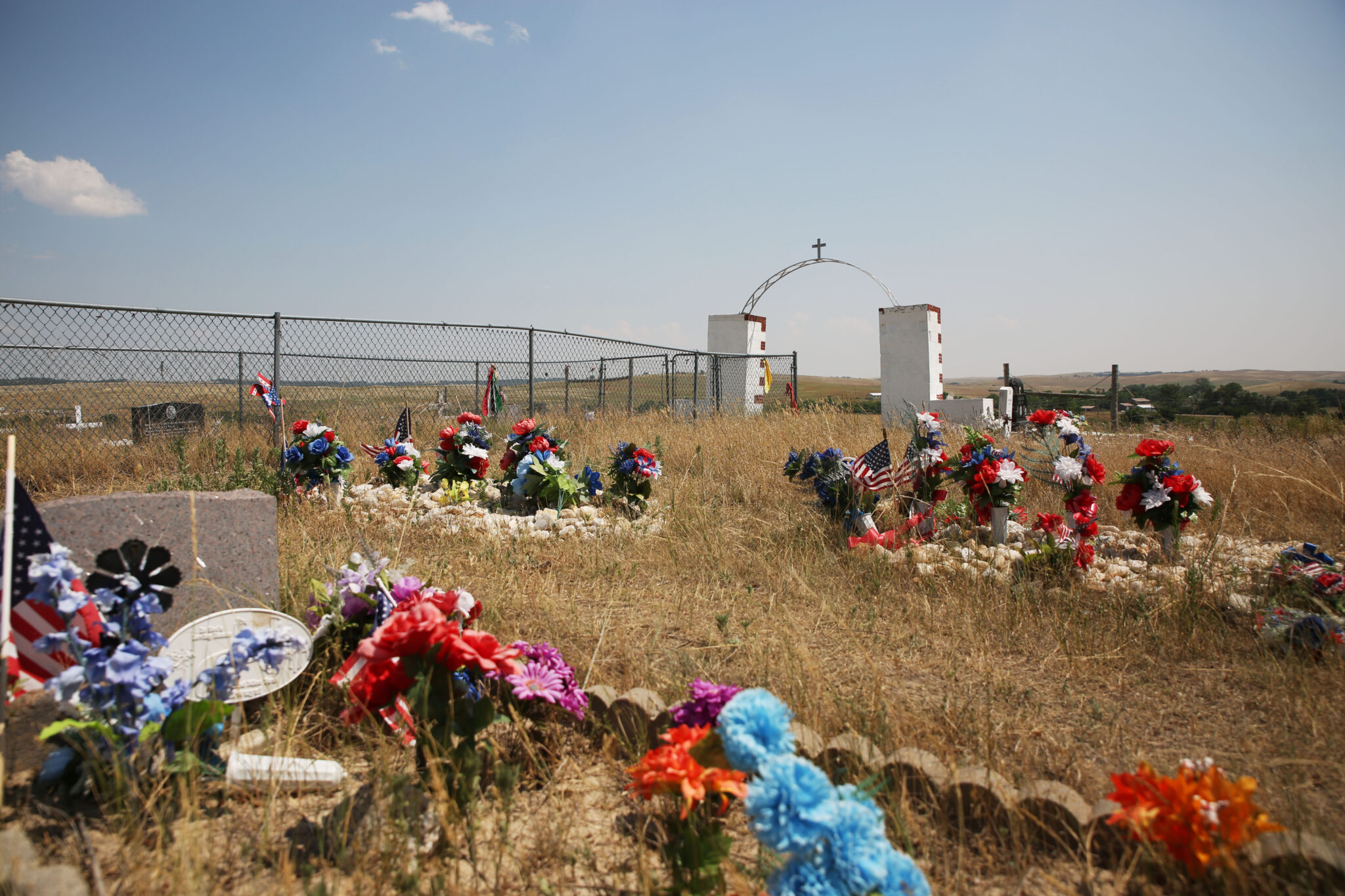
The U.S. Senate sent President Donald Trump a bill Thursday that would protect a portion of the Wounded Knee Massacre site on the Pine Ridge Reservation.
U.S. Rep. Dusty Johnson, R-South Dakota, sponsored the legislation in the House, where it passed in January. Sen. Mike Rounds sponsored the legislation in the Senate, where it passed Thursday, with Majority Leader John Thune as a cosponsor. Both are Republicans from South Dakota.
[Editor's Note: This article was originally published by South Dakota Searchlight. Used with permission. All rights reserved.]
Johnson released a statement saying “the time is now here to properly memorialize the lost and preserve the land.”
Please support our year-end campaign. CLICK HERE TO DONATE.

“I look forward to seeing the president sign this into law to ensure the land remains sacred for generations to come,” Johnson said.
Rounds also issued a statement, saying the Wounded Knee Massacre was “a devastating low point in U.S.-Lakota relations” and “we will continue to tell the story of this dark day in our nation’s history.”
The legislation would place 40 acres at the massacre site in restricted-fee status, which means it could not be sold, taxed, gifted or leased without approval by Congress and the Oglala Sioux and Cheyenne River Sioux tribes, which jointly purchased the land three years ago.
The leaders of both tribes praised the bill’s passage in comments included in a news release from Johnson.
“Today, we stand to acknowledge the atrocities committed against the Lakota people to continue to heal, to protect, to educate, and most importantly, to ensure that we never forget the Wounded Knee Massacre of 1890,” said Cheyenne River Tribe Chairman Ryman LeBeau.
Oglala Sioux Tribe President Frank Star Comes Out called the bill “an important act that will preserve the memory of the Wounded Knee Massacre and the legacy and sacrifice of our ancestors.”
“Significantly,” Star Comes Out said, “it also promotes tribal self-determination and allows us to protect our Wounded Knee site in perpetuity.”
The bill’s passage comes a little more than two months after U.S. Secretary of Defense Pete Hegseth announced his rejection of calls to rescind medals awarded to soldiers for their participation in the massacre.
Bills to revoke the medals have been introduced this congressional session in the House from Jill Tokuda, D-Hawaii, and in the Senate from Elizabeth Warren, D-Massachusetts. Neither bill has advanced out of its assigned committee, and South Dakota’s members of Congress have not signed on as cosponsors.
The massacre occurred on Dec. 29, 1890. A large group of Lakota people traveling to the Pine Ridge Agency in southwestern South Dakota made camp near Wounded Knee Creek, where they were surrounded by hundreds of Army soldiers. A shot rang out during a struggle while the soldiers tried to disarm the camp, and the soldiers opened fire.
Fewer than 40 soldiers were killed (some by friendly fire, according to historians), while estimates of Lakota deaths ran from 200 to 300 or more, depending on the source, including men, women and children. After some of the bodies froze on the ground for several days, a military-led burial party placed them in a mass grave.
One hundred years later in 1990, Congress passed a resolution expressing “deep regret” for the massacre.
Help us defend tribal sovereignty.
At Native News Online, our mission is rooted in telling the stories that strengthen sovereignty and uplift Indigenous voices — not just at year’s end, but every single day.
Because of your generosity last year, we were able to keep our reporters on the ground in tribal communities, at national gatherings and in the halls of Congress — covering the issues that matter most to Indian Country: sovereignty, culture, education, health and economic opportunity.
That support sustained us through a tough year in 2025. Now, as we look to the year ahead, we need your help right now to ensure warrior journalism remains strong — reporting that defends tribal sovereignty, amplifies Native truth, and holds power accountable.
 The stakes couldn't be higher. Your support keeps Native voices heard, Native stories told and Native sovereignty defended.
Stand with Warrior Journalism today.
Levi Rickert (Potawatomi), Editor & Publisher