- Details
- By Native News Online Staff
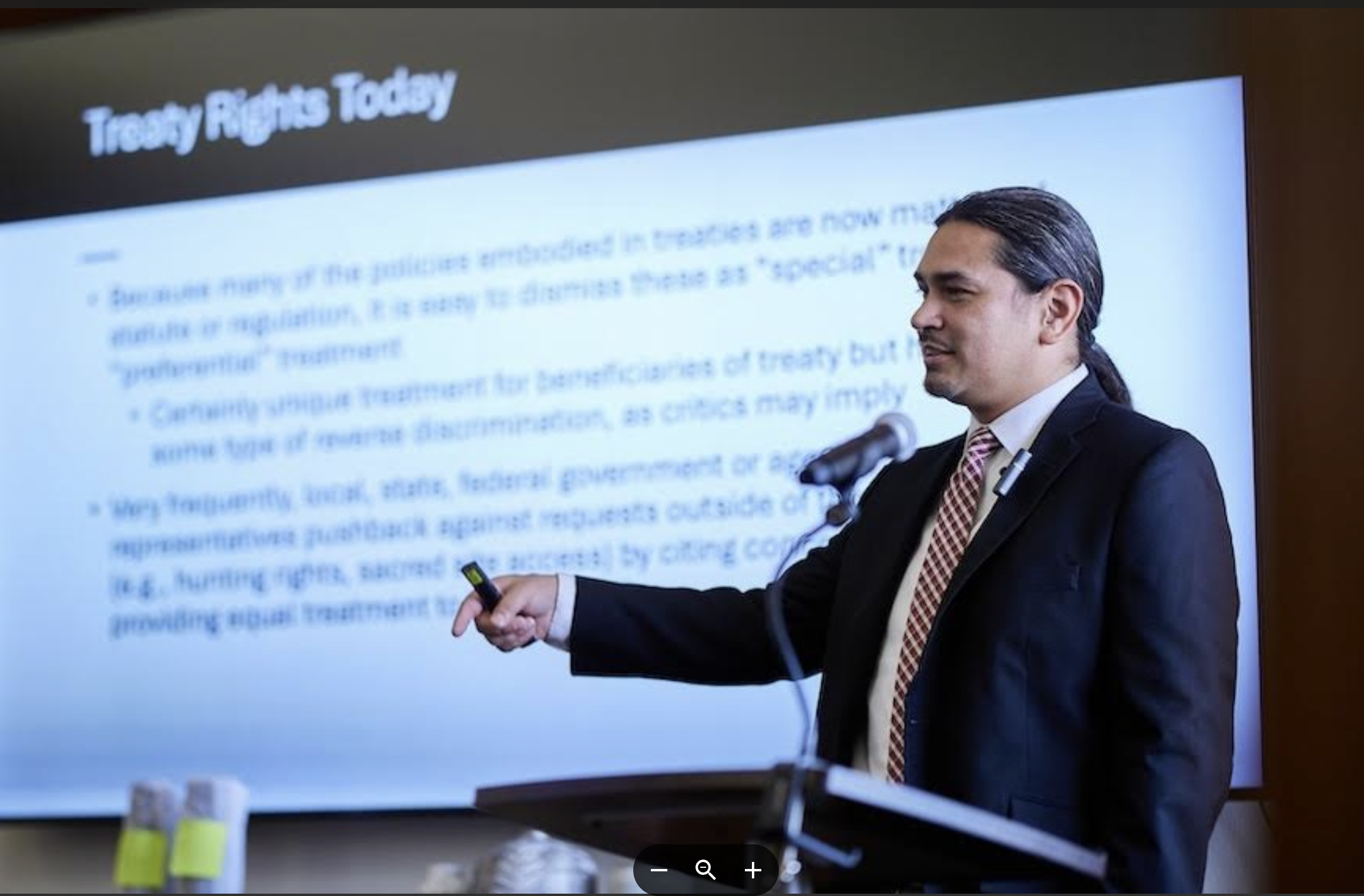
The University of Oklahoma recently hosted an event as part of its Ethical Tribal Engagement Series, aimed at fostering meaningful dialogue, promoting ethical practices, and building collaborative partnerships between Tribal Nations and non-Indigenous institutions. The event featured newly elected Comanche Nation Chairman Forrest Tahdooahnippah, JD (Comanche), who delivered a keynote address on “Bridging Gaps: Treaties and Treaty Rights – A Tribal Leader’s Perspective.”
“Chairman Tahdooahnippah is deeply committed to Native law, focusing on protecting and strengthening Tribal sovereignty and educating others on these critical issues,” said Tana Fitzpatrick, JD, (Crow/Lakota/Ponca/Chickasaw), associate vice president of Tribal relations and director of the Native Nations Center. “We are grateful to him for illuminating OU faculty, staff and students about Comanche Nation’s treaties.”
Tahdooahnippah's presentation explored the trust relationships inherent in treaties between Tribal Nations and the U.S. government. He emphasized that treaties are not merely legal contracts but sacred agreements founded on trust and mutual respect, shaped by the sacrifices of Native ancestors.
“For Indigenous peoples, treaties represent not just rights, but also responsibilities passed down from generations who fought, suffered and even gave their lives to secure them,” Tahdooahnippah said. “These are not just legal documents; they are human rights and fundamental rights that define the trust relationship between tribes and the federal government.”
During his address, Tahdooahnippah also tackled a common misconception—that treaty rights are a form of special treatment or preferential status. He explained that such views misrepresent the true purpose of treaties, which are unique, nation-to-nation agreements grounded in the recognition of Tribal Nations as sovereign entities.
“Calling treaty rights ‘special treatment’ has connotations of reverse discrimination, which misses the point entirely. Our treaty rights are our birthrights and they exist because our ancestors sacrificed for them,” he said.
Tahdooahnippah further explored the trust relationship through historical examples, including the Treaty of Medicine Lodge Creek, underscoring how treaties reflect the federal government’s recognition of Tribal Nations as sovereign entities.
“When the U.S. entered into treaties with the Comanche Nation, they were acknowledging us as nations — equivalent in status to any other sovereign country,” he said. However, he cautioned against interpreting treaties solely through the lens of Western contract law, which he argued fails to capture these agreements' moral and historical gravity.
More Stories Like This
10 Years of Building Business Dreams for Indigenous WomenIchigo Foundation Awards American Indian College Fund Adult Education Program
Bard College Center for Indigenous Studies (CfIS) Hosts Annual Symposium With Keynote Speaker Miranda Belarde-Lewis on March 9–10
American Indian College Fund Announces Spring 2026 Faculty Fellow Cohort
Navajo Nation Signs $19 Million Diné Higher Education Grant Fund Act into Law
Help us defend tribal sovereignty.
At Native News Online, our mission is rooted in telling the stories that strengthen sovereignty and uplift Indigenous voices — not just at year’s end, but every single day.
Because of your generosity last year, we were able to keep our reporters on the ground in tribal communities, at national gatherings and in the halls of Congress — covering the issues that matter most to Indian Country: sovereignty, culture, education, health and economic opportunity.
That support sustained us through a tough year in 2025. Now, as we look to the year ahead, we need your help right now to ensure warrior journalism remains strong — reporting that defends tribal sovereignty, amplifies Native truth, and holds power accountable.
 The stakes couldn't be higher. Your support keeps Native voices heard, Native stories told and Native sovereignty defended.
Stand with Warrior Journalism today.
Levi Rickert (Potawatomi), Editor & Publisher