- Details
- By Jenna Kunze
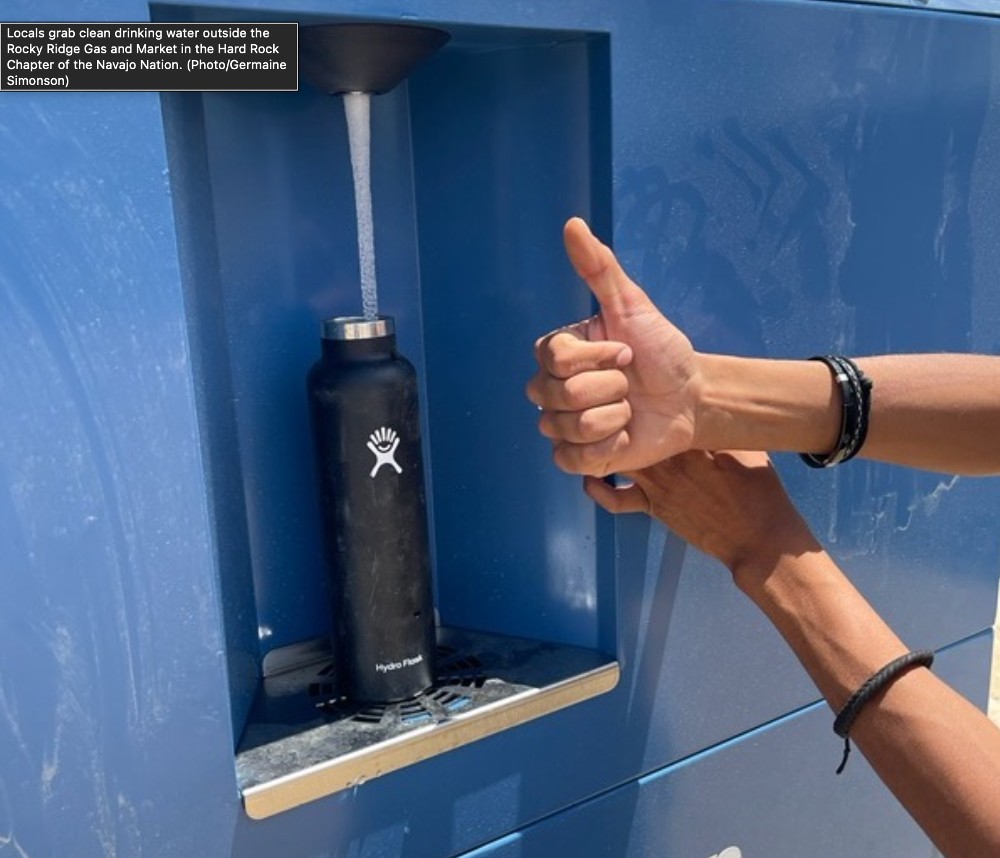
Leading up to World Water Day—a National holiday on March 22 aimed at raising awareness for the nearly 2 billion people living without access to clean water— the U.S. Environmental Protection Agency (EPA) today announced $1.6 million in available grant funding to support tribal water and air quality projects.
At least 2 million Americans still don't have running water or a working toilet at home, according to a 2019 report from the US Water Alliance. Of those lacking access to clean water, Native communities are the hardest hit: 58 out of every 1,000 Native American households lack complete plumbing—which includes a potable water supply system— as opposed to three out of every 1,000 white households, the report found.
The Native American Rights Fund found that because reservations are less likely to have clean and reliable water, they experience higher mortality, poverty, and unemployment rates.
Want more Native News? Get the free daily newsletter today.
Congress aims to improve the situation in Indian Country with its allocation of $1.6 million in American Rescue Plan funding available to tribal communities. The EPA plans to award roughly 16 grants of $100 thousand each to eligible tribal communities through its Environmental Justice Small Grants Program.
Grants are available to federally recognized tribal governments whose project proposals engage tribal members in community involvement or educational opportunities that deal with clean air or safe drinking water.
“This funding opportunity will help ensure that our Tribal Nation partners and their communities are prioritized within EPA’s whole-of-government approach to address environmental challenges,” JoAnn Chase, Director of the American Indian Environment Office, said in a statement. “This funding also serves as reaffirmation of EPA’s policy, and the Biden Administration’s priority, to advance and integrate environmental justice into all of our work, including our work with federally recognized Tribal governments and indigenous peoples.”
Projects awarded to tribal communities under the Environmental Justice Small Grants Program will fall in line with President Biden’s Justice40 initiative, which aims to ensure that federal agencies deliver at least 40% of benefits from certain investments to underserved communities.
Interested applicants can participate in scheduled conference calls and webinars with the EPA to learn more about the grant program on April 7, April 14, and May 3. Grant applications are due May 19, and the projects will begin on October 1.
More Stories Like This
Gwich'in Tribal Governments Submit Comments Challenging Fish and Wildlife Service's Inadequate Environmental Review of Arctic Refuge Snow RoadRappahannock Tribe Challenges 9M-Gallon Water Plan
Feds release draft long-term plans for Colorado River management
Apache Leader Walks 60 Miles to Court Hearing That Will Decide Fate of Sacred Oak Flat
Rappahannock Tribe Raises Sovereignty and Environmental Concerns Over Caroline County Water Permit
Help us defend tribal sovereignty.
At Native News Online, our mission is rooted in telling the stories that strengthen sovereignty and uplift Indigenous voices — not just at year’s end, but every single day.
Because of your generosity last year, we were able to keep our reporters on the ground in tribal communities, at national gatherings and in the halls of Congress — covering the issues that matter most to Indian Country: sovereignty, culture, education, health and economic opportunity.
That support sustained us through a tough year in 2025. Now, as we look to the year ahead, we need your help right now to ensure warrior journalism remains strong — reporting that defends tribal sovereignty, amplifies Native truth, and holds power accountable.
 The stakes couldn't be higher. Your support keeps Native voices heard, Native stories told and Native sovereignty defended.
Stand with Warrior Journalism today.
Levi Rickert (Potawatomi), Editor & Publisher