- Details
- By Jenna Kunze
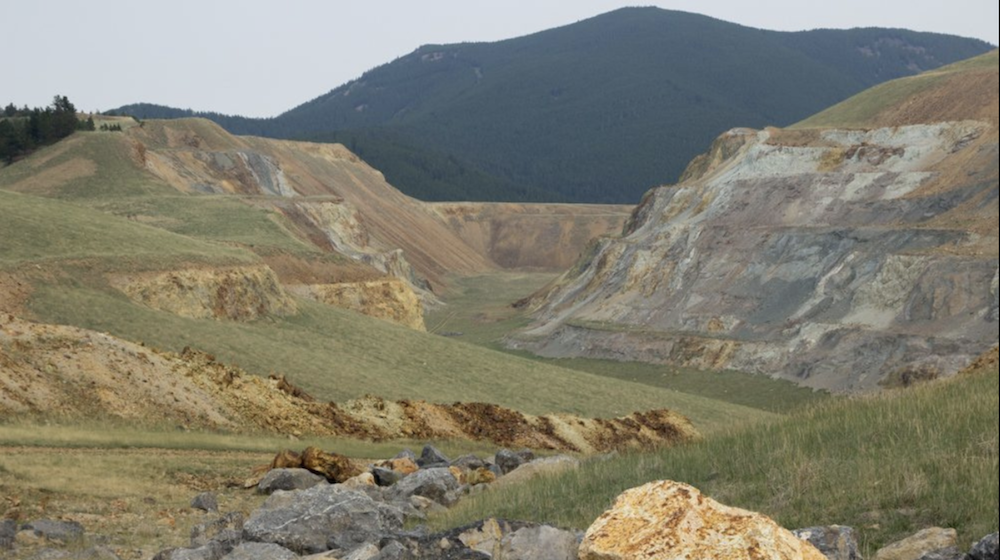
The Fort Belknap Indian Community in Montana and three conservation organizations are standing against a proposed mining project that threatens to compound past mining damage in the Little Rocky Mountains.
On Monday, Sept. 19, the Tribe — along with Montana Environmental Information Center, Earthworks, and Montana Trout Unlimited — filed a motion to intervene in support of the Montana Department of Environmental Quality’s (DEQ) more stringent environmental review of proposed mining exploration at a reclaimed mine site near the Fort Belknap Reservation.

In July 2021, an individual named Luke Ployhar applied with the state to conduct exploration activities at the site of former cyanide heap leach gold mines in the Little Rocky Mountains. The Zortman and Landusky mines operated between 1979 and 1998 and polluted the surrounding water. The state of Montana and the U.S. Bureau of Land Management has since spent an estimated $80 million in reclamation and water treatment at the site, according to the motion to intervene.
In Feb. 2022, the Montana DEQ finished an environmental assessment of the property and concluded that a more comprehensive review, called an Environmental Impact Statement, was necessary to analyze the potential impacts on areas of tribal cultural significance.
“This was the right decision for this site. DEQ received comments from three Tribal Historic Preservation Officers, all of whom indicated potential serious impacts to cultural resources for the Nakoda and Aaniiih people,” Department of Environmental Quality’s Director Chris Dorrington said in a statement.
DEQ and the U.S. Bureau of Land Management (BLM) have conducted extensive and costly cleanup in the Little Rockies. Acid mine drainage caused contamination of surface and groundwater in the region, which includes lands and waters on the Fort Belknap Indian Reservation. An estimated $80-$85 million in funding was appropriated to the cleanup of the previous mining locations because the U.S. Environmental Protection Agency issued a memorandum declaring it a Superfund site.
“The Little Rockies have already been devastated by past mining activities that have polluted tribal lands and waters with acid mine drainage,” said Bonnie Gestring, Earthworks Northwest Program Manager in an email to Native News Online. “...New mining activities in the area would put the ongoing reclamation work at risk, and simply shouldn’t be authorized."
Ployhar appealed that decision with the Board of Environmental Review in May 2022. According to Earthjustice and the Indian Law Resource Center, which represents the tribe and the organizations in the appeal, Ployhar is the subject of an ongoing enforcement action by the Montana Department of Environmental Quality for alleged illegal exploration activities at seven other sites in the Little Rockies. In July 2022, DEQ issued a $516,567 penalty to Ployhar.
“There is substantial history establishing the detrimental effects created by previous mining activity in the Little Rockies,” Jeffrey Stiffarm, president of the Fort Belknap Indian Community, said in a statement. “Environmental impacts are being felt to this day. The Fort Belknap Indian Community will continue to actively pursue any issues that detrimentally affect the homelands of the Gros Ventre and Assiniboine people. This includes supporting the positions of other agencies that understand the need for a comprehensive review of any proposed mining exploration.”
In its brief for the intervenors, attorneys cited Gros Ventre Tribe v. United States, “[i]t is undisputed that the Zortman-Landusky mines have devastated portions of the Little Rockies, and will have effects on the surrounding area, including the Fort Belknap Reservation, forever. That devastation, and the resulting impact on tribal culture, cannot be overstated.”
Darren Thompson contributed reporting to this story, which has been updated.
More Stories Like This
Gwich'in Tribal Governments Submit Comments Challenging Fish and Wildlife Service's Inadequate Environmental Review of Arctic Refuge Snow RoadRappahannock Tribe Challenges 9M-Gallon Water Plan
Feds release draft long-term plans for Colorado River management
Apache Leader Walks 60 Miles to Court Hearing That Will Decide Fate of Sacred Oak Flat
Rappahannock Tribe Raises Sovereignty and Environmental Concerns Over Caroline County Water Permit
Help us defend tribal sovereignty.
At Native News Online, our mission is rooted in telling the stories that strengthen sovereignty and uplift Indigenous voices — not just at year’s end, but every single day.
Because of your generosity last year, we were able to keep our reporters on the ground in tribal communities, at national gatherings and in the halls of Congress — covering the issues that matter most to Indian Country: sovereignty, culture, education, health and economic opportunity.
That support sustained us through a tough year in 2025. Now, as we look to the year ahead, we need your help right now to ensure warrior journalism remains strong — reporting that defends tribal sovereignty, amplifies Native truth, and holds power accountable.
 The stakes couldn't be higher. Your support keeps Native voices heard, Native stories told and Native sovereignty defended.
Stand with Warrior Journalism today.
Levi Rickert (Potawatomi), Editor & Publisher