



Guest Opinion. On May 22, for the first time in California history, a District Attorney’s Office, Tribal government, and Sheriff’s Office signed a Memorandum of Understanding (MOU) to formally launch a regional task force dedicated to addressing one of the most urgent—and most overlooked—public safety crises in our state: Missing and Murdered Indigenous People (MMIP).
This agreement is not ceremonial. It is a promise.
It is a promise to families who have waited too long for answers. A promise to Tribal communities who have been forced to search alone. And a promise to every Indigenous child growing up today that their lives will be valued, their voices heard, and their safety protected.
The statistics are staggering. Native women face murder rates more than 10 times the national average in some parts of the country. Indigenous people are more likely to be victims of violence, sexual assault, and homicide. And yet, many cases are left unsolved, uninvestigated, even due to fragmented jurisdiction, historical mistrust, and systemic neglect.
This task force is our response. Built in collaboration with Wilton Rancheria and the Sacramento County Sheriff’s Office, the Sacramento Regional MMIP Task Force represents a new model of intergovernmental partnership rooted in respect, data-sharing, cultural understanding, and shared
accountability.
The MOU we signed outlines clear commitments:
• We will review cold cases involving Indigenous victims and re-examine leads through a coordinated lens.
• We will share critical data and establish investigative protocols that honor both law enforcement expertise and Tribal knowledge.
• We will prioritize culturally informed practices in all interactions with families and communities.
This work is long overdue—and deeply personal. Behind every case file is a mother still searching, a community still grieving, and a future cut short.
I have met with families who carry unspeakable pain. They told me stories of daughters who after a routine walk. Sisters who were never seen again after a night out. Young men whose bodies were found, but whose stories never were. What they all shared was not just the loss, but the silence that followed. Silence from institutions. Silence from justice. Silence that until now, too often went unbroken.
We must end that silence.
In recent years, the federal government has made important strides: launching the Not Invisible Act Commission, funding Tribal law enforcement, and supporting data coordination through the Bureau of Indian Affairs. But these efforts cannot succeed in isolation. National momentum must be matched by local leadership, with real-world action where people live—and where justice has too often stalled.
Our MMIP task force is that local action.
To the families who will stand beside us as we launch this task force, I say: we see you. We hear you. We are with you.
To my colleagues in other counties and states: I hope this agreement becomes a model—a blueprint—for how governments and Tribal nations can come together to pursue justice with integrity and humility.
This is not the end of a conversation. It is the beginning of a movement. A movement that says no more missing. No more murders. No more ignored.
We cannot undo the past. But together, we can build a system that ensures history does not repeat itself. A system where Indigenous lives are no longer invisible.
They are honored. They are protected. And they matter.
Justice begins with visibility. And this task force is just the beginning.
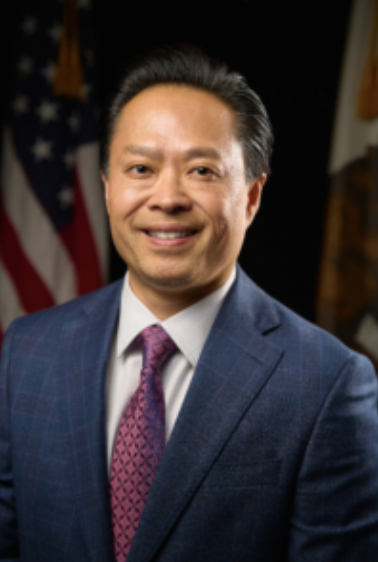
Thien Ho is the District Attorney of Sacramento County.
Help us defend tribal sovereignty.
At Native News Online, our mission is rooted in telling the stories that strengthen sovereignty and uplift Indigenous voices — not just at year’s end, but every single day.
Because of your generosity last year, we were able to keep our reporters on the ground in tribal communities, at national gatherings and in the halls of Congress — covering the issues that matter most to Indian Country: sovereignty, culture, education, health and economic opportunity.
That support sustained us through a tough year in 2025. Now, as we look to the year ahead, we need your help right now to ensure warrior journalism remains strong — reporting that defends tribal sovereignty, amplifies Native truth, and holds power accountable.
 The stakes couldn't be higher. Your support keeps Native voices heard, Native stories told and Native sovereignty defended.
Stand with Warrior Journalism today.
Levi Rickert (Potawatomi), Editor & Publisher