



- Details
- By Professor Victoria Sutton
Guest Opinion. The judiciary should be above reproach and when a judge falls from grace, it is alarming. When the judge comes from the highest court in a state, it is cause for particular alarm.
In a long forgotten story, a North Carolina Supreme Superior Court judge knowingly made a land transaction with the Cherokee Tribe to purchase land in Kentucky for a new colony called Transylvania. He did so while forming a partnership with none other than Daniel Boone. Daniel Boone was not just a bear hunter and explorer, he was a land speculator. (History is a lot more interesting if we tell the truth about it.)
Please support our year-end campaign. CLICK HERE TO DONATE.

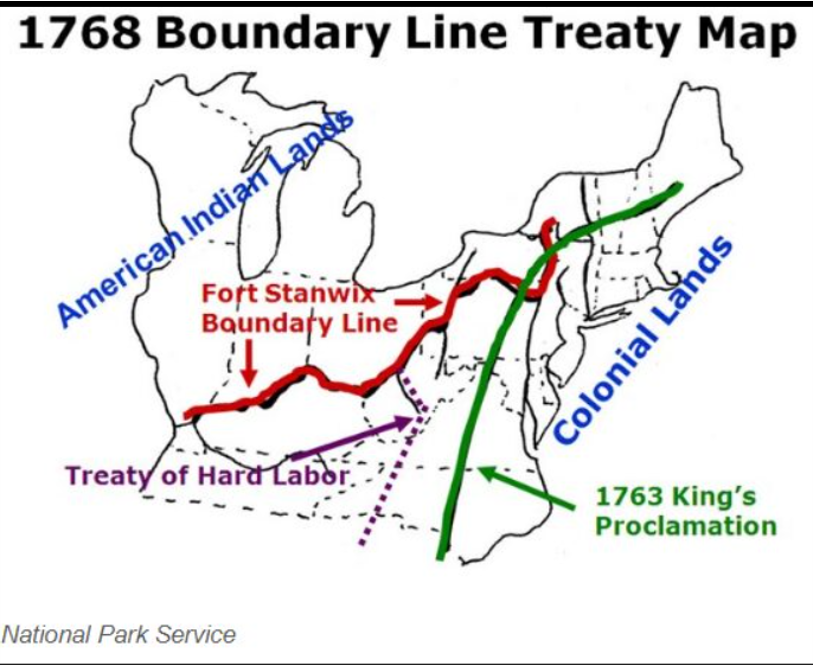
While serving as a judge, Judge Archibald Henderson was formulating the idea to violate the British Proclamation of 1763. The Proclamation of 1763, simply stated, prevented encroachment and settlement of lands beyond the Appalachian Mountains, and was signed to appease the tribes with territory that was being taken. The political goal of the law was to make settlement more attractive by reducing the threat of Indian attacks by convincing the Indigenous people that the would be undisturbed on their lands.
But George Washington and Henderson were both said to share the belief that the Proclamation of 1763 was “a mere temporary expedient to quiet the minds of the Indians, and was not intended as a permanent bar to the Western civilization.”
The Treaty of Fort Stanwix of 1768 that followed, was intended to sharpen the borders created by the Proclamation of 1763. But it made evident that these borders were overlapping other land claims, treaties and assumptions about possession. Great Britain took possession of much of Kentucky and most of West Virginia.
Meanwhile, Judge Richard Henderson was appointed in 1768 as an Associate Justice of the Superior Court of the Colony of North Carolina. He rode the court circuit including the western area of North Carolina where settlement Indians lived in white settlements on the frontier. During this time, he was planning to go into land speculation in the developing west. Despite his knowledge of the law, and his position as a colony judge, he formulated a plan to create a land company and procure lands directly from the Overhill Cherokee Tribe, in Kentucky; despite the prohibition of the Proclamation of 1763 against individuals buying land from Indian Tribes.
During Judge Henderson’s travels through western North Carolina he became acquainted with an explorer who had already traveled the Wilderness Road through the Cumberland Gap into Kentucky. Daniel Boone lived in Wilkes County, N.C. in his early years, and there is some indication that he worked in nearby Salisbury, N.C. for Judge Henderson prior to this partnership.
In 1775, Judge Henderson created a partnership with six prominent citizens (Richard Henderson, Thomas Hart, Nathaniel Hart, John Williams, John Luttrell, William Johnston, James Hogg, David Hart and Leonard Hendley Bullock) to establish the Transylvania Colony. Henderson convened a meeting at Sycamore Shoals on the Watauga River to meet with the Cherokee leaders to acquire most of Kentucky and some of Tennessee, with the Treaty of Sycamore Shoals. The Cherokee leaders had negotiated the trade before this meeting and the payment that they received was not impressive, given that one of the recipients of a hunting shirt, said that he could do better with one day’s hunting than what he received.
Deal was made, then what?
After the deal was made, Henderson announced they were interested in the Transylvania colony being recognized by the Congress. There were plans that all of the investors would be Lord Proprietors, and they would have their own colony to rule. However, the reaction to a jurist violating the Proclamation of 1763 was not lost on the leaders of North Carolina and Virginia. Gov. Josiah Martin issued an official Proclamation “against Richard Henderson and his Confederates”6 condemning this purchase as illegal, and proclaiming it void. The colony of Virginia also condemned the entire transaction. When Congress was asked to give Transylvania federal recognition, they wanted nothing to do with the transaction that was contrary to the rights of states, and so they refused to recognize it, effectively triggering its demise.
But Richard Henderson had no ethical issue with selling the land with illegal title to settlers. Quoting from his journal, they are “a set of scoundrels who scarcely believe in God or feared the devil.”
Dissolving the Transylvania Company
Richard Henderson was fully aware of the objection to his purchases and that the land was purchased in violation of the Proclamation of 1763, something that should not happen with a judge charged with enforcing the laws of the government.
After Virginia’s formal censure of Henderson’s land transactions; Virginia held depositions to determine who had purchased the illegal titles. They subpoenaed Richard Henderson, witnesses and all those claiming deeds regarding lands that were purchased illegally from Indian Tribes, from 1777-1778 (note this is after the Declaration of Independence, and transition from colonies to states).
The states granted Henderson 200,000 acres for his trouble; and from that, Henderson gave Daniel Boone 2,000 acres for risking his life, and moving his family, and taking part in an illegal scheme. Next time you see the famous carving by Daniel Boone, “I killed a bar”, in 1775 (below) , he was also engaged in one of the first massive land frauds in American history.
To read more articles by Professor Sutton go to: https://profvictoria.substack.
Professor Victoria Sutton (Lumbee) is a law professor on the faculty of Texas Tech University. In 2005, Sutton became a founding member of the National Congress of American Indians, Policy Advisory Board to the NCAI Policy Center, positioning the Native American community to act and lead on policy issues affecting Indigenous communities in the United States.
Help us defend tribal sovereignty.
At Native News Online, our mission is rooted in telling the stories that strengthen sovereignty and uplift Indigenous voices — not just at year’s end, but every single day.
Because of your generosity last year, we were able to keep our reporters on the ground in tribal communities, at national gatherings and in the halls of Congress — covering the issues that matter most to Indian Country: sovereignty, culture, education, health and economic opportunity.
That support sustained us through a tough year in 2025. Now, as we look to the year ahead, we need your help right now to ensure warrior journalism remains strong — reporting that defends tribal sovereignty, amplifies Native truth, and holds power accountable.
 The stakes couldn't be higher. Your support keeps Native voices heard, Native stories told and Native sovereignty defended.
Stand with Warrior Journalism today.
Levi Rickert (Potawatomi), Editor & Publisher