



- Details
- By Shaun Griswold
Moses Wiseman spoke his Yup’ik language before he learned English. As a college freshman, he entered the field of Alaska Native language revitalization with a bit of an inherited purpose.
“I know I qualified very heavily for this because I spoke my Native tongue. I knew how to write it, I knew how to understand it. I know how to comprehend it,” Wiseman said in an interview with Cultivating Culture.
What started as an internship at Calista Education and Culture, led to mentorship under Yup’ik oral historian and translator Alice Rearden. From there, Wiseman found a purpose to “normalize” Yup’ik language in everyday settings that has since culminated in the Aperyarat Calricaraam Tungiinun, a translation for medical settings to help his community members during hospital triage, which he led as the Alaska Native Languages Program Director at the Alaska Institute for Justice.
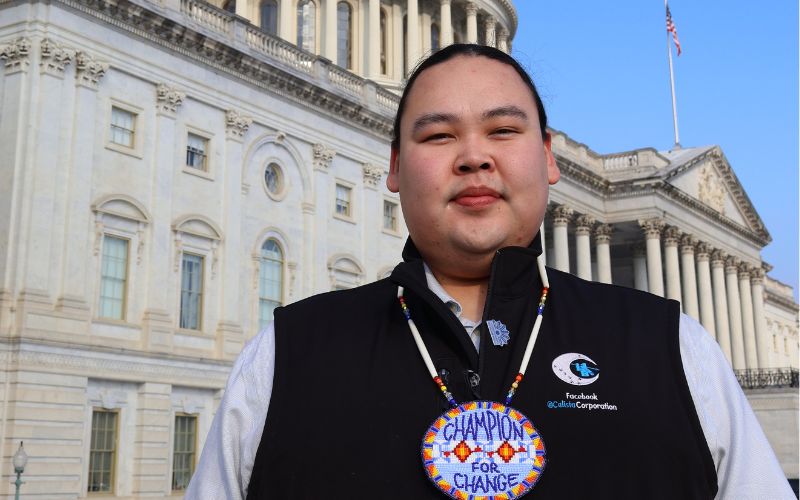
The 24-year-old was recently named a 2026 Champion for Change by the Aspen Institute’s Center for Native American Youth. Wiseman discussed the honor and shared his thoughts during an interview with Cultivating Culture. The interview has been edited for clarity.
Cultivating Culture: How do you define language revitalization?
Moses Wiseman: When we're talking about revitalizing the language within our own individual communities, it's about expanding from what we currently have. And evolving it to start pulling things that were stopped because of colonialism or because of religion in general.
My definition for revitalizing language within my community is to normalize language in general and to be able to speak our native languages within professional spaces, within healthcare systems, within education, and within higher education. To be able to normalize it. Our people are very smart, and even if you don't speak English, you tend to be very smart and intelligent.
I work as the Alaska Native Languages Program Director. In terms of normalizing language revitalization, we offer translation and interpretation services, and that means serving our people and being able to interpret, either in a court setting, a healthcare setting, or in social services.
CC: What are the biggest challenges you face in your language revitalization work?
Wiseman: Money, sadly it's money. Another thing is getting people to want to do the work with you and being able to allow people to feel the excitement of normalizing our language and having everything accessible in our native languages.
Funding is very unique here in Alaska because, down in the lower 48 they have treaty rights - you know, (Indian Health Service) is a treaty right. Each individual Native nation likely has a treaty between them and the United States, but here in Alaska it's very unique.
(In Alaska) we also use the Indian Reorganization Act to allow us to be federally recognized as tribes to find funding.
People are always excited to see the end product because it's something that will eventually be used in everyday practice. Right now, we are beginning the second phase of our glossary project at the Alaska Native Languages Program). The glossary we just released has behavioral health and mental health terms. We got funding from the state of Alaska Health Department before funding got cut. But we released the first phase of the project and that took a lot of work. There were over 500 audio clips I had to go through. The next phase is translating documents that are used in emergency healthcare.
CC: Can you share more about that resource and can we see it?
Wiseman: Absolutely, yes. It’s available online.
When you go into the emergency room, you know, when you're being triaged. You're being asked, “What are your allergies? What's your medical history? Do you have any specific things you'd like to tell us? What's your date of birth?” Things like that, you know, and common diagnoses such as diabetes or pneumonia.
The second phase is very unique, because in the first phase, we have audio attached to some of our words, and you can listen. It's interactive. So when you look up something like depression. You can hear the word depression. You can look at the Yup’ik translation of depression, and you can also look at how it's written and you can also listen to the definition as well. And what's so unique about the current glossary is that it's laid out so that if other native languages want to have it translated from English to their Native language, you can easily input that.
So for the second phase, it’s mainly keeping PDFs available. For example, if a nurse was triaging a patient and the patient didn't really understand. They would have the PDF right then and there, and be able to give that to the patient and pointing out the question that they're asking, which eventually will translate into the native language.
CC: How would a resource like this help you personally when you visit the doctor?
Wiseman: I'd feel comfortable. I wouldn't feel scared, which can happen because of the history of how natives were treated within the medical scene. We’re very underrepresented in a lot of spaces and being able to understand the questions that they're asking would make me feel at ease and not be as scared.
CC: Do you have any perspectives to share on artificial intelligence used in language revitalization?
Wiseman: Thankfully, artificial intelligence hasn't been used heavily for my work in language revitalization. I have some mixed thoughts regarding AI. I really hope it doesn't affect our language because I know in the past there have been mistranslations. The federal government likely used AI that mistranslated Yup’ik onto government documents. They tried to translate from English into Yup’ik, but they used Canadian Inuit. We noticed that Inuit use symbols we don’t use.
CC: What was it like when you found out you were named a 2026 Champion for Change?
Wiseman: I applied because a friend of mine, who was a previous Champion for Change two years ago, said very good things about this program. I thought they're probably better applicants than me, who are more impressive than my resume. I really didn't believe that I would get in. I was sitting down andI looked up my phone, and I got an email from one of the staff members saying that I was accepted into the program, and I just couldn't believe it.
I have to remind myself that I deserve to be in the rooms where I am currently in. When things like this happen for me, I have to remind myself that I come from a very long line of wonderful people. They're very powerful, and they're very intelligent as well. I have consistently reminded myself of the values that I grew up with. You know, being respectful, having humility, and being able to understand where I come from.
I hope everyone understands that language is important.
More Stories Like This
Coast-to-Coast Readings Seek Justice for Missing and Murdered Indigenous Women and RelativesThe New York Historical Announces Transformative Gift of Indigenous Masterworks Ahead of Nation’s 250th Anniversary
The Rock Musician Playing NdN Humor for Valentine’s Day
Southwestern Association for Indian Arts Appoints New Board Chair
Help us defend tribal sovereignty.
At Native News Online, our mission is rooted in telling the stories that strengthen sovereignty and uplift Indigenous voices — not just at year’s end, but every single day.
Because of your generosity last year, we were able to keep our reporters on the ground in tribal communities, at national gatherings and in the halls of Congress — covering the issues that matter most to Indian Country: sovereignty, culture, education, health and economic opportunity.
That support sustained us through a tough year in 2025. Now, as we look to the year ahead, we need your help right now to ensure warrior journalism remains strong — reporting that defends tribal sovereignty, amplifies Native truth, and holds power accountable.
 The stakes couldn't be higher. Your support keeps Native voices heard, Native stories told and Native sovereignty defended.
Stand with Warrior Journalism today.
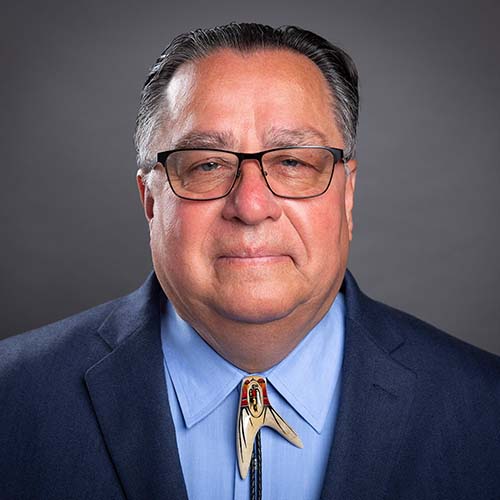
Levi Rickert (Potawatomi), Editor & Publisher