



- Details
- By Yereth Rosen, Alaska Beacon
A Nuiqsut group says the administration violated federal law by ending Teskekpuk Lake safeguards and dismissing subsistence harvesting as a ‘non-use’ of resources
Editor's Note: This article was originally published on February 2, 2026, by Alaska Beacon. Used with permission. All rights reserved.
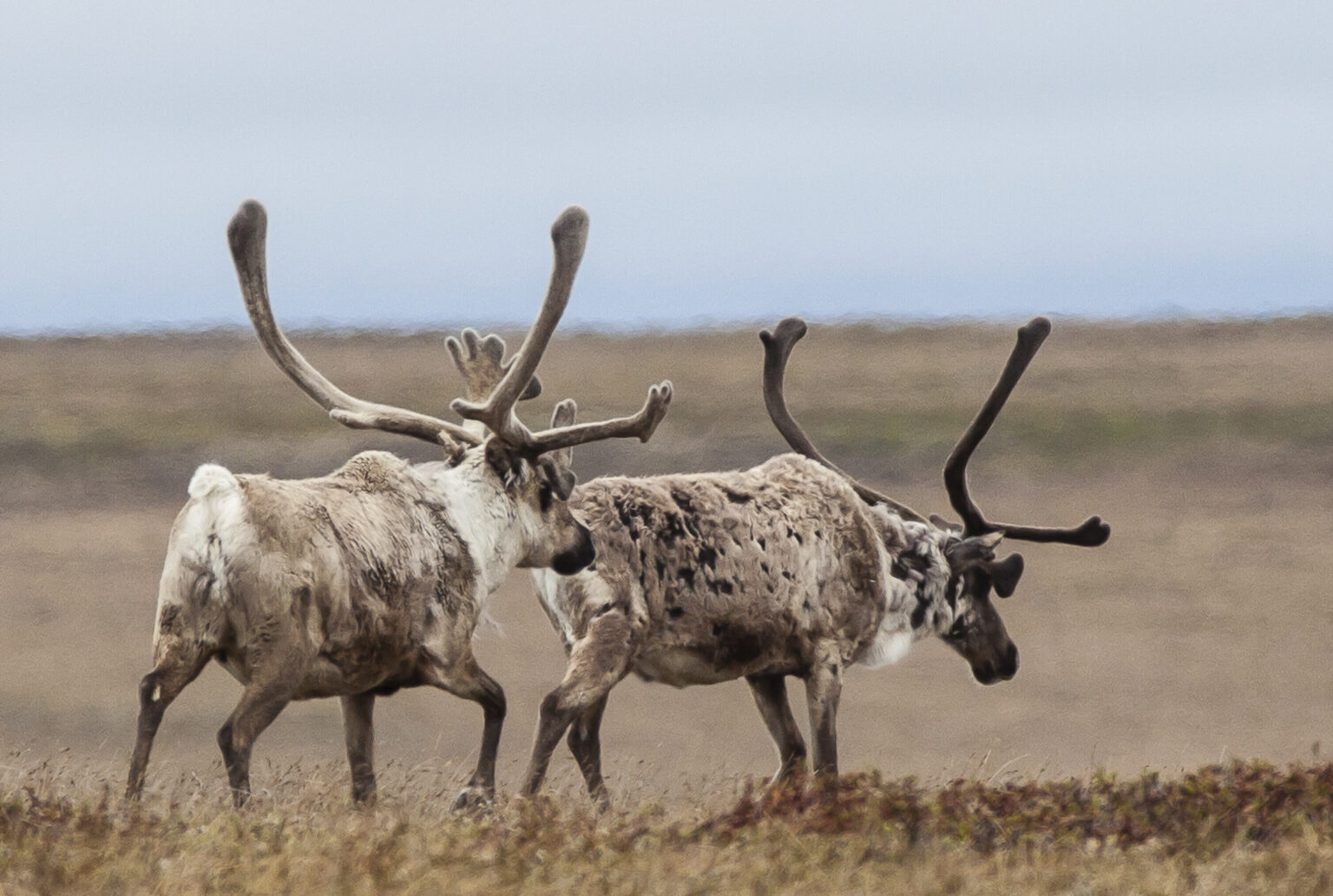
Representatives of Nuiqsut, an Inupiat village on the North Slope, have sued the Trump administration over the abrupt cancellation of a program that gave protections to the Teshekpuk Lake area and the caribou herd that uses it. Teshekpuk Lake is the largest lake in the Arctic region and known as a diverse and sensitive wetland ecosystem.
Nuiqsut Trilateral Inc., which comprises the Nuiqsut city government, the tribal government and the village for-profit corporation, filed the lawsuit on Jan. 28 in U.S. District Court in Washington, D.C.
The Trump administration’s cancellation violated subsistence rights and values that have been enshrined in law for half a century and are of utmost importance to the region’s Indigenous people, the lawsuit said.
At issue is a 2024 right-of-way agreement signed by the Biden administration’s Interior Department and the city of Nuiqsut, the village’s tribal government and Kuukpik Corporation, the village forprofit Native corporation. The three Nuiqsut entities have joined in an organization called Nuiqsut Trilateral Inc.
The right-of-way protects the Teshekpuk Lake area and about 1 million acres around it. The area is important to the caribou herd named for the lake, to vast numbers of migratory birds and to other wild resources harvested by the region’s Indigenous people for traditional subsistence purposes. The cancelled agreement gave the Nuiqsut organization some authority over activities in the protected area.
The agreement arose out of deliberations over development of the Willow project, the largest oil drilling project in Alaska’s National Petroleum Reserve. The Biden administration ultimately approved the project in 2023, but with caveats to protect the Teshekpuk Caribou Herd and other natural resources important to subsistence practices. Such protections were crucial to Kuukpik’s support of the Willow project, according to the lawsuit.
The Trump administration objected to those protections for the Teshekpuk Lake area, which might contain large quantities of undeveloped oil.
In her notice canceling the right-of-way, Interior Department Deputy Secretary Katharine MacGregor said the agreement violated the Naval Petroleum Reserves Production Act, or NPRPA. That is the 1976 law that governs management of the National Petroleum Reserve in Alaska.
“While granting any conservation right-of-way is unlikely to be lawful under the NPRPA for any amount of acres in this petroleum reserve, doing so across a surface area larger than the state of Rhode Island with a subsurface that is highly prospective for oil and gas development is clearly unlawful,” MacGregor said in her cancellation notice sent on Dec. 19 to the Nuiqsut organization.
The Secretary of the Interior has the right to grant rights-of-way to support development activities, but the law “plainly does not authorize a ROW for a non-use,” her cancellation notice said.
The Nuiqsut groups’ lawsuit responded sharply to the assertion that subsistence practices amount to a “non-use” of the area.
“That characterization fundamentally misapprehends the most basic concepts of “subsistence” on Alaska’s North Slope and is incompatible with the NPRPA’s plain text,” the complaint said.
Determining that subsistence is a “non-use” is “in tension with Congress’s recognition that ‘subsistence uses’ are, as the name implies, ‘uses’ of land and resources,” the complaint said.
Elsewhere, the complaint describes the importance of subsistence to the people of Nuiqsut. “Native communities in northern Alaska have relied on subsistence uses of natural resources since their ancestors crossed the Bering Strait thousands of years ago. Hunting and fishing, as well as communal sharing of resources, are key components of the Iñupiat culture and way of life: the Iñupiat people’s ‘physical and cultural survival depends on the continued harvest of natural resources.’”
For decades, Teshekpuk Lake and the lands adjacent to it have been protected from development to varying degrees. Protections date back to the Reagan administration.
But the Trump administration is seeking to open the entire area, including the lake itself, to oil development. President Donald Trump in December signed Congressional legislation that overturned other Biden administration protections for the area. And the Trump administration in December approved a new management plan that lifted development restrictions in that area.
The Department of the Interior declined to comment on the lawsuit. ConocoPhillips, which is not a party to the right-of-way agreement or the lawsuit over its cancellation, also declined to comment.
Correction: This article has been updated to reflect that the Trump administration has approved a new management plan for the reserve that removes Teshekpuk Lake area development restrictions. A previous version of this story misstated the date of the lawsuit, which was filed on Jan. 28.
Help us defend tribal sovereignty.
At Native News Online, our mission is rooted in telling the stories that strengthen sovereignty and uplift Indigenous voices — not just at year’s end, but every single day.
Because of your generosity last year, we were able to keep our reporters on the ground in tribal communities, at national gatherings and in the halls of Congress — covering the issues that matter most to Indian Country: sovereignty, culture, education, health and economic opportunity.
That support sustained us through a tough year in 2025. Now, as we look to the year ahead, we need your help right now to ensure warrior journalism remains strong — reporting that defends tribal sovereignty, amplifies Native truth, and holds power accountable.
 The stakes couldn't be higher. Your support keeps Native voices heard, Native stories told and Native sovereignty defended.
Stand with Warrior Journalism today.
Levi Rickert (Potawatomi), Editor & Publisher