Native Vote 2026. On January 9, 2026, three Native American organizations—National Congress of American Indians, Alaska Federation of Natives, and Native Vote Washington—filed an amicus brief at the U.S. Supreme Court in the case, Watson v. Republican National Committee, which addresses state deadlines for ballots received after Election Day. At issue in the case is a bipartisan Mississippi law, which allows absentee ballots that are mailed by Election Day and received by the registrar within five business days after Election Day. In Watson, the RNC argues that federal law requires all ballots must be in custody of state officials by the end of Election Day. If the Court were to adopt this reasoning it would overturn state laws that allow for the acceptance of ballots received after Election Days.

In their brief, the Native organizations explain why state laws that extend ballot receipt deadlines help protect Native voters. Due to logistical burdens and systemic shortcomings, ballots collected in Native communities arrive with election officials after Election Day at significantly higher rates than from non-Native communities. Disallowing ballots that are cast by Election Day but delayed in transit will disenfranchise Native voters at a higher rate than other voters.
Ben Mallott, President of the Alaska Federation of Natives, emphasized the importance of accommodating Native voters, stating, “Allowing ballots mailed on Election Day to be counted ensures that Native communities’ voices are heard and respected, despite the unique logistical challenges we face.”
Native communities regularly receive unequal and inadequate opportunities to vote in person. As a result of these barriers, as well as the complete lack of in-person voting in some states and Tribal communities, voting by mail is the only option for many Native voters. Voting by mail plays an outsized role in Native communities. Smaller, rural communities are often designated as vote-by-mail elections.
For Native voters, however, reliable vote-by-mail service is often absent or difficult to access due to a lack of home mail delivery, long distances to post offices, poor infrastructure, reduced postal hours, and inclement weather. Indeed, one of the most difficult government services to access in many Native communities is the mail. Many Native American reservations and Alaska Native Villages are in extremely rural and remote areas, consistently 40-150 miles from the nearest off-reservation border town or neighboring community. In rural Alaska, these obstacles are even more extreme. Most Alaska Native Villages are located entirely off Alaska’s limited road system, tens to hundreds of miles away from hub communities and accessible only by boat or small airplane.
For example, the United States Census Bureau tracks which communities have unreliable mail service, designating them ‘update leave.’ Across the country, only a tiny portion of residential areas are designated “update leave.” Those areas are disproportionately Native areas. In fact, as the Native composition of a community increases, the proportion of the area that is “update leave” increases by the same percentage, strongly suggesting that the experience of unreliable mail service is largely unique to Native communities.
In part, the disparity is because the postal infrastructure was largely built before Natives were conferred citizenship. Rural free delivery to a person’s home mailbox or cluster mailbox in their neighborhood was introduced in 1896 and made permanent in 1902, approximately twenty-two years before the Indian Citizenship Act. Approximately 89% of current post offices were established prior to 1920, while the Indian Citizenship Act was passed in 1924. Another explanation is that providing services to Native people is deprioritized. When white populations integrate into a Native community, mail services increase. One study showed that rural reservations that have large populations of non-Natives have better access to postal infrastructure, including at-home mail delivery.
In addition, rural post offices (especially in Native communities) typically have abbreviated hours and days. One study found that the limited hours on the Navajo Nation reservation could not be explained simply by demand or population, instead they appear to stem from discriminatory patterns during early settlement.
Finally, mail sent to and from post offices in or near Native communities can take longer to deliver. Mail coming from rural post offices in Native communities—reservation towns and Alaska Native Villages in particular—can take circuitous routes, which leads to longer delivery times. For example, a ballot mailed from a voter on the Navajo Nation in Window Rock, Arizona is routed to Gallup, New Mexico, then Albuquerque, New Mexico, then Phoenix, Arizona, then Show Low, Arizona, and then—finally—to the county seat in St. Johns, Arizona. Critically, it is often impossible to estimate exactly how long a piece of mail will take to be delivered from a rural post office.
In another Arizona example, social scientists found that these delays are not attributable to simply being rural. Rural areas that are off-reservation (even with the smallest populations) had far better mail services as well as delivery times that nearly matched those for urban locations. In contrast, the letters posted from on-reservation locations had much longer delivery times. Therefore, it is no surprise that in Arizona, which has a strict deadline for receiving all ballots by 7:00 pm on Election Day, mail-in ballots coming from Native voters are rejected at a rate seven times higher than mail-in ballots cast by white voters.
Meanwhile, in Alaska, 131 of the 401 precincts hand count ballots, with initial results telephoned to officials. The physical ballots are then mailed to Juneau, which means that 33% of precincts across the state are entirely dependent on the U.S. Postal Service for ballot delivery. Ballots may not be received in Juneau in time to be counted because of staffing gaps, non-existence of post offices in Alaska Native Villages, poor coordination between the U.S. Postal Service and election officials, and bad weather that can ground small plane travel for weeks at a time. Staffing issues plague post offices throughout rural Alaska. As of 2023, there were 77 Postmaster Relief vacancies in roadless precincts in Alaska.
Although Alaska’s absentee ballots can arrive up to ten days after Election Day, ballots must be postmarked on or before Election Day. Most mail in Alaska is automatically postmarked in Anchorage or Juneau. Thus, a ballot placed into the mail in a rural Alaska Native village will likely not be postmarked for several days, after it reaches Anchorage or Juneau.
All of these examples help explain why ballots from Native communities arrive after Election Day at significantly higher rates than those from non-Native communities. States, responsible for the administration of federal elections, have navigated these obstacles with varying success. In some states, like Alaska and Washington, extending the deadline to receive mail-in ballots that are lawfully cast on or before Election Day is a critical mechanism used to address the persistent infrastructure failures in Native communities.
“A law aimed at protecting citizens’ right to vote should not be prohibited,” said NCAI Executive Director Larry Wright. “Common sense dictates that states should be allowed to recognize the significant barriers faced in each state by geography and lack of infrastructure, especially when those barriers disproportionately impact Native communities and inhibit indigenous people from voting. States should be allowed to pass laws that maximize legitimate voter participation in state and federal elections, and that necessarily includes allowing the acceptance of legitimate ballots cast on Election Day but received at a later date.”
More Stories Like This
Native News Weekly (August 25, 2024): D.C. BriefsNative News Weekly (March 1, 2026): D.C. Briefs
Scope Narrowed, Report Withheld: Questions Mount Over Michigan Boarding School Study
Zuni Youth Enrichment Project Announces Family Engagement Night and Spring Break Youth Programming
Next on Native Bidaské: Leonard Peltier Reflects on His First Year After Prison
Help us defend tribal sovereignty.
At Native News Online, our mission is rooted in telling the stories that strengthen sovereignty and uplift Indigenous voices — not just at year’s end, but every single day.
Because of your generosity last year, we were able to keep our reporters on the ground in tribal communities, at national gatherings and in the halls of Congress — covering the issues that matter most to Indian Country: sovereignty, culture, education, health and economic opportunity.
That support sustained us through a tough year in 2025. Now, as we look to the year ahead, we need your help right now to ensure warrior journalism remains strong — reporting that defends tribal sovereignty, amplifies Native truth, and holds power accountable.
 The stakes couldn't be higher. Your support keeps Native voices heard, Native stories told and Native sovereignty defended.
Stand with Warrior Journalism today.
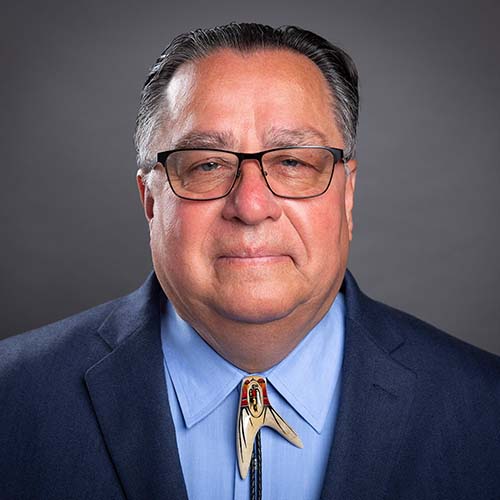
Levi Rickert (Potawatomi), Editor & Publisher