- Details
- By Elyse Wild
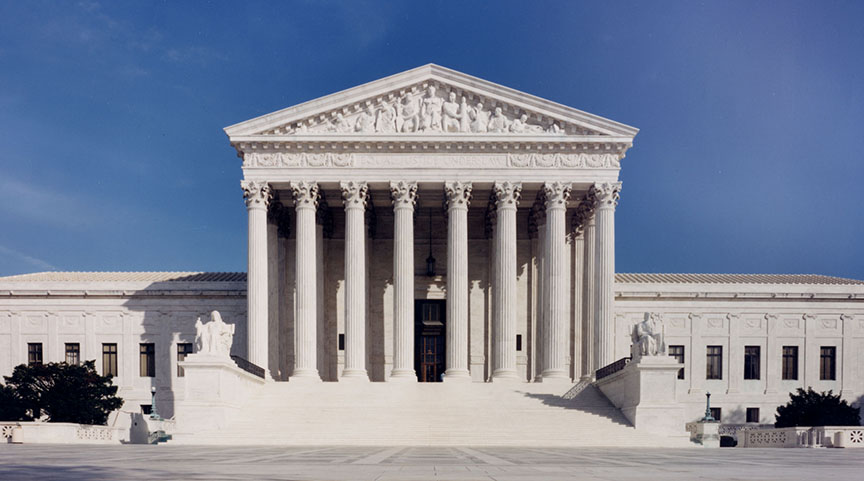
The U.S. Supreme Court has declined to hear a legal challenge brought by the Sault Ste. Marie Tribe of Chippewa Indians regarding a fishing agreement governing treaty-protected fishing rights in the Upper Great Lakes.
The Court’s decision follows the Tribe’s petition asking the Supreme Court to review a ruling by the U.S. Court of Appeals for the Sixth Circuit, which upheld an August 2023 district court decision approving a fishing rights agreement. That agreement was negotiated between federal regulators, the Michigan Department of Natural Resources (DNR), and four federally recognized Michigan tribes: the Bay Mills Indian Community, the Grand Traverse Band of Ottawa and Chippewa Indians, the Little River Band of Ottawa Indians, and the Little Traverse Bay Bands of Odawa Indians.
The agreement allocates fishing rights in portions of the Upper Great Lakes and establishes regulations governing gear, fishing locations, seasons, and species. The Sault Ste. Marie Tribe has argued that the agreement infringes upon its treaty-reserved fishing rights and unlawfully excludes the Tribe from participation in decisions that directly affect its interests.
The Sault Ste. Marie Tribe of Chippewa Indians was not a party to the agreement. The Sault Ste. Marie Tribe contended the agreement infringes on their fishing rights provided through the 1836 treaty.
"While the Sault Ste. Marie Tribe of Chippewa Indians intended to protect our treaty rights and not concede to the State’s demand for biweekly reporting, which has never demonstrated to be necessary, we respect the outcome and will work cooperatively with the other Tribe’s to implement the consent decree," Sault Tribe Chairman Austin Lowes said in an email to Native News Online.
In 2024, the Tribe appealed to the Sixth Circuit, asserting that the agreement violates treaty rights by prohibiting traditional fishing gear, closing historically used fishing areas, restricting access to certain fish species, failing to provide year-round exclusive fishing zones, and improperly allocating fishing opportunities among the tribes. The Tribe also argued that its exclusion from negotiations violated its right to due process, as it is one of seven sovereign tribal governments subject to the consent decree governing Great Lakes fishing.
The Sixth Circuit affirmed the district court’s ruling, and the Supreme Court’s refusal to grant review leaves that decision in place.
The outcome is particularly significant given that the Sault Ste. Marie Tribe operates the largest commercial fishing enterprise in the state of Michigan, making access to Great Lakes fisheries a critical economic and cultural issue for the Tribe.
More Stories Like This
Native News Weekly (August 25, 2024): D.C. BriefsNative News Weekly (March 1, 2026): D.C. Briefs
Scope Narrowed, Report Withheld: Questions Mount Over Michigan Boarding School Study
Zuni Youth Enrichment Project Announces Family Engagement Night and Spring Break Youth Programming
Next on Native Bidaské: Leonard Peltier Reflects on His First Year After Prison
Help us defend tribal sovereignty.
At Native News Online, our mission is rooted in telling the stories that strengthen sovereignty and uplift Indigenous voices — not just at year’s end, but every single day.
Because of your generosity last year, we were able to keep our reporters on the ground in tribal communities, at national gatherings and in the halls of Congress — covering the issues that matter most to Indian Country: sovereignty, culture, education, health and economic opportunity.
That support sustained us through a tough year in 2025. Now, as we look to the year ahead, we need your help right now to ensure warrior journalism remains strong — reporting that defends tribal sovereignty, amplifies Native truth, and holds power accountable.
 The stakes couldn't be higher. Your support keeps Native voices heard, Native stories told and Native sovereignty defended.
Stand with Warrior Journalism today.
Levi Rickert (Potawatomi), Editor & Publisher