



- Details
- By Shaun Griswold
Cultivating Culture started in spring 2025 with news items to showcase Native American sovereignty in food and Native language revitalization in any place where that is present.
With support from the MacArthur Foundation, our storytelling follows a farm-to-table path, rooted in Indigeneity at every step — from seed to harvest, kitchen to plate, and voice to story. We explore how language and traditional knowledge rise up through food systems, and how asking for a second helping can be an act of cultural preservation and resistance.
Please support our year-end campaign. CLICK HERE TO DONATE.
As we close out the year we wanted to share some of the work Cultivating Culture has published since spring. We covered bison revitalization, graduation regalia protections, spoke with Indigenous chefs for recipes, tracked how federal policies impact our food systems, and we went into restaurants to show Native food principles in action.
If you like it, please consider a donation to help us report on Indigenous Food Sovereignty into next year. Or, subscribe to our newsletter that shares our stories twice a week direct to your inbox.
We hope you enjoy reading what we did in 2025, and how we will continue our coverage on how food and language shape tribal sovereignty in 2026.
Class of 2025 Leads the Way for Indigenous Graduation Regalia
By Shaun Griswold and Bella Davis (Published on May 27, 2025)
The cliff fendlerbush’s blooms offered countless nibbles for one hungry young deer. Its mother watched the feast from several steps away, on the other side of a nature path crossroad below Fort Lewis College in Durango, Colorado. Getting impatient, or perhaps not feeling worried, the elder deer headed off to the Animas River and left her child behind in the bush to find its own way. Sooner or later, all parents have to let their offspring go. In the human world, we often call this “graduation.”
Downriver in New Mexico, near an entrance to the football stadium where thousands would watch Farmington High School’s graduation ceremony, Keira Manuelito quickly sold eight of the translucent starry light balloons she had made with the help of her cousin, Ashlyn Chee. An older white woman desperately wanted to purchase number nine: “I need one for the valedictorian — he’s my nephew, I only have $5 cash.” But Keira stood firm: The balloons were $10. The lady was persistent. Keira’s mom, Valerie Benally, stepped in, took the lady’s money, gave her the balloon and handed her daughter an extra $5. “Here, now you’re even,” she said, pointing to the next person with $20 in hand and no need of change to buy the last balloon.
The trip to Farmington had been a surprise; Benally wanted to encourage her daughter’s balloon-selling enterprise. That morning, they left their home in Twin Lakes on the Navajo Nation and drove east to Crownpoint to deliver a turquoise cluster bracelet that Benally had made for a graduate.
Where the Buffalo Roam: Tribes Lead Bison Return for Food Sovereignty
By Chez Oxendine (Published on October 02, 2025)
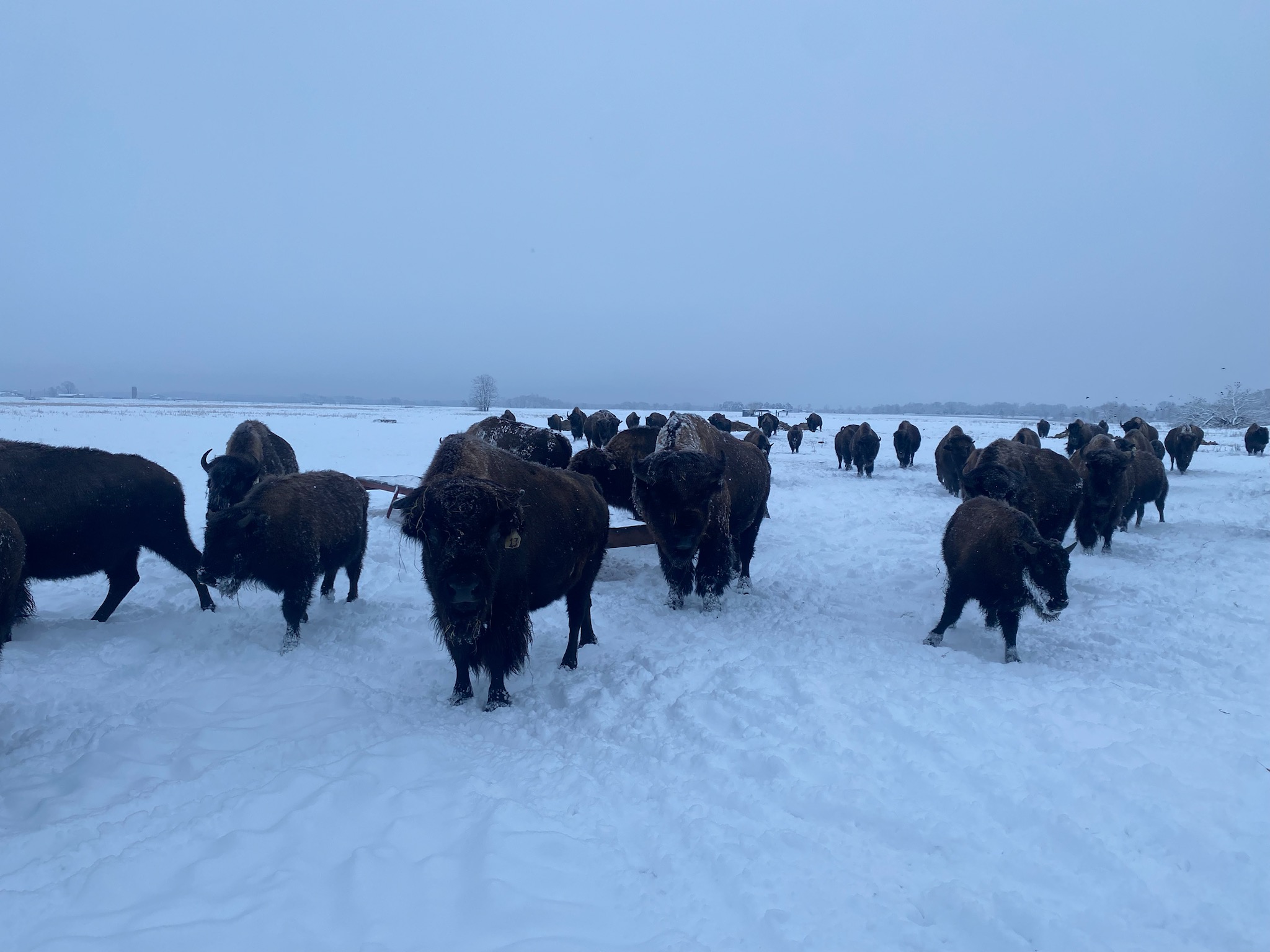
Thanks to a growing Native-led movement to restore bison, tribes like the Modoc Nation in Oklahoma are seeing extraordinary results in 2025, the Nation now has more buffalo than tribal members.
The herd sits 500 strong, and three times a week ranch manager Jeremy Garrett spends the bulk of his day cycling between the sub-herds, checking on individual animals and ensuring the fences hold.
“I don't carry a card that says I'm a Native person, but my grandpa is, and buffalo have been an important animal to me - for me this is a dream come true,” Garrett said. “I get to share this passion with others through the work we do for the tribe.”
As federal priorities shift and its support slows for bison - but doesn’t stop - Native communities across the plains and western United States continue bringing the buffalo back from nigh-extinction to resume their central role in customs, foodways and ecosystems.
The Modoc maintain the herd both to support their own tribal members as well as those of nearby tribes who haven’t started their own ranches, Garrett said. Roughly 75 percent of the ranch’s annual 25,000 pounds go to these communities for free.
Up until recently, that program was supported by a United States Department of Agriculture grant intended to put bison back into tribal diets. Now, the Modoc Nation has taken it over by offsetting costs with smaller federal and state grants, as well by selling some animals each year at farm shows.
“It’s tribes helping tribes,” Garrett said of the arrangement. “It’s a way for us to connect and support each other, while getting back to those traditional foods.”
By Elyse Wild (Published on August 07, 2025)
NiMiiPuu culture and existence are at the foundation of the Nez Perce Tribal Hatchery.
It’s why the tribal management plan implements Nez Perce traditional language, Nimiipúu timpt, into the restoration work that produces 1.4 million Chinook salmon annually into the Clearwater River basin from the hatchery called Cuy’eemnim sepeepyimniwes, which translates into its literal purpose: a place to cause fish to grow.
U.S. Health Secretary Robert F. Kennedy Jr. saw this demonstrated during a visit to the site on July 24 with Idaho Gov. Brad Little, tribal leaders and hatchery operators.
“Secretary Kennedy was able to witness our efforts and better understand the tribal perspective on our first foods, and food sovereignty and the state of peril salmon are in now,” Nez Perce Chairman Shannon F. Wheeler said.
That peril is directed from executive actions by President Donald Trump that canceled agreements with Columbia River Basin tribes like the Nez Perce in order to move energy production policies forward.
This marks a clear distinction for Kennedy’s health directives that conflict with President Trump and local Idaho Republicans’ economic and energy desires.
“American Indians are experiencing a food genocide through ultra-processed foods — what they call ‘white death’: white sugar, white flour and white grease,” he said in an interview with Native News Online. “Many are now food deserts, though Pacific Northwest reservations have been better off due to salmon access.”
By Shaun Griswold (Published on October 29, 2025)
An emergency authorization from the Blackfeet Tribal Business Council to slaughter 18 buffalo from the tribe’s herd will produce thousands of pounds of meat for community members facing uncertain food assistance during the ongoing federal government shutdown.
In addition, the Blackfeet Fish and Wildlife Department and the Blackfeet Commodity Office are moving ahead with an elk harvest to produce more meat.
“With federal restrictions and the shutdown disrupting vital resources, the Blackfeet Nation is turning to its own natural resources and community partnerships to ensure that families continue to have access to food,” the tribe said in a statement.
These are among many examples of how tribes across the United States are moving proactively to forecast an increase in demand for food aid and to steer some direction forward as confusion and chaos boil over each day the federal government remains shut down. And with each passing day, the shutdown continues to represent another day the federal government fails to meet its treaty and trust obligations to tribes.
On day 29 of the shutdown, as Congress did not pass a federal budget to reopen the government, members of the U.S. Senate Committee on Indian Affairs heard from tribal leaders about the drastic impact it has caused within Indian Country in education, commerce, food, and housing development.
By Elyse Wild (Published on November 04, 2025)
The additional 40,000 pounds of food Lisa Ansell Frazier ordered in October for the Buffalo Youth Nation Project will stock food lodges onsite at four Wind River Reservation schools through December. The Sweet Grass Lodge, the second tribal food bank that Frazier (Cheyenne River Sioux Tribe) keeps stocked with traditional and local foods, also grew its inventory to distribute food aid to more people.
Frazier's food orders, twice the size of a typical month, were done as tribes across the country saw disarray in Congress and forecasted a lengthy federal government shutdown, now in its 35th day. To brace for cuts to the Supplemental Nutrition Assistance Program, tribes and Native-led organizations are doing what Frazier has done in Wind River, and have leaned into their food distribution programs to feed relatives.
"Look into what your ancestors did," Frazier said. "Go back to making relatives with people. That sense of settler colonialism, where there's an isolation and a hierarchy that is very divisive and tiered and based on paper and material possessions — that is not our way. If you are healthy, then I am healthy."
Deer Camp: A Family Tradition That Runs Deep
By Kristen Lilya (Published on November 26, 2025)
Every fall, as soon as the air turned crisp and the leaves began to drop, my dad would come alive with joy. We cancelled all plans that happened to fall on the opening weekend of firearm deer hunting season in Minnesota - no questions asked.
Deer season started the holidays in our house. As a kid, I remember the hours when I sat beside my dad in silence, so still we could hear mice rustling through the leaves. Every squirrel, every bird, every sound became part of the rhythm of the woods. If I sniffled or coughed, my dad gave me a look that shouted in silence, “You just scared away every deer in Minnesota.” Then he’d crack a grin, and we’d both smile quietly to ourselves. It became our unspoken joke.
There were times I wanted to hang out with friends, play basketball, or do anything other than sit in a cold deer stand all day. The joy it brought my dad always encouraged me to go. His face brightened when the whole family was out there together. I saw him happy.
Reviving the Words of Our Ancestors: Potawatomi Language Conference Inspires Generations
By Levi Rickert (Published on September 05, 2025)
HOPKINS, Mich. — When Robert “Dokmëgizhêk” Lewis, Ph.D., taught a Potawatomi language class in late July, he kept the attention of his students by inserting cartoon figures like Oscar, Daffy Duck, Sponge Bob, and the Cookie Monster into his slide presentation.
Lewis was teaching on how to say words for colors in Bodwéwadmimwen at the 2025 Language Conference in Hopkins, Michigan. The conference was held on the first day of the 2025 Pottawatomi Gathering hosted by the Match-E-Be-Nash-She-Wish Band of Pottawatomi, commonly known as the Gun Lake Tribe in West Michigan.
“Wénithë odë yawet? (Who is this?)" Lewis asked the class in Bodwéwadmimwen. The participants responded speaking in the Native language.
"Daffy Duck odë yawė. (This is Daffy)," Lewis continued.
"Wabshkezė nė o Daffy, mkedéwzė nė o Daffy, anaké zhë skëbgezė nė o Daffy? (Is Daffy white, is Daffy black, or is Daffy green)?" Lewis asked next.
The participants responded wirh "Éhé', mkedéwzė o Daffy."
"Yes, Daffy is black." Lewis proclaimed.
Additional Articles:
Green Corn Celebration Reconnects Ho-Chunk Nation to Ancestral Foods and Lands
Award-Winning Chef Crystal Wahpepah Serves Up Her Favorite Fall Comfort: Pumpkin Squash Soup
Chef Sean Sherman Talks “Turtle Island” and the Future of Indigenous Food
What Inspires Indigenous Ballet Dancer Jock Soto
More Stories Like This
Native News Weekly (August 25, 2024): D.C. BriefsNative News Weekly (March 1, 2026): D.C. Briefs
Scope Narrowed, Report Withheld: Questions Mount Over Michigan Boarding School Study
Zuni Youth Enrichment Project Announces Family Engagement Night and Spring Break Youth Programming
Next on Native Bidaské: Leonard Peltier Reflects on His First Year After Prison
Help us defend tribal sovereignty.
At Native News Online, our mission is rooted in telling the stories that strengthen sovereignty and uplift Indigenous voices — not just at year’s end, but every single day.
Because of your generosity last year, we were able to keep our reporters on the ground in tribal communities, at national gatherings and in the halls of Congress — covering the issues that matter most to Indian Country: sovereignty, culture, education, health and economic opportunity.
That support sustained us through a tough year in 2025. Now, as we look to the year ahead, we need your help right now to ensure warrior journalism remains strong — reporting that defends tribal sovereignty, amplifies Native truth, and holds power accountable.
 The stakes couldn't be higher. Your support keeps Native voices heard, Native stories told and Native sovereignty defended.
Stand with Warrior Journalism today.
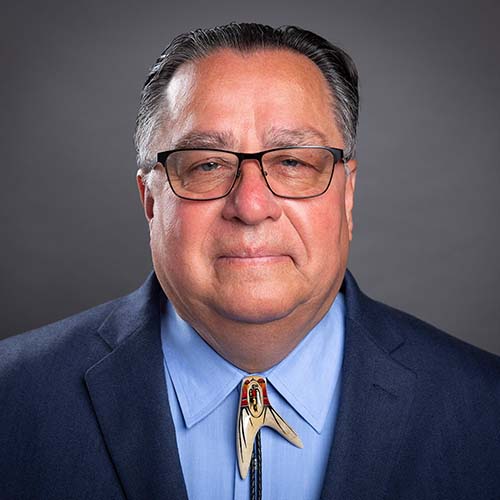
Levi Rickert (Potawatomi), Editor & Publisher