



- Details
- By Hugu Turner, USC Annenberg Media
By 2029, it will be mandatory for all high school students to take courses in Native American history. The reason: California education has failed its first people.
Penned by Assemblymember James Ramos, a San Manuel native, the California Indian Education Act is the latest chapter in Native people’s struggle to have their culture and longstanding hardship recognized in America.
“The hope is that students learn the true history of California, the horror and the genocide, but also the resiliency of the Indian people,” Ramos said in a 2024 address on the legislation’s importance.
Representatives from California tribes beyond San Manuel have said they feel as though California schools have been failing them. “As my kids were coming up in school they were taken to our local mission here, San Luis Rey, and made to make adobe bricks,” said Bradley Munoa, Pechanga Tribal Member and head of Pechanga Studios. “Missions for us are akin to plantations in the south. I was thinking, how would the word world react if kids were taken to a plantation and made to pick cotton? There would be some kind of outrage.”
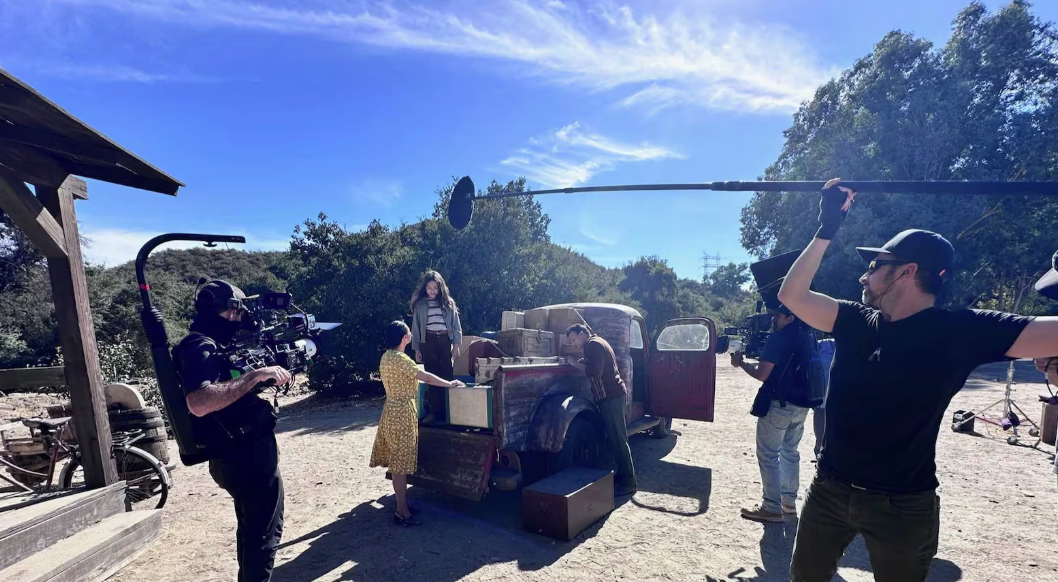
Through Pechanga Studios, Munoa’s goal has been to elucidate the struggles of older tribal members while teaching new generations the heritage they aren’t taught in school. Munoa’s latest project, a 10-episode docudrama titled “People of the West,” plans to tell the tribe’s entire history from their perspective. “History is written by the winners, so when California history is taught, it’s taught in a very romanticized, idyllic way, and they omit the heavy, harrowing, hard to swallow information. Our documentary will follow our people from our creation myth to today,” Munoa said Created as materials for 2030’s new wave of Native American education, the docu-drama, Munoa hopes, will cut through the apathy currently surrounding Native culture.
Currently in post production and set to release in 2029, “People of the West” is different from any other Native American media project, uniting filmmakers from multiple nations to create a statewide historical record of California indigenous people, rather than focusing on one tribe at one moment in time. “‘People of the West’ traces a continuous, statewide narrative, from creation stories and first contact to modern sovereignty and restoration, always centering Native protagonists,” according to Munoa, who is collaborating with California’s Department of Education to make the series easily accessible free-of-charge to educators statewide and beyond.
The Pechanga are just one offshoot of the Payómkawichum (translates to People of the West) people, renamed Luiseño after being forced to live and work at Mission San Luis Rey. In addition to heading Pechanga’s new film and TV production studios, Munoa is a member of one of the five oldest families in the Pechanga nation, with a street on their reservation bearing his family name.
California schools have always had a strained relationship with the state’s Native inhabitants. On an exclusive tour of the Pechanga reservation, Munoa stopped next to an old building, the baby blue paint on its wooden walls bleached by the sun. He explained it to be one of many old boarding schools across California where Native children were immersed in early American culture, and had their own erased. “They were taught not to speak their language, they were punished for doing so,” he said. “Their hair was cut, they were given English names. Our language nearly died because of it. Only recently have we begun to be able to teach it in our school, but there’s only one true recording of our original language so most of it is still an approximation.”
However, apathy around Native people isn’t a new development.
“The story of the Native Americans is one of the greatest tragedies of modern times, a holocaust that destroyed millions of people who lived here long before the Europeans conquered them,” said Joe Saltzman, USC professor of Journalism History and Ethics, and storied documentarian.
“Today, the Native American is often a shadow of their ancestors, riddled with poverty, alcoholism, and hatred for a country of immigrants that seems to have forgotten or purposely ignored this country’s original population.”
A pioneering TV journalist, Saltzman fought hard to produce “Black on Black” in 1968, the first-ever documentary on Black culture in Los Angeles, to unexpected critical and commercial acclaim.
However, as he turned his lens to Native Americans, he found reactions to be different. “In 1971, I produced the first documentary on Native Americans called ‘The Unhappy Hunting Ground.’ But it turned out nobody seemed to care about Native Americans then or now. [It] was the lowest rated documentary I produced at CBS. Few Americans watched the 90-minute program and when it was repeated on CBS television, I was pressured to cut the documentary down to 60 minutes.”
Later going on to receive high ratings and awards for humanizing sexual assault and breast cancer survivors, in documentaries “Rape” (1972) and “Why Me” (1974), Saltzman views the response to “Unhappy Hunting Ground” as a sign of just how overlooked Native people really are.
“I thought if everyone knew the real story about the people we called ‘Indians’ in 1971, there would be more compassion and understanding for the first ‘Americans.’ But I was wrong,” Saltzman said. “Nothing changed, and the tribes kept dying out.”
“People of the West” seeks to do the same thing “Unhappy Hunting Ground” did, which is to give modern Americans a little more understanding of their Native predecessors, and therefore a reason to finally care.
Due to the reforms penned by Ramos, the Pechanga documentary might not have to fight everything else on TV for America’s attention, increasing its chances of success. Now, as the Trump Administration gears up to give America a blowout 250th birthday celebration, that care might be more important than ever.
Help us defend tribal sovereignty.
At Native News Online, our mission is rooted in telling the stories that strengthen sovereignty and uplift Indigenous voices — not just at year’s end, but every single day.
Because of your generosity last year, we were able to keep our reporters on the ground in tribal communities, at national gatherings and in the halls of Congress — covering the issues that matter most to Indian Country: sovereignty, culture, education, health and economic opportunity.
That support sustained us through a tough year in 2025. Now, as we look to the year ahead, we need your help right now to ensure warrior journalism remains strong — reporting that defends tribal sovereignty, amplifies Native truth, and holds power accountable.
 The stakes couldn't be higher. Your support keeps Native voices heard, Native stories told and Native sovereignty defended.
Stand with Warrior Journalism today.
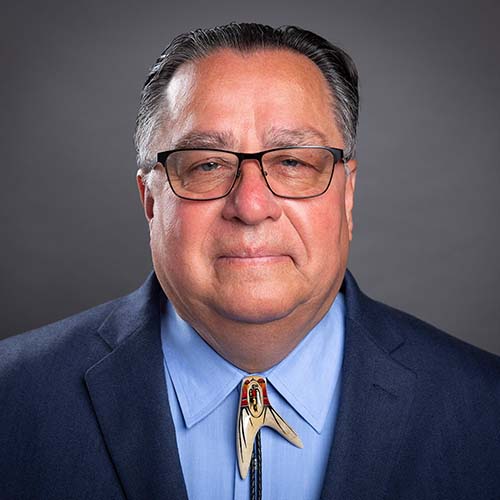
Levi Rickert (Potawatomi), Editor & Publisher