- Details
- By Elyse Wild
At the end of each year, I am left with the overwhelming sense that there are so many more stories to be told in Indian Country. It’s easy for me to fall into the breakneck pace of tackling one article after another after another, always looking ahead to the never-ending horizon of articles waiting to be written.
I ask my sources to share some of their most vulnerable moments with me. I ask them to open their hearts, and in turn, I pour my own heart into their story.
Indian Country has taught me what it means to be a steward— to dedicate yourself to something separate from you so that it can stand on its own. It’s through that lens that I view my work here at Native News Online, and across Indian Country. Of the many stories I worked on this year, a few stand out in my heart.
Alaska Native and American Indian women are 2.3 to 4 times more likely than white women to die in childbirth.
In April, I traveled to Alaska to report on a group of Alaska Native midwives reawakening traditional birth practices for Alaska Native families and saving lives. The article explores what Native families living in Alaska’s most remote villages endure to give birth away, hundreds of miles away from their communities.
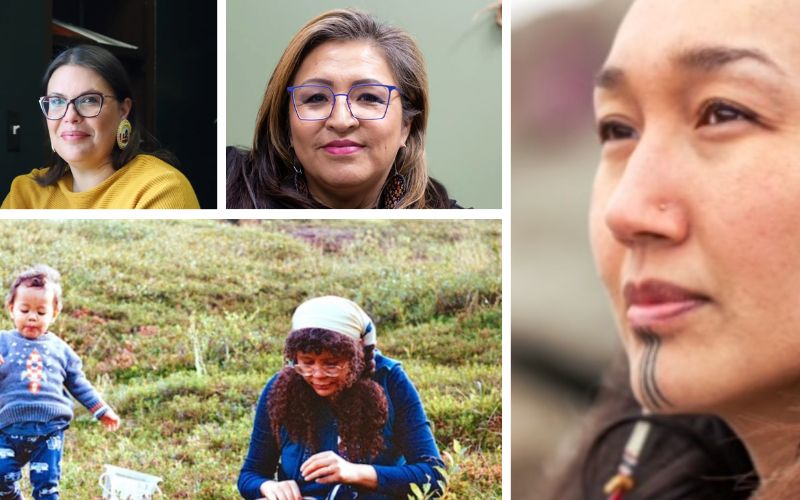
Among my subjects was Chante Tran, a young Yup’ik mother who gave birth with the group's support.
I sat cross-legged on her wooden floor, drinking hot herbal tea and listening as she told the story of bringing her son into the world, of the fear that grew in her from the abuse of generations of Alaska Native women before her, and the comfort she found in her Alaska Native doula who advocated for her.
During our interview, Tran’s two-year-old son brought me his Yup’ik drum and demonstrated how to use it. As I tried to beat the drum and play a rhythm, he laughed, shook his head, and took it back quickly, drumming and singing a song of his ancestors.
‘First Foods’ took me to Lansing and Petoskey, Michigan, to report on how Native American lactation counselors are increasing positive outcomes for Native mothers and babies through culturally centered breastfeeding support.
Breastfeeding is linked to lower rates of conditions that disproportionately affect Native communities, including sudden infant death syndrome (SIDS), respiratory infections, and diabetes. As I explored how crucial breastfeeding is to health, I saw colonialism's long dark shadow as a thief of the most intimate of acts —that of a mother feeding her child — and I learned once again that nothing that is taken is insignificant.
Charlene Aqpik Apok is a force in Alaska’s Missing and Murdered Indigenous Peoples (MMIP) movement. Her organization targets the massive data gaps that underpin the MMIP crisis, one of the most pressing issues in Indian Country and one of the most egregious outcomes of the countless broken treaty promises. Data for Indigneous Justice began on a piece of paper on which families of victims wrote the names of their missing or murdered loved ones. Today, the organization stewards a database of MMIP cases to drive change in the systems that allow the crisis to flourish.
More Stories Like This
Cherokee Nation Eyes $4 Million Transitional Housing ProgramIndian Health Service Reflects on 2025; Touts Facility Expansions, Workforce Development
Senate Committee on Indian Affairs to Host Hearng in Bills to Beneift Tribal Health Programs
Cherokee Nation Plans Reentry Housing Using Opioid Settlement Money
Bipartisan Bill Seeks to Address Health Disparities in Tribal Communities