- Details
- By Native News Online Staff
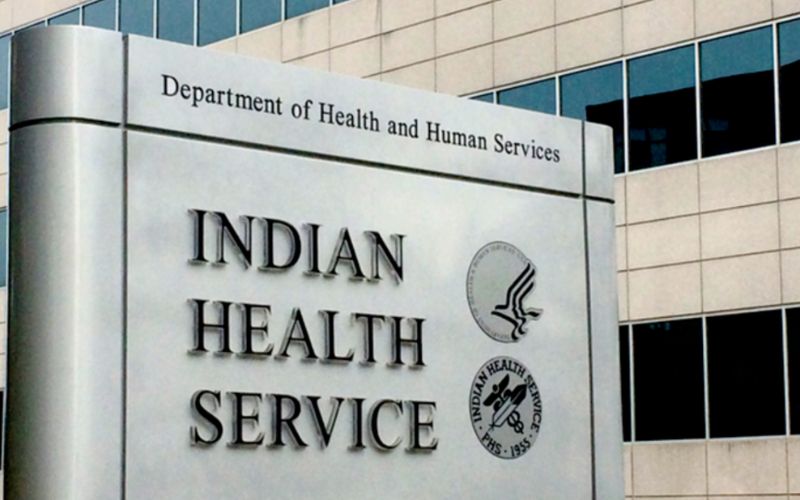
The Indian Health Service has released its year-in-review, touting its accomplishments for 2025, a year marked by swift policy changes and funding cuts across most federal agencies.
The agency, tasked with providing healthcare to 2.8 million American Indians and Alaska Natives across the U.S, turned 70 last year and was largely shielded from the Trump administration's massive budget cuts
Established in 1955, it has long struggled under a bare-bones budget and staffing vacancies. Today, it operates more than 600 healthcare facilities and 41 urban Indian organizations across 37 states.
Appropriations, Staffing, Facility Expansion
Last year, lawmakers passed a spending minibus allocating $8.05 billion to the historically strapped agency for the 2026 Fiscal Year, plus an additional $5.31 billion in advance appropriations for the 2027 Fiscal Year, marking the fourth consecutive year the IHS budget includes advance appropriations.
Tribes administered approximately 65% of the IHS’s $8.2 million 2025 budget under self-determination agreements.
While the agency is still without a director since Roslyn Tso’s (Dine) term ended last January, it made several high-level appointments throughout the year. In September, Dr. Kim Hartwig (Nez Perce Tribe) was appointed Director of Strategic Initiatives, followed in October by the appointment of Clayton W. Fulton (Cherokee Nation) as Chief of Staff.
As well, the agency broke ground on 14 new facilities. It awarded $25 million through the Small Ambulatory Program to 8 Tribes for facility construction/expansion and $700 million from the Infrastructure Investment and Jobs Act for water, sanitation, and solid waste systems. 306 new Sanitation Facilities Construction projects were funded, which the agency estimates will serve 14,450+ households in Indian Country.
Last year, the IHS launched several programs to address the disproportionate level of chronic illness with which Native communities live. This includes expanding a Hepatitis C Elimination program, launching a heart health program, and funding dementia care programs to the tune of $2 million.
As well, two Tribes and one tribal organization transitioned to self-governance, taking over healthcare operations in their communities from the IHS, according to the review.
Last year, IHS made efforts to address its near 30% vacancy rate. It awarded more than 1,800 scholarships and loan repayments under three programs aimed at educating and training health professionals for careers at IHS facilities.
Finally, the IHS launched the Office of Indian Veterans Support, led by Captain Carmen “Skip” Clelland, a citizen of the Cheyenne and Arapaho Tribes of Oklahoma.
Native Americans serve in the military at the highest rates of any demographic in the United States, serving at five times the national average. Native veterans face significant health disparities and are twice as likely to be uninsured as their non-Native counterparts
To read the full year-in-review, click here.
More Stories Like This
Senate Committee on Indian Affairs to Host Hearng in Bills to Beneift Tribal Health ProgramsCherokee Nation Plans Reentry Housing Using Opioid Settlement Money
Bipartisan Bill Seeks to Address Health Disparities in Tribal Communities
After Funding Whiplash, Feds Invest $100M to Fight Addiction