- Details
- By Elyse Wild
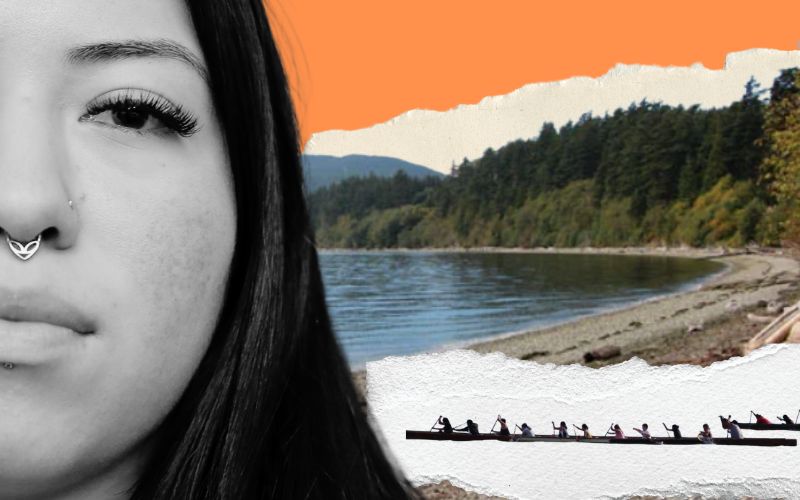
BELLINGHAM, Wash. — On a summer night in 2019 near where the Salish Sea hugs the lands of the Lummi Nation reservation, 17-year-old Merandalee Jones (Lummi) was given a choice by the police: go home with her parents or be admitted to a hospital for mental health treatment.
She had been arguing with her ex-boyfriend after a canoe-pulling race, a traditional Lummi sport she’d grown up doing. The relationship was toxic and abusive. That night, the argument escalated, and when the police arrived, Jones told them that if she was made to go home, she would likely end her life.
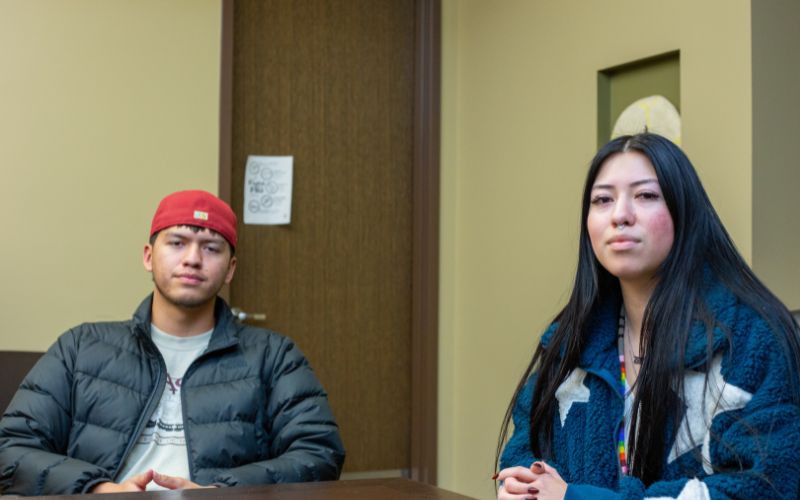
“I was suicidal that night,” Jones told Native News Online. “I chose to go to the hospital instead, but immediately started getting nervous and thinking, ‘Wait, is this really what I want to do?’”
Jones, now 23, sits on the Lummi Nation Tribal Youth Council and advocates for mental health in her community. Her recovery centered on reconnecting with canoe pulling and traditional practices she had abandoned during years of depression.
Native American youth like Jones have the highest risk for suicide of any demographic.
Factors like generational trauma, lack of access to health care, broken treaty promises and cultural stigma underpin the crisis.
Living on a reservation exacerbates suicide risk: Native youth living on reservations have an increased risk for suicidal ideation and suicide attempts.
The Lummi Nation is responding by combining crisis intervention with cultural reconnection — monthly Coastal Jams, canoe pulling, and youth council programs that give young people a voice and a sense of belonging.
In 2024, representatives from the Lummi Nation, including its youth council, traveled to Reykjavik to learn about the Icelandic Prevention Model, developed in the early 1990s to reduce teen substance use. When adapted to rural communities in North America, the model has shown promise in reducing symptoms of depression and suicidal ideation.
A coalition of five Washington tribes is working to adapt the prevention model, marking the first time it's been implemented in tribal communities.
The model is almost a mirror of principles innate to many tribal communities — it focuses on collective rather than individual responsibility and emphasizes creating healthy communities where drugs and alcohol are absent and giving youth a voice.
Cross-Border Drug Crisis Compounds Mental Health Challenges
The Lummi Nation reservation sits on the northernmost tip of the Puget Sound, just 20 miles south of the Canadian border. The location has put the community on the front lines of cross-border fentanyl trafficking and an overdose crisis that has left many Lummi youth in families fractured by death or addiction.
The tribe issued a state of emergency in 2023 after losing four relatives to overdose deaths in just one week. The community had 54 deaths in 2025, nine of which were overdoses, according to Evelyn Jefferson, an enrolled Lummi citizen who leads the tribe’s crisis team.
While substance abuse increases suicide risk, even teens who abstain from drugs are impacted.
Last August, the Lummi Nation held a grief camp for youth to help them cope with loss through community and culture.
Crisis Response Teams Offer Alternative to Emergency Rooms
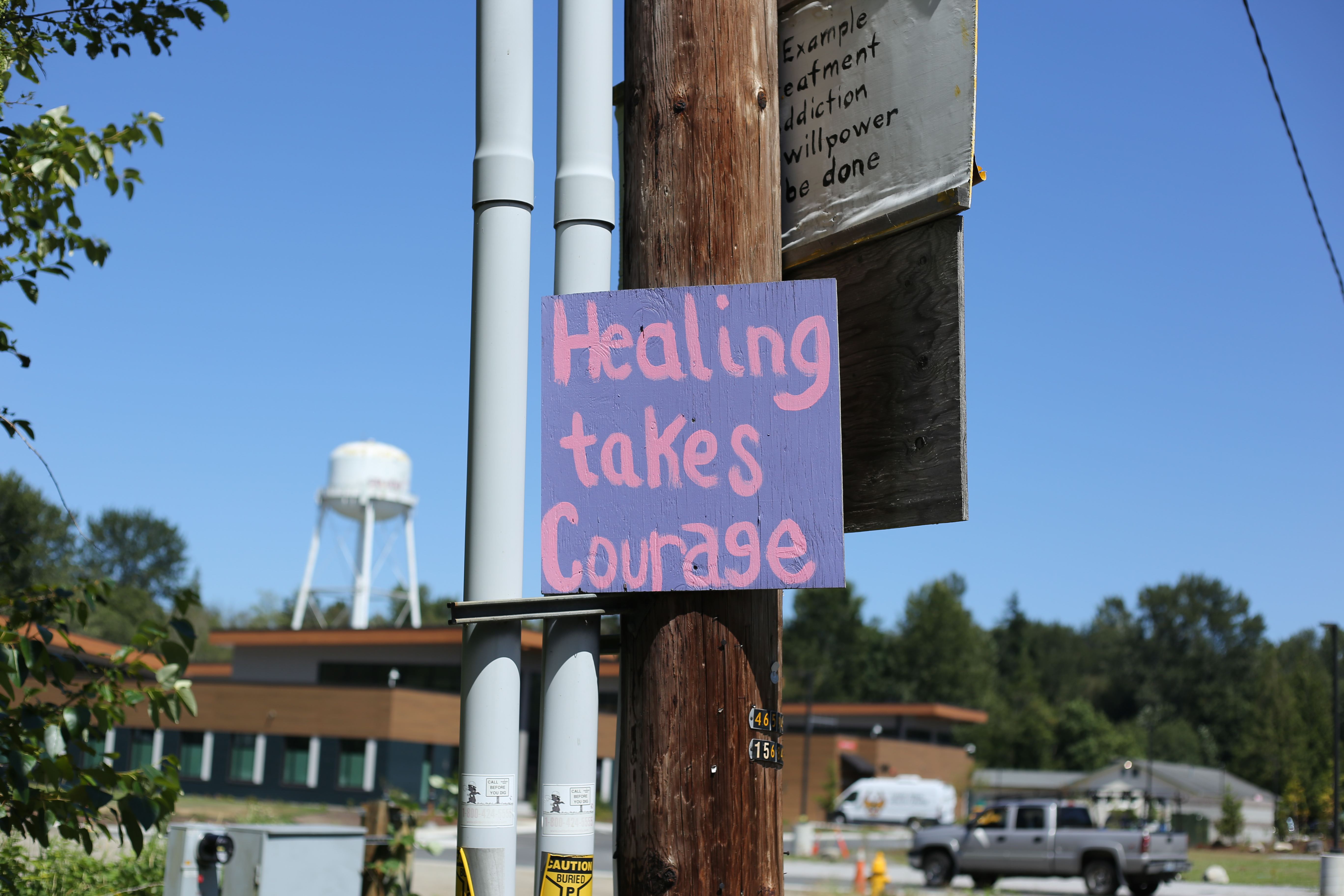
Jefferson’s crisis team responds to and provides support during and after overdoses and mental health emergencies.
“For youth, we have packets with Native drawings on them and let them color while we are talking,” Jefferson said. “We have encouraging words in the Lummi language that we give them to post on their walls. We get them into behavioral health right away. We have counselors who go up to the schools, and we check in every morning and let them know who's struggling.”
Dr. Sybal McLean, the tribe’s designated crisis responder, says that when it comes to working with the community’s youth, it often starts with a call from the school or parents. Depending on their age — 13 is the age of consent for mental health treatment in Washington State — the team will meet with the family to help with crisis planning and connect them to available resources.
Depending on the situation, the youth may be brought to the emergency room, but McLean says the atmosphere in the hospital can aggravate someone already in a delicate mental state.
“Oftentimes, what is said to a crisis responder in person can change by the time they get to the ER,” McLeantold Native News Online. “Sometimes you are sitting there for hours and hours, and finally you just want to get out of there. So they say, ‘No, I don’t have any ideations or plans or intent,’ just to get discharged. But for us, they are still on our radar.”
McLain, 41, grew up in Lummi and says she sees more youth embracing traditional practices than when she was young.
“I see more youth involved in culture than when I was growing up,” McLean said. “That gives me hope. When you do something that connects you to your ancestors or just to your community, it builds resilience. Life is going to have its challenges. It’s how you're able to get through them and cope with them. My generation was limited in coping skills. If you engage in your culture, that is the prevention there.”
Traditional Practices Offer Path to Healing
Jones’ story illustrates that path from crisis to healing through cultural reconnection.
She grew up in a tight-knit family — brothers, sisters, aunties, uncles, and cousins regularly gathering for Sunday dinners and birthday parties. A group chat keeps them connected and in constant communication. Everyone grew up canoe pulling.
For coastal Salish tribes, canoe pulling was once essential to trade, sustenance and travel. Today, it's a sport that connects tribal youth to their ancestors’ cultural practices.
Jones remembers her first time canoe pulling. She was seven years old, and her dad signed her up for a 700 km race in the youth singles category.
“I started to cry,” she laughed as she recalled the memory. “I was so scared.”
With her family cheering her on, Jones fought through the tears. As soon as the race started, her canoe got stuck in a mass of seaweed. A family member walked out into the water and pushed her gently out of the weeds so she could paddle. She went on to win first place.
“[After the race], I just started laughing,” she said. “I don’t know why I thought it was going to be so scary.”
Canoe pulling became central to Jones’ life. She raced up and down the Pacific Northwest and into Canada, becoming part of a community of coastal tribal youth keeping the sport and tradition alive.
“One of my favorite things about it was going to different reservations and meeting friends — we all ended up growing up together through canoe pulling,” she said.
Jones’ mental health decline began in middle school when she met the person who would be her on-again, off-again boyfriend and began a relationship she describes as emotionally abusive. By the time she was in high school, she was drinking, sneaking out and arguing more and more with her parents. She struggled attending a school off the reservation and felt trapped in the relationship.
“It felt like I was screaming into darkness,” she said. “I couldn’t get out of it. It really influenced how I felt about myself. It just snowballed, and I struggled with depression and suicidal tendencies.”
She pushed away her family and friends and rejected the activities she once loved.
“That’s when I started resenting canoe pulling,” she said. “I didn’t want to do it, I didn’t want to be forced to do it. I was losing interest in my things.”
Even though her family was close-knit, depression and substance abuse were rarely talked about, and she struggled to express how she was feeling.
“The generation of my grandparents and parents, the way they were raised, was like tough love. By the time I got to the point of trying to speak about how I felt, there was so much anger and resentment and it just was really a struggle to try and ask for help, also because there were a few times where I did try asking for help, and I just got told, like, ‘Oh, whatever,’” she said. “I don't even think I could see how far gone I was myself at that time.”
When Jones chose the hospital over going home that evening in 2019, she was nervous at first, but ultimately happy with her choice. She received inpatient treatment for two weeks, meeting with a therapist, adjusting her medication to manage depression and anxiety, and participating in group therapy.
“Group therapy was something to get used to,” she said. “I'm not crazy for feeling the way I am. Because we all have our own stuff going on, some worse than others. And it just kind of makes you realize you're not alone.”
When she was discharged, Jones felt as if she were walking out of a thick fog and back into her life. Her relationship with her parents transformed. Although she still struggled with depression and anxiety from time to time, she now had the tools to keep from spiraling.
She began to find herself again. The next summer, she got her GED and started canoe pulling again.
“When I was in the bad part of it, I couldn't connect to my culture,” she said. “After I started doing better and trying to take better care of myself, I could find the love for it and connect with it again. When I am anxious or stressed out, canoe pulling helps, I need it.
“Once you go out on the water, you just kind of relieve all your stress out there and you leave it on the water,” she said.
Youth Council Revives Cultural Programming
Today, Jones is a mental health advocate for youth in her community and sits on the Lummi Nation Tribal Youth Council with her younger brother, James. When they joined in 2023, the council had been defunct for nearly a decade, allowing them to shape it from the ground up, deciding what kind of impact they wanted to have on the community. One of their primary goals is to preserve culture with Lummi youth. The youth council is the driving force behind Coastal Jams, a cultural celebration now held monthly in the tribe's community building, a quarter mile from where pebbled shores where the Lummi reservation meets the Salish sea.
“It's like a place where they can let go and just feel free to show their colors and dance and sing,” James said. “It's empowering, in a way, to express yourself in Coastal Jams. Once I started doing it, I was moved by it and thought we could be doing more than that.”
“The Coastal Jams are a really good outlet for kids to socialize and give healing to themselves,” said Valencia Tupero, an enrolled Lummi citizen who serves as the youth tribal council coordinator.
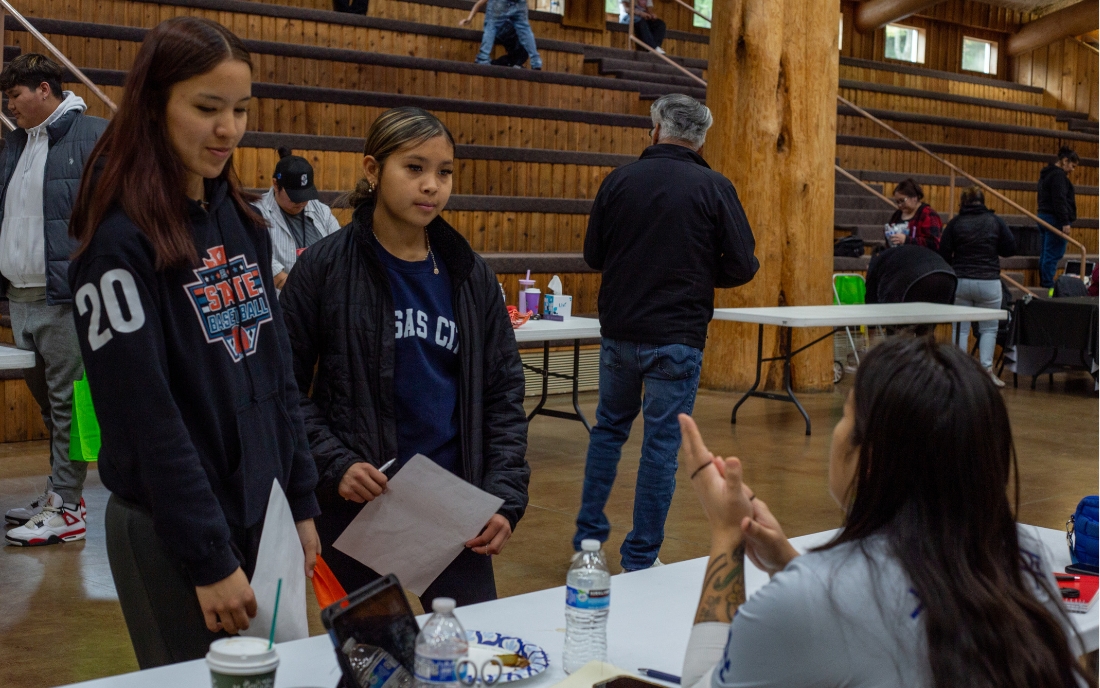 Valencia Tupero talks to students about joining the Lummi Nation Tribal Youth Council. (photo/Elyse Wild)
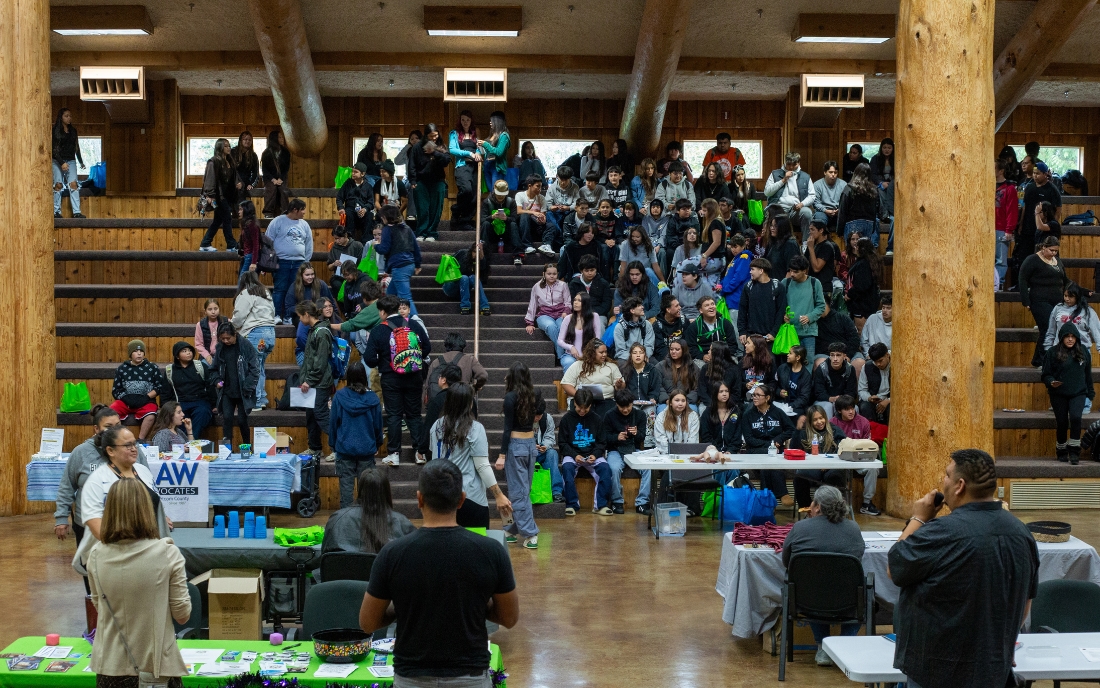 Students gather for a group photo at a Lummi Nation youth fair. (photo/Elyse Wild)
In October, the Lummi Nation high school held a youth resource fair for students in the area. Hundreds of teenagers from Lummi and nearby Ferndale poured into the recreation building and wove among more than two dozen tables filled with brochures and packets from various departments across the tribe. Pop music filled the space. An MC called over the speaker system periodically, reminding the kids to collect signatures from each table to be eligible to enter a raffle for an electric scooter.
Tupero sat at the tribal youth council table with a sign-up sheet for those interested in joining. Tupero coaches girls' volleyball and has three kids in the high school – many students recognized her, their faces lighting up as they approached the table. Tupero told them about the opportunities they would have on the youth council — traveling to conferences, hosting cultural events, and meeting with the tribe’s business council to make their voices heard — and, before signing their papers, had them answer a question from Native News Online, “What do you love about your community?”
Some were shy and spoke softly; others laughed. One by one, they answered:
“My culture.”
“Singing and dancing.”
“Good food.”
“Coastal jams.”
“Being surrounded by water.”
“Togetherness.”
“Canoe pulling.”
“Family.”
“You are never alone.”
More Stories Like This
‘Our Culture is Prevention’This National Cancer Prevention Month, Reduce Your Risk
New Mexico Will Investigate Forced Sterilization of Native American Women
USDA Expands Aid for Lost Farming Revenue Due to 2025 Policies