



- Details
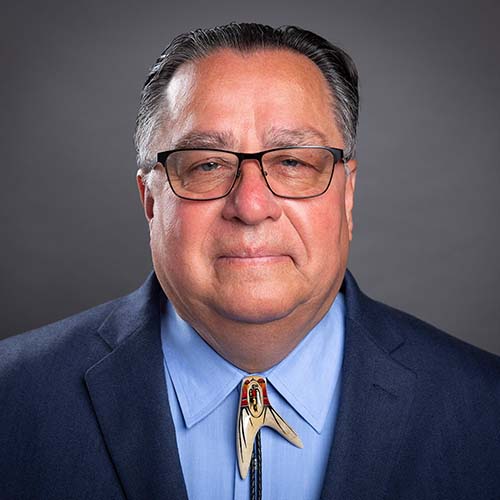
- By Mark Trahant
Guest Opinion. I first met Jesse Jackson in 1978. He was speaking at a youth conference in Washington with Billy Mills. It was electric. He had youth from across Indian Country standing up and shouting, “I am somebody.”
Young? Urban? Reservation? Poor? None of that mattered. Everyone has dignity and can contribute.
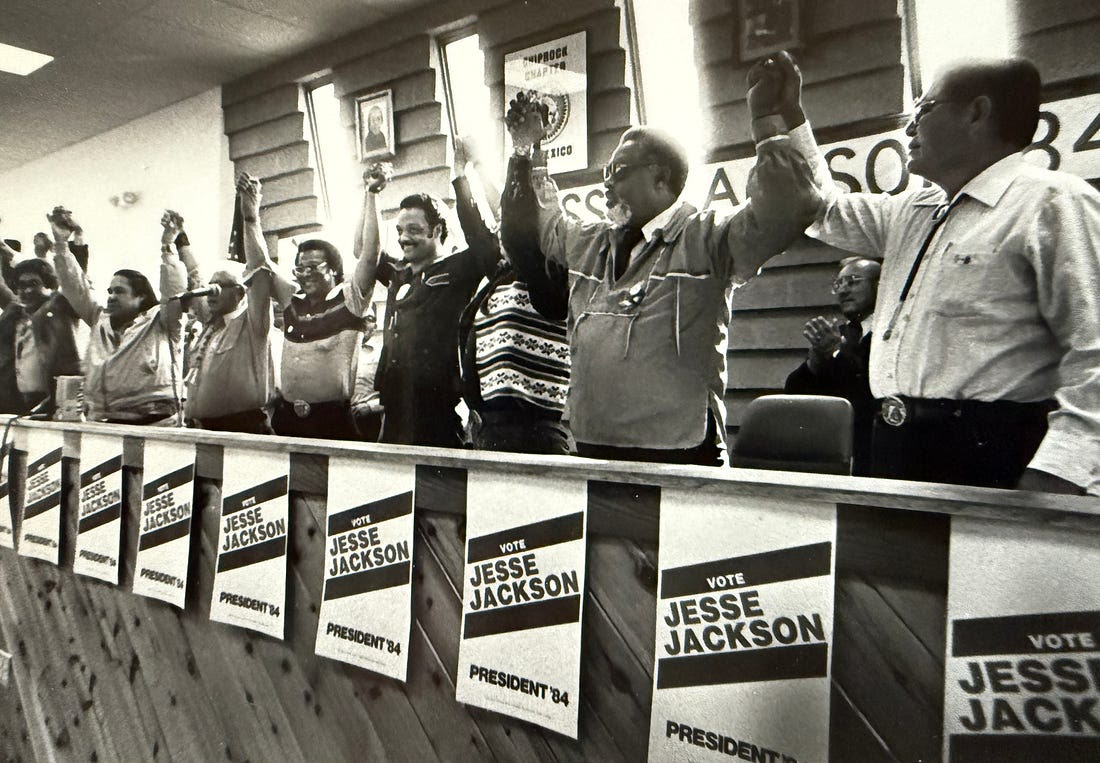
A few years later he was the first presidential candidate to specifically campaign in Indian Country. I was editor of the Navajo Times and in 1984, Jackson spoke before the Navajo Tribal Council in Window Rock, Arizona, and then again at an event in Shiprock, New Mexico.
I was not present (stuck in the newsroom) but the reporters and photographers talked about how powerful those moments were. He had the council responding exactly as he did with teenagers a few years earlier. Standing up. Shouting. “I am somebody!”
Jackson’s presidential run, the Rainbow Coalition, showed that there was an alternative to. the smoke filled rooms and donor-driven presidential campaigns. People Power had potential.
I don’t think I have heard any candidate — including Barack Obama (at least at the beginning) — as informed as Jackson on federal-Indian policy. He knew his stuff from treaties and the Supremacy Clause to the importance of economic development.
The Washington Post: “He amassed more than 3 million votes during the primaries, and he took 384 delegates with him to the Democratic National Convention in San Francisco. From an initial field of eight candidates, he finished third in the primary campaign, behind former vice president Walter F. Mondale, the eventual nominee, and Sen. Gary Hart of Colorado.
“When they write the history of this [primary campaign], the longest chapter will be on Jackson,” Mario Cuomo, the New York governor, said to The Post at the time. 'The man didn’t have two cents. He didn’t have one television or radio ad. And look what he did.'”
Four years later Jackson ran again and more than doubled the number of votes he earned.
The last time I visited with Jesse Jackson was in 2004. I had just asked President George Bush about “sovereignty.” The event was over and I was still on stage and I could see Jackson standing. He motioned to me, come here. As I went over, he looked very serious, and scolded me. “You didn’t understand the president,” he said. Then he launched into a riff about sover-reign-ity. And “you’ve been sovereignized.” Then he threw his head back and laughed.
That same night he was on Democracy Now and and repeated his take on Bush’s sovereignty moment.
Jackson’s legacy is extraordinary. He changed the nature of political campaigns. He inspired countless young people to run for office, all sorts of offices. And he reminded us about our own inherent dignity and personal power.
Mark Trahant is a distiguished Shoshone-Bannock journalist and author with over 50 years of experience chronicling Indigenous news and public policy.
Help us defend tribal sovereignty.
At Native News Online, our mission is rooted in telling the stories that strengthen sovereignty and uplift Indigenous voices — not just at year’s end, but every single day.
Because of your generosity last year, we were able to keep our reporters on the ground in tribal communities, at national gatherings and in the halls of Congress — covering the issues that matter most to Indian Country: sovereignty, culture, education, health and economic opportunity.
That support sustained us through a tough year in 2025. Now, as we look to the year ahead, we need your help right now to ensure warrior journalism remains strong — reporting that defends tribal sovereignty, amplifies Native truth, and holds power accountable.
 The stakes couldn't be higher. Your support keeps Native voices heard, Native stories told and Native sovereignty defended.
Stand with Warrior Journalism today.
Levi Rickert (Potawatomi), Editor & Publisher