- Details
- By Levi Rickert
Opinion. On April 4, 1968, Dr. Martin Luther King, Jr. left his motel room to go to dinner with fellow civil rights leaders and was shot and killed by an assassin’s bullet. Dr. King’s assassination flared civil unrest across the country with riots breaking out in major cities.
Sen. Robert F. Kennedy (D-NY) was seeking the Democratic party’s nomination then. On the night Dr. King was murdered, Kennedy was in Indianapolis. His brother, President John F. Kennedy, had been assassinated four years prior in Dallas.
On the night of Dr. King’s death, Robert Kennedy was scheduled to speak to a crowd in a Black neighborhood. The mayor of Indianapolis advised him not to attend the rally, and the Indianapolis police said they would not protect him because it was too dangerous.
Kennedy ignored the advice to not go and went anyway.
In an era before social media and instantaneous news, many of the Blacks in the crowd had not heard the news of Dr. King’s killing. Several gasps were heard throughout the crowd as Kennedy announced Dr. King’s death.
That night, in his speech Kennedy shared a personal part of himself relating to the loss of his beloved brother.
“For those of you who are Black and are tempted to be filled with hatred and distrust at the injustice of such an act, against all white people, I can only say that I feel in my own heart the same kind of feeling. I had a member of my family killed, but he was killed by a white man. But we have to make an effort in the United States, we have to make an effort to understand, to go beyond these rather difficult times,” Kennedy said.
Kennedy called for unity in a country torn apart by racial tensions.
“What we need in the United States is not division; what we need in the United States is not hatred; what we need in the United States is not violence or lawlessness; but love and wisdom, and compassion toward one another, and a feeling of justice toward those who still suffer within our country, whether they be white or they be Black,” Kennedy said.
On that night, Indianapolis remained calm as cities burned across the country.
Less than two months later, Kennedy was shot in the head minutes after he delivered a victory speech for winning the California primary, as he made his way with his staff through a Los Angeles hotel. He died the next night. The nation grieved.
I thought about the violent deaths of 1968 after watching television coverage of the attempted assassination of former President Donald Trump on Saturday evening.
Commentators appeared to not know or remember the history of this country, which was birthed in violence and has a history laden with attempted — and in a few terrible cases, successful — assassinations. They spoke as though these violent acts were a new phenomenon in the United States.
Many presidents have been the targets of assassination attempts, including Andrew Jackson, Theodore Roosevelt, Franklin Roosevelt, Harry Truman, Gerald R. Ford, and Ronald Reagan.
Sadly, four U.S. presidents were assassinated: President Abraham Lincoln, James Garfield, William McKinley, and John F. Kennedy.
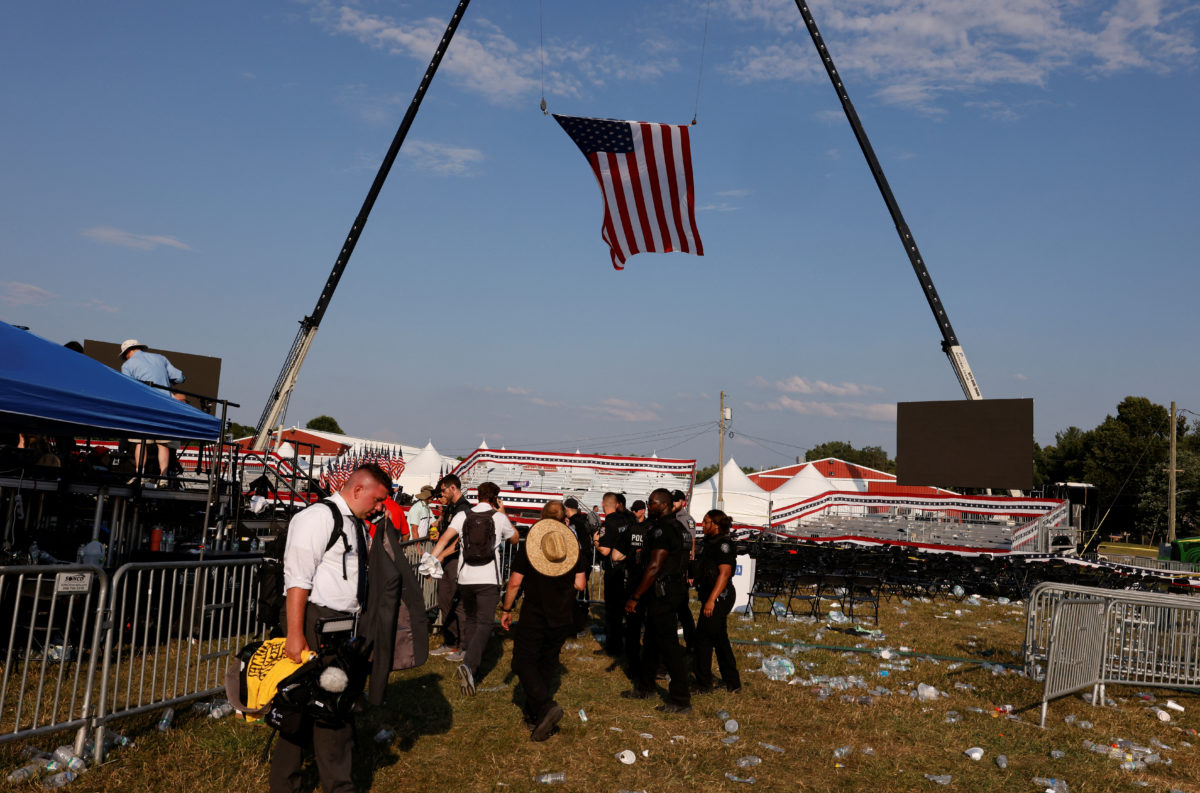
Saturday night's assassination attempt in Butler, Penn. is a continuation of violence in the United States.
The shooter used an assault rifle. Americans should not be shocked; there are heinous crimes committed with assault rifles almost on a daily basis in this country. Assault weapons have been used to kill countless school children. Assault weapons have been used at numerous public events that have left hundreds of innocent people dead.
If you doubt the United States is a violent country, ask a Native American. Our leaders and tens of thousands of our ancestors have been killed by violence, genocide, and wars waged by other American citizens.
After the assassination attempt on former President Trump in Butler, two former Navajo Nation leaders released statements. The two were part of the administration that led the Navajo Nation during the Covid-19 pandemic. One is a Democrat and the other is a Republican.
Former Navajo Nation Jonathan Nez, a Democrat who is currently running for Congress in Arizona’s 2nd congressional district, sent the following text message on Saturday evening:
“Our prayers go out to the former President and all those in attendance today who were impacted by an unacceptable act of political violence today. Regardless of one’s politics, acts like today are not acceptable, period. We wish for a speedy recovery for former President Trump and thank the Secret Service and first responders on the scene for their immediate response. We pray for our Nation.”
Republican Myron Lizer, who served as vice president of the Navajo Nation, sent Native News Online a statement condemning political violence.
“Certainly, political violence needs to end! Public shaming needs to end! Both sides need to learn from this, stop the hate and divide, come together as Americans. As Americans, we can be reconciled to one another.”
Just like the powerful speech Robert Kennedy delivered on the night of Dr. King’s assassination, both Navajo leaders provided words of wisdom.
It is time for the United States to move beyond violence that has plagued this country since its beginnings.
Thayék gde nwéndëmen - We are all related.
More Stories Like This
Disrupting Poverty Through OpportunityMarmot Day (Ground Hog Day) and the (Lack of) Law
Sanctuary Cities Under Siege: When Federal Power Becomes a Weapon Against the People
Denmark's Genocidal Practices in Greenland
Cherokee Nation Stands Against Predatory Lending
Help us defend tribal sovereignty.
At Native News Online, our mission is rooted in telling the stories that strengthen sovereignty and uplift Indigenous voices — not just at year’s end, but every single day.
Because of your generosity last year, we were able to keep our reporters on the ground in tribal communities, at national gatherings and in the halls of Congress — covering the issues that matter most to Indian Country: sovereignty, culture, education, health and economic opportunity.
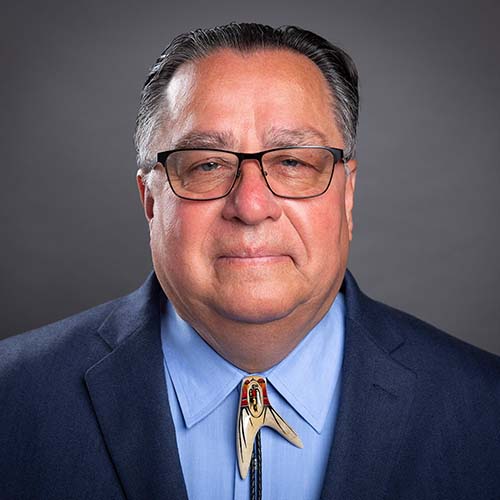
That support sustained us through a tough year in 2025. Now, as we look to the year ahead, we need your help right now to ensure warrior journalism remains strong — reporting that defends tribal sovereignty, amplifies Native truth, and holds power accountable.
 The stakes couldn't be higher. Your support keeps Native voices heard, Native stories told and Native sovereignty defended.
Stand with Warrior Journalism today.
Levi Rickert (Potawatomi), Editor & Publisher