- Details
- By Levi Rickert
Opinion. Soon after the Jan. 24 death of Alex Pretti, a 37-year-old intensive care unit Veterans Affairs nurse who was shot and killed by Border Patrol agents on Saturday, Homeland Security Secretary Kristi L. Noem labeled him a domestic terrorist.
She then blamed state and local authorities in Minnesota for the killing, implying that their policies were the root cause of the Border Patrol agent firing 10 shots at close range, killing Pretti instantly.
Noem characterized the policies as permissive sanctuary city measures, asserting that jurisdictions that shelter criminals and refuse cooperation with federal authorities contribute to unsafe environments.
She urged Minnesota leaders to work more closely with federal law enforcement, specifically by turning over individuals with serious criminal histories to U.S. Immigration and Customs Enforcement instead of releasing them, so they could be detained and deported.
Sanctuary cities — communities that have chosen to prioritize public safety, human dignity, and trust between residents and local government — are now under direct assault by federal immigration authorities. What we are witnessing is not simply an immigration enforcement strategy. It is the deliberate use of federal power as a political weapon.
Sanctuary policies exist for a reason. They are designed to ensure that immigrants—documented or not—can report crimes, seek medical help, send their children to school, and interact with local authorities without fear that doing so will lead to detention or deportation.
As Native Americans know, when trust exists between communities and law enforcement, everyone is safer. When that trust is destroyed, crime goes unreported, victims stay silent, and entire neighborhoods are pushed further into the shadows.
Yet the Trump administration has chosen to make sanctuary cities a political target.
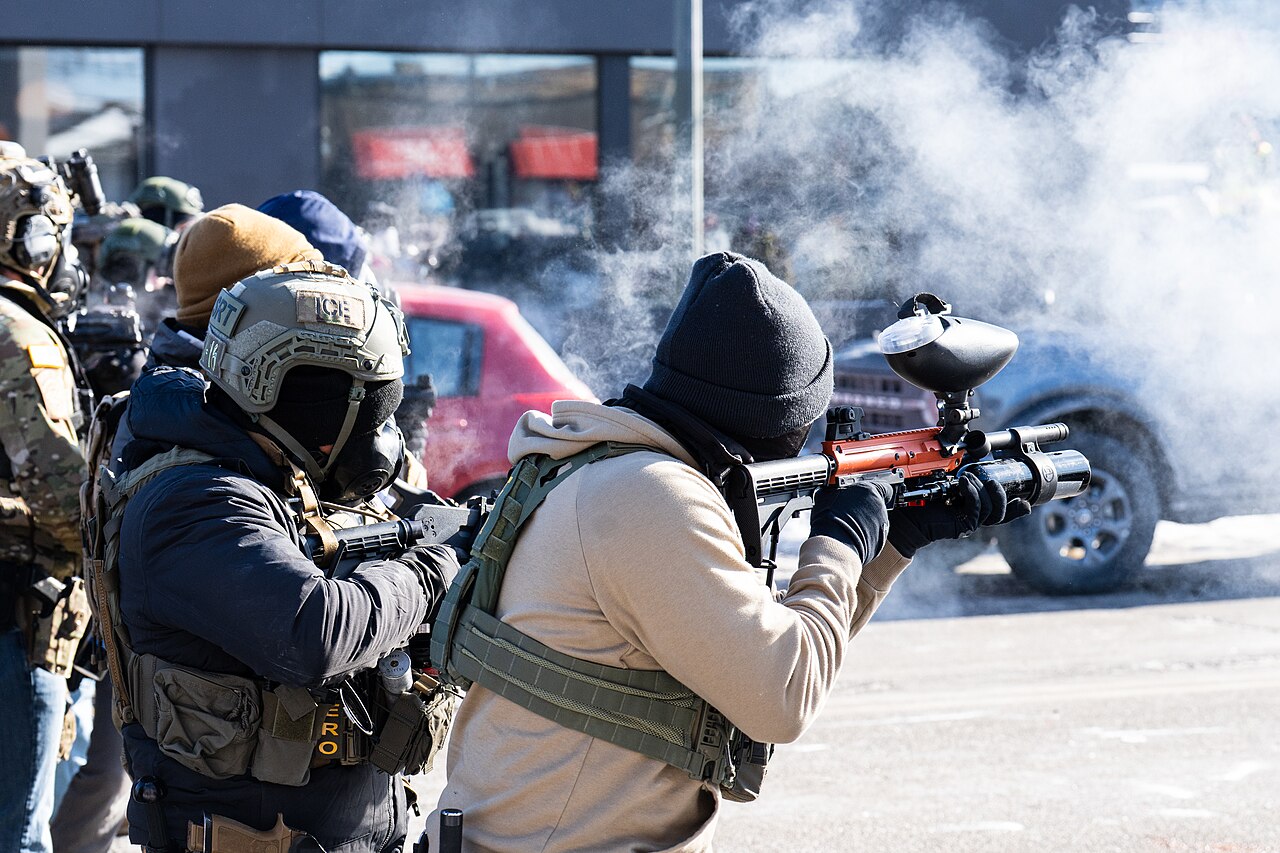
In Minneapolis, St. Paul, New York, Los Angeles, Chicago and other cities deemed sanctuary cities, ICE and other federal agents have intensified their operations, flooding neighborhoods, conducting aggressive raids, and sowing fear among families who have lived, worked, and contributed to these communities for years.
These actions are being carried out despite the clear wishes of local governments and in direct opposition to policies adopted by city councils, mayors, and residents.
This is not about public safety. It is about control. It is about fear.
In recent weeks, we have seen federal lawsuits, funding threats and aggressive enforcement actions aimed squarely at these communities. In Minnesota, some 3,000 heavily armed federal agents have operated in neighborhoods already traumatized by years of over-policing and violence.
Protests erupted after an ICE agent killed 37-year old Minnesotan Renee Good on Jan. 7, 2026. Instead of reflection or restraint, the response from Washington has been more force, more intimidation, more spectacle.
For Native people, none of this feels new.
We know what it looks like when the federal government decides that certain communities are “problems” to be managed rather than human beings to be respected. We know what it looks like when laws are enforced selectively, when jurisdictions are punished for asserting their own values and when military-style tactics are used against civilian populations. Our history is filled with forced removals, broken treaties and federal policies that claimed legality while delivering devastation.
The rhetoric may be different today, but the machinery is familiar.
Sanctuary cities are being framed as lawless. Their leaders are being portrayed as reckless. Immigrants are being dehumanized—again—as threats rather than neighbors. This narrative is not accidental. It is politically useful. It creates an “enemy.” It justifies extraordinary measures. And it distracts from the real issues facing this country: housing insecurity, healthcare access, climate change and economic inequality.
The cruelty is not a side effect. It is the point.
What makes this moment even more dangerous is the normalization of it all.
We are being conditioned to accept armored vehicles in neighborhoods. To accept masked agents conducting operations with little transparency. To accept that some people deserve fewer rights because of where they were born. History teaches us where this road leads, and it never leads anywhere good.
Native communities should be paying close attention. Today it is immigrants. Tomorrow it could be water protectors. Protesters. Journalists. Anyone deemed inconvenient or disobedient.
Solidarity is not a slogan. It is a necessity.
The same systems that once justified the removal of our ancestors from their homelands are now being used to justify the removal of our neighbors from their homes. The same language of “law and order” that was used to break treaties and criminalize Native existence is being used again.
Sanctuary cities are not the problem. They are one of the few remaining moral counterweights to a political climate that has grown increasingly comfortable with cruelty.
A nation that governs through fear is not strong. It is failing. A government that treats human beings as disposable is not enforcing justice. It is abandoning it.
Thayék gde nwéndëmen - We are all related.
More Stories Like This
Denmark's Genocidal Practices in GreenlandCherokee Nation Stands Against Predatory Lending
Tribes Seek Better Data, Real Accountability in MMIP Cases Ahead of Tribal Consultation
What Would Dr. King Say About ICE?
Help us defend tribal sovereignty.
At Native News Online, our mission is rooted in telling the stories that strengthen sovereignty and uplift Indigenous voices — not just at year’s end, but every single day.
Because of your generosity last year, we were able to keep our reporters on the ground in tribal communities, at national gatherings and in the halls of Congress — covering the issues that matter most to Indian Country: sovereignty, culture, education, health and economic opportunity.
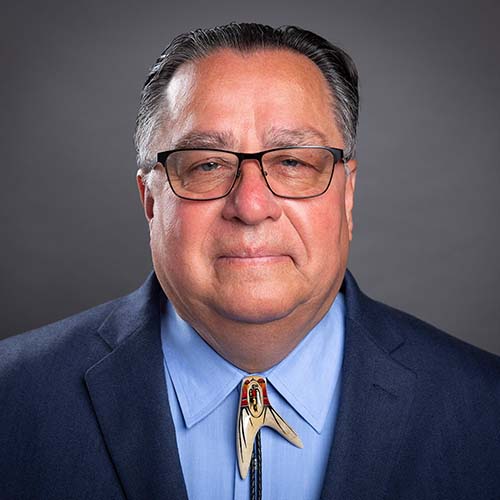
That support sustained us through a tough year in 2025. Now, as we look to the year ahead, we need your help right now to ensure warrior journalism remains strong — reporting that defends tribal sovereignty, amplifies Native truth, and holds power accountable.
 The stakes couldn't be higher. Your support keeps Native voices heard, Native stories told and Native sovereignty defended.
Stand with Warrior Journalism today.
Levi Rickert (Potawatomi), Editor & Publisher