



- Details
- By Aaron Payment
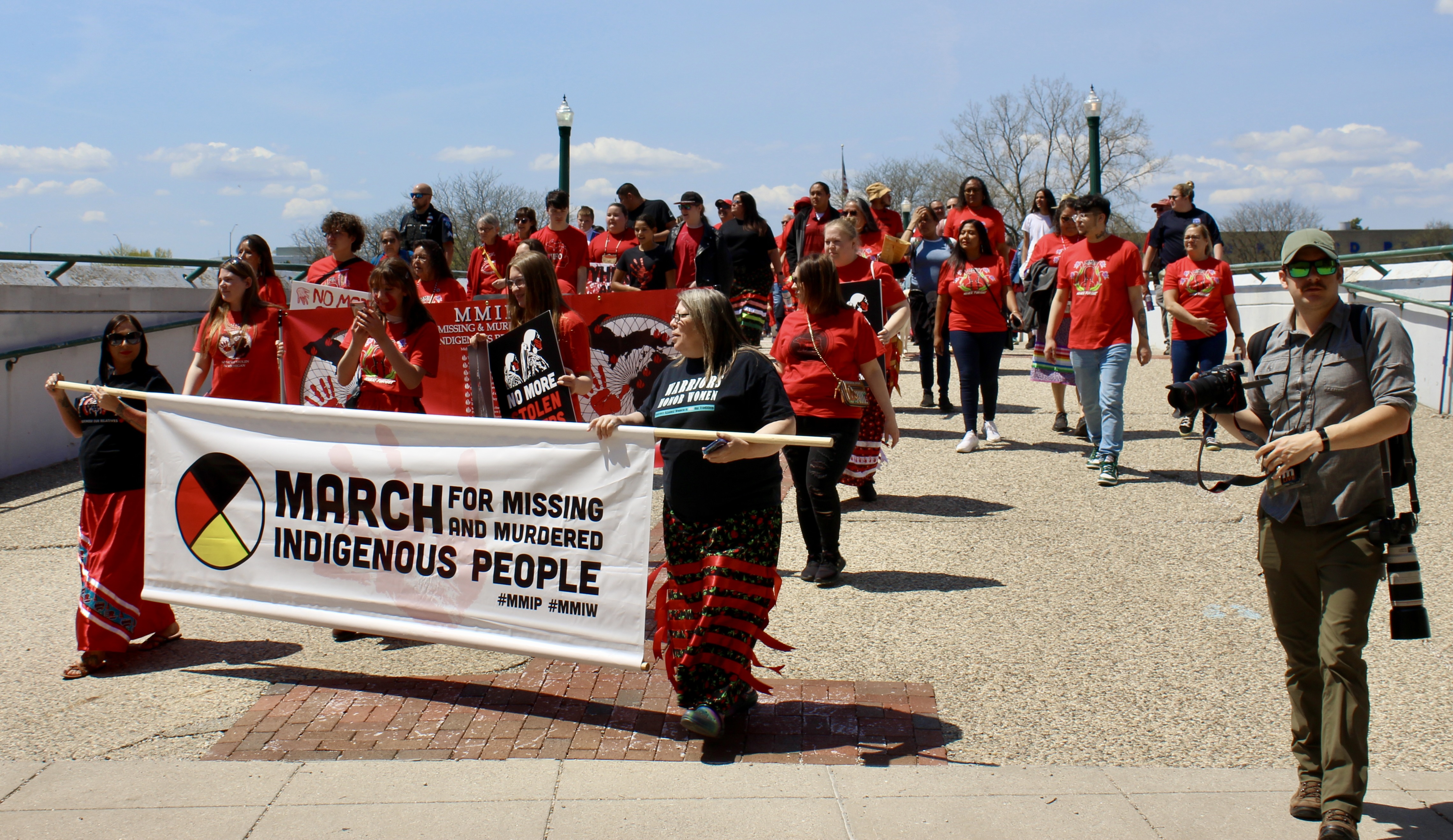
Guest Opinion. The objectification of Native people as relics of the past and as “Invisible Americans” helps explain why reporting on missing Native persons is less reliable and why there is an expected undercount due to data collection requirements. I have long advocated for better data collection regarding Murdered and Missing Indigenous Persons (MMIP) and wish to highlight key information in preparation for the Office of Violence Against Women (OVW) Tribal Consultation, rescheduled for Jan. 21–23, 2026, on the Shakopee reservation in Prior Lake, Minnesota. This article is intended to serve as a primer for preparing oral and written Tribal testimony.
Too often, when our people go missing, it does not feel like their cases are treated with the same urgency as when others go missing. The complex maze of tribal jurisdiction, issues with American Indian and Alaska Native self-identification, and limited primary data collection make accurate and reliable accountability difficult. While the MMIP movement has helped increase understanding and the continued reauthorization of the Violence Against Women Act (VAWA) has strengthened protections, Native people continue to experience the worst outcomes. This underscores the urgent need for reform and improved data collection.
What we do know is that murder is the third leading cause of death among Native women. On some reservations, the rate of violence is ten times the national average. According to the National Congress of American Indians (NCAI), the Bureau of Indian Affairs reports that 4,200 MMIP cases remain unresolved. A 2023 Congressional Research Service report revealed that only 25% of missing Native persons had known tribal affiliations. While 19% went missing from a reservation, the vast majority went missing off-reservation and in urban areas, where federal treaty and trust funding obligations for law enforcement are essentially nonexistent. The upcoming OVW Consultation is an opportunity for Tribal Nations to address violence against Native people and to secure an accurate accounting of the MMIP crisis.
Tribal Consultation focus areas include:
-
Administering tribal funds and programs
-
Enhancing the safety of Indian women from domestic violence, dating violence, sexual assault, homicide, stalking, and sex trafficking
-
Strengthening the federal response to these crimes
-
Improving access to local, regional, state, and federal crime information databases and criminal justice information systems
An overarching question is whether a new authorizing statute should call for a broader program of research or a self-determined Tribal Census rather than a single national study; how existing victimization data might be used; and what other strategies could improve understanding of prevalence data on VAWA crimes. In 2005, VAWA mandated comprehensive data collection on the MMIP crisis.
The U.S. Department of Justice has acknowledged deficiencies in the 2016 “baseline study,” including challenges related to tribal jurisdictions on, off, and near reservations and in urban areas; inconsistencies with U.S. Census data; Institutional Review Board approval barriers; logistical constraints with research grants and reporting; and insufficient funding. In 2023, continuation of the baseline study was deemed not feasible due to budget and sampling challenges. During consultation, Tribal Nations will have the opportunity to request greater accountability in data collection.
NCAI and partner organizations’ 2025 recommendations include increasing resources and collaboration among law enforcement agencies; launching a national awareness campaign on MMIP with equitable media coverage; and developing targeted training programs for federal, state, and tribal law enforcement to address systemic barriers that contribute to disparities in response.
Currently, I serve as the NCMEC Tribal Nations Fellow. I will make the luncheon keynote on Thursday, Jan. 22, during the OVW consultation. I will share policy recommendations including:
-
A self-determination Tribal Census approach
-
State-federal-tribal agreements on Tribal citizen data collection
-
Reconciliation and better use of existing data
-
Adding Tribal citizenship and descendancy to identification and reporting
-
Establishing a central MMIP repository with automatic Tribal notifications
-
Training data collectors on American Indian and Alaska Native identification
-
Funding for technical assistance for data collection
-
Funding for MMIP Tribal Community Response Plan technical assistance and implementation
On Friday, Jan. 16, Native News Online’s Native Bidaské posted a podcast regarding MMIP data collection improvements needed.
For more information about the 20th Annual Government-to-Government Violence Against Women Tribal Consultation, rescheduled to take place Jan. 21–23, 2026, at the Mystic Lake Center in Prior Lake, Minnesota, please visit this link: https://www.ovwconsultation.org/
If you have questions or want more information regarding the NCMEC Tribal Nations’ Fellows program, please contact Dr. Aaron A. Payment at [email protected] or [email protected], or by calling 906-440-8946.
Dr. Payment has served in elective tribal office for over 23 years including as Chairperson/CEO and Tribal Council; numerous National Tribal Advisories including the National Advisory Council on Indian Education, ESSA Negotiated Rule Making, HHS Secretary Tribal Advisory, and Tribal Interior Budget Council, has served as 1 st VP (elected twice), Secretary (elected twice) and as Midwest Regional VP of the National Congress of American Indians. Dr. Payment holds a BS, MPA, MEd, EdS, EdD all after having earned his GED. Email:
More Stories Like This
What Would Dr. King Say About ICE?In Unity and Commitment
Protecting Our People through Human Trafficking Awareness
It is Time for Animal Behavior to Become Its Own Discipline
Help us defend tribal sovereignty.
At Native News Online, our mission is rooted in telling the stories that strengthen sovereignty and uplift Indigenous voices — not just at year’s end, but every single day.
Because of your generosity last year, we were able to keep our reporters on the ground in tribal communities, at national gatherings and in the halls of Congress — covering the issues that matter most to Indian Country: sovereignty, culture, education, health and economic opportunity.
That support sustained us through a tough year in 2025. Now, as we look to the year ahead, we need your help right now to ensure warrior journalism remains strong — reporting that defends tribal sovereignty, amplifies Native truth, and holds power accountable.
 The stakes couldn't be higher. Your support keeps Native voices heard, Native stories told and Native sovereignty defended.
Stand with Warrior Journalism today.
Levi Rickert (Potawatomi), Editor & Publisher