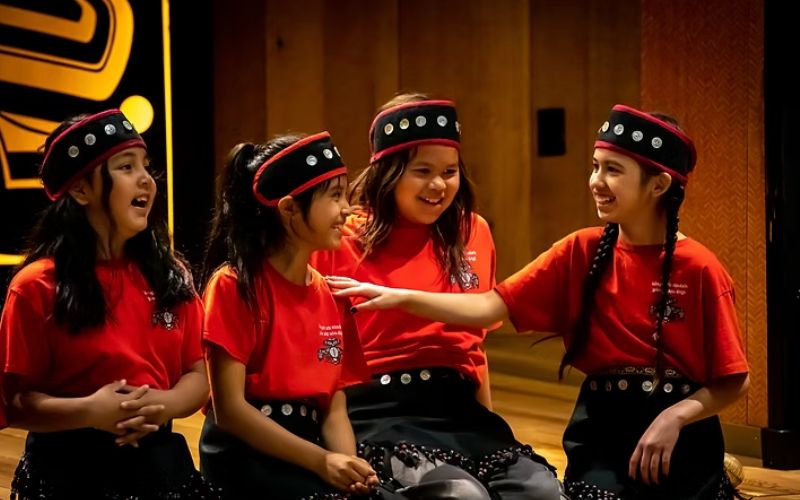
Tlingit language students now have greater access to lesson plans designed for at-home learning through a digital language course.
“This is Tlingit Duolingo, but better,” Sealaska Heritage Institute language director Jamie Shanley told Native News Online. “It can rate your language and tell you if you passed or failed, and there are little games; it's pretty interactive.”
The course is designed to reach families and staff of the Tlingit Culture, Language, and Literacy program in the Juneau School District. The language is spoken by the Tlingit people living primarily in Southeast Alaska. When the community asked for more language-learning resources, Sealaska Heritage Institute responded by implementing its existing programs on the digital platform 7,000 Languages, which hosts the lessons for free.
Anyone can take Tlingit language lessons, whether they live in the Alaska community or not. So far, 400 people are signed up for the courses, Shanley said. The expansion will have an immediate impact on current Tlingit language learners and participants in cultural programs.
“As their students are learning the language in school, parents and grandparents and family members wanted to be able to match, or meet, what their students are coming home learning,” Shanley said. “So we wanted an option for busy parents, working families to be able to learn the language on their own.”
The Beginner Tlingit Language Asynchronous Course is the foundation for the new intermediate lesson plans in the software.
Anna Neelaatughaa Clock (Koyukon, Eyak) designed that course with the goal to expose students to “a small amount of information in various and repetitive activities helps them learn most efficiently. Each lesson builds on the previous one.”
Tlingit language beginner courses have three units, each with 9 lessons. The goal is to teach students how to introduce themselves, ask someone where they are from and share small details about what meals they ate.
Student success rates are yet to be standardized, meaning there is no language proficiency test for Tlingit learners at this time. That is in the longer plan to expand language courses, Shanley said. In the meantime, real impact is happening with teachers who now have additional language resources to use in everyday classroom instruction.
Shanley said the foundation of the Tlingit Culture, Language and Literacy program has increased language instruction since the group received a Department of Education Native American Language Grant three years ago. Teachers are using Tlingit learned in language courses and incorporating it into other classroom instruction, she said.
“Instead of teaching a 30-minute class about the Tlingit language where you might be learning some vocabulary and terms, they're taking their curriculum, and they might do a whole science unit in the language,” Shanley said.
It’s also opening up longer conversations among students, families, and teachers about the best outcomes for the community to speak the Tlingit language.
“The feedback has been good. We want to boost how many parents of the program are utilizing it,” Shanley said. “Our course developer is also a teacher and she's setting up times with parents and families to have check-ins like ‘tell me, questions you have, let's talk through this.’ Just to kind of give parents some more accountability if they want that option.”
At Native News Online, our mission is rooted in telling the stories that strengthen sovereignty and uplift Indigenous voices — not just at year’s end, but every single day.
Because of your generosity last year, we were able to keep our reporters on the ground in tribal communities, at national gatherings and in the halls of Congress — covering the issues that matter most to Indian Country: sovereignty, culture, education, health and economic opportunity.
That support sustained us through a tough year in 2025. Now, as we look to the year ahead, we need your help right now to ensure warrior journalism remains strong — reporting that defends tribal sovereignty, amplifies Native truth, and holds power accountable.
The stakes couldn't be higher. Your support keeps Native voices heard, Native stories told and Native sovereignty defended.
Stand with Warrior Journalism today.
Levi Rickert (Potawatomi), Editor & Publisher
About The Author
Author: Shaun GriswoldEmail:This email address is being protected from spambots. You need JavaScript enabled to view it.
Shaun Griswold, contributing writer, is a Native American journalist based Albuquerque. He is a citizen of the Pueblo of Laguna, and his ancestry also includes Jemez and Zuni on the maternal side of his family. He has more than a decade of print and broadcast news experience.



 The stakes couldn't be higher. Your support keeps Native voices heard, Native stories told and Native sovereignty defended.