




- Details
- By Chuck Hoskin Jr
Guest Opinion. In a health emergency, a few minutes can be the difference between life and death. Cherokee families deserve emergency responders who can always bring rapid care in a crisis. That’s why Deputy Chief Bryan Warner and I have proposed more than $54 million in funding to enhance Cherokee Nation’s Emergency Medical Services and upgrade our fleet of ambulances.
The increased funding will address some of our most pressing issues, including lowering rural response times, reducing staff strains, and improving training for our community partners within the Cherokee Nation Reservation. The funding for these initiatives will come from Cherokee Nation’s COVID-19 Respond, Recover and Rebuild plan, as well as additional dollars generated by the tribe's health system.
Cherokee Nation’s EMS provides a high level of care and responsiveness across a large area of our reservation, but we have seen in the past two years that we need more. We’ve seen the volume of EMS calls increase, and the COVID pandemic has placed a heavy burden on our emergency medical services. We are working closely with Cherokee Nation Health Services and our current EMS staff for input on the department’s expansion.
Want more Native News? Get the free daily newsletter today.
A new ambulance facility for Cherokee Nation EMS and an expanded fleet of ambulances will improve speed and effectiveness. Cherokee Nation’s current ambulances were obtained through the U.S. General Services Administration, a federal agency that provides economical access to standard vehicle types. These GSA ambulances have served us well for many years. However, as our fleet ages, getting GSA ambulances quickly serviced and back in operation has been a challenge. The “one size fits all” GSA vehicles also lack some of the features and upgrades we might want for Cherokee Nation. That’s why going forward, we plan to have a mix of GSA and tribal ambulances.

Another need for our emergency response is a joint training facility that serves EMS, area fire departments, and all Cherokee Nation Health Services training needs. Our EMS staff already provides critical training, including cardiac life support, pediatric advanced life support and basic life support classes. We will also improve staff living and working quarters, which will be a boon for recruitment and retention. The upgrades in equipment will ensure state-of-the-art emergency medical care for Cherokee families.
Immediate help is needed to fill a gap in ambulance service for Adair County, which has one of the highest per capita Cherokee population anywhere. The County must create a new ambulance service due to an expiring third-party contract. Cherokee Nation will provide up to $300,000 in operating expenses through May, giving time for Adair County EMS to become financially stable. Also, we are donating two surplus ambulances to Adair County EMS and leasing space to them at a nominal rate. These aspects of our proposal, born of collaboration with local Council members Josh Sam and Shawn Crittenden and Adair County EMS representatives, are critical to keeping lifesaving services available in Adair County.
Going forward, Cherokee Nation’s EMS department will assess multiple partner programs to determine which services need tribal support. We are also exploring the possibility of creating a new branch focused on transferring patients between health facilities. This legislation has the potential to impact everyone living in northeast Oklahoma.
I am grateful for the life-saving work of our EMS crews in our communities, and I am proud that Cherokee Nation can provide the state-of-the-art resources to do even more.
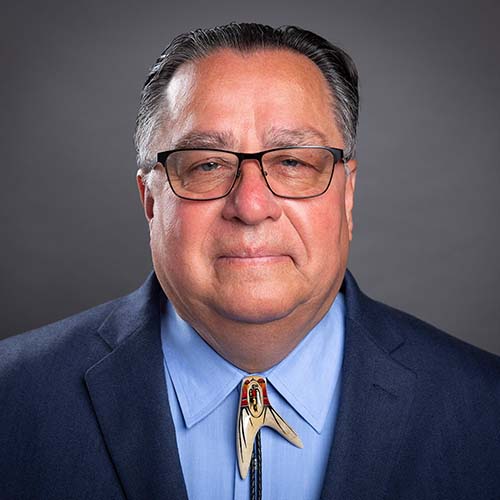
Chuck Hoskin, Jr. is the principal chief of the Cherokee Nation.
More Stories Like This
Disrupting Poverty Through OpportunitySanctuary Cities Under Siege: When Federal Power Becomes a Weapon Against the People
Denmark's Genocidal Practices in Greenland
Cherokee Nation Stands Against Predatory Lending
Tribes Seek Better Data, Real Accountability in MMIP Cases Ahead of Tribal Consultation
Help us defend tribal sovereignty.
At Native News Online, our mission is rooted in telling the stories that strengthen sovereignty and uplift Indigenous voices — not just at year’s end, but every single day.
Because of your generosity last year, we were able to keep our reporters on the ground in tribal communities, at national gatherings and in the halls of Congress — covering the issues that matter most to Indian Country: sovereignty, culture, education, health and economic opportunity.
That support sustained us through a tough year in 2025. Now, as we look to the year ahead, we need your help right now to ensure warrior journalism remains strong — reporting that defends tribal sovereignty, amplifies Native truth, and holds power accountable.
 The stakes couldn't be higher. Your support keeps Native voices heard, Native stories told and Native sovereignty defended.
Stand with Warrior Journalism today.
Levi Rickert (Potawatomi), Editor & Publisher