
fbpx
facebook app symbol  twitter  linkedin  instagram 1

 Brian Adams for Native News Online

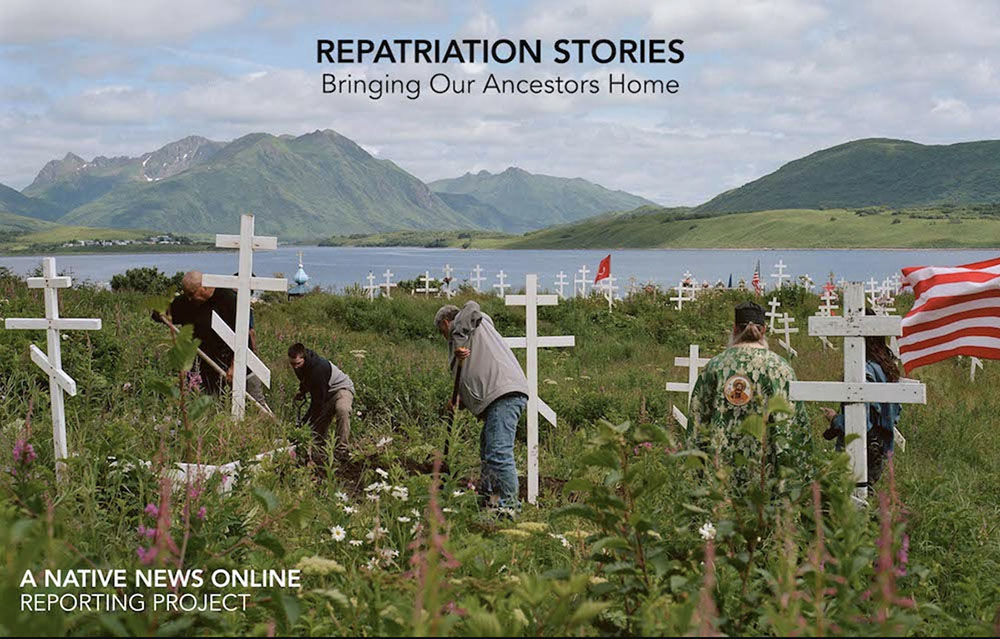
Since 1990, federal law has required the repatriation of certain Native American human remains and cultural artifacts. Enacted by Congress, the Native American Graves Protection and Repatriation Act — known as NAGPRA — recognized that the human remains of Native ancestors “must at all times be treated with dignity and respect” — and that those remains and cultural artifacts belong to their lineal descendants, Indian Tribes and Native Hawaiian organizations.

While Native News has covered repatriation stories throughout its 12-year history, beginning in 2021, we made a commitment to regular, ongoing reporting of the repatriation and the issues surrounding it. The following pages compile our coverage, including stories and photography. If you’d like to ask us questions or share a story of how repatriation has affected your community, contact [email protected]. If you’d like to support our continuing coverage of repatriation, please consider a one-time or recurring donation.
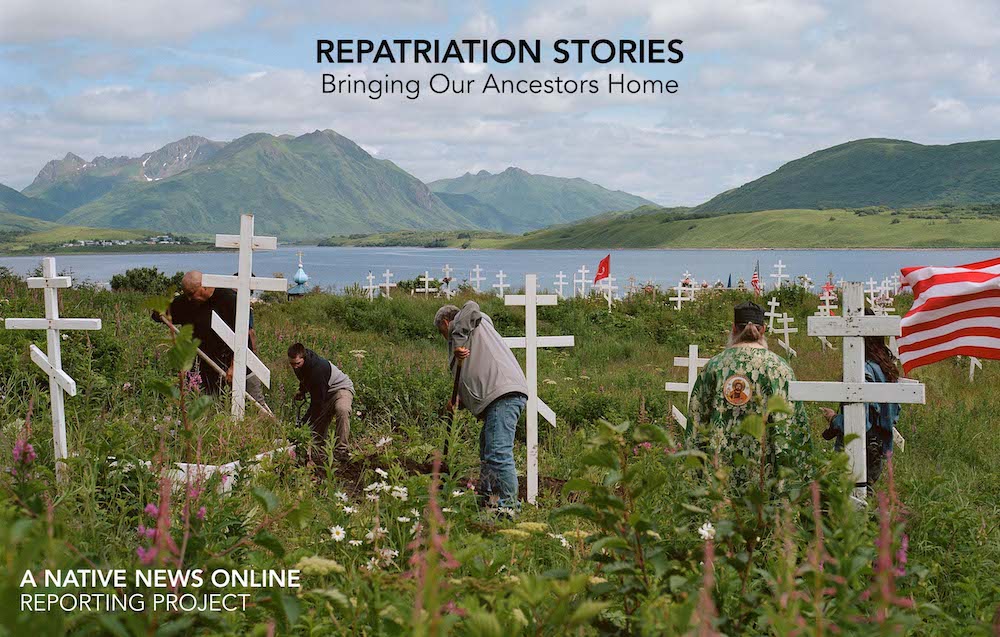
Photo: Brian Adams for Native News Online
  • Fund the Repatriation of Natives Buried on a Golf Course Now

    Type: Default
    Ad Visibility: Show Article Ads
    Hide Blurb: No
    Hide More Stories Like This: False
    Reader Survey Question: No Question
    Video Poster: https://nativenewsonline.net/images/10_Years_Logo.png

    Opinion.Tucked between the fourth and the fifth holes on the fairway of the Hiawatha Golf Course in Canton, South Dakota, lies a fenced-in Indian cemetery. There are no markers for the 126 known graves found there. The course’s golfers would probably never suspect why the area is fenced off unless they entered it and read a placard facing opposite the fairway listing the names of – not all but some – of 121 Native people buried there. The known names. 

  • ‘A Place of Padlocks and Chamber Pots’: Repatriation Discussions for the 126 Natives Buried at the Only Government-Run Native Insane Asylum

    Type: Default
    Ad Visibility: Show Article Ads
    Hide Blurb: No
    Hide More Stories Like This: False
    Reader Survey Question: No Question
    Video Poster: https://nativenewsonline.net/images/10_Years_Logo.png

    After a summer of returning nine ancestors who died while attending boarding school in Carlisle, Pennsylvania, the Rosebud Sioux Tribe is zeroing in on another location for return: The cemetery of a former government-run insane asylum in Canton, a town of about 3,000 people in southeast South Dakota.

  • University of Alabama Keeps Indigenous Remains in Paper Bags; Federal NAGPRA Committee Says Remains are Ancestors of Tribes & Can Be Returned

    Type: Default
    Ad Visibility: Show Article Ads
    Hide Blurb: No
    Hide More Stories Like This: False
    Reader Survey Question: No Question
    Video Poster: https://nativenewsonline.net/images/10_Years_Logo.png

    The University of Alabama Museums have skeletons in their closets—literally.

  • The Association on American Indian Affairs is declaring #EVERYTHINGBACK during the 7th Annual Repatriation Conference

    Type: Default
    Ad Visibility: Show Article Ads
    Hide Blurb: No
    Hide More Stories Like This: False
    Reader Survey Question: No Question
    Video Poster: https://nativenewsonline.net/images/10_Years_Logo.png

    Over the last 100 years, federal Indian law and policy has come a long way from U.S. funded policies meant to destroy the structures of autonomy, governance, and security of Native Nations to forcibly assimilate Native peoples into its melting pot. These federal actions have been declared by U.S. leaders as acts of genocide, meant to stamp out and eradicate Native Nations altogether. 

  • Why Don’t Indigenous Children Buried at Carlisle and Other Former Indian Boarding Schools Qualify for Repatriation Under NAGPRA?

    Type: Default
    Ad Visibility: Hide Article Ads
    Hide Blurb: No
    Hide More Stories Like This: False
    Reader Survey Question: No Question
    Video Poster: https://nativenewsonline.net/images/10_Years_Logo.png

    Under legislation passed by Congress in 1990 — the Native American Graves Protection and Repatriation Act (NAGPRA) — certain cultural artifacts, funerary objects, and human remains held by museums and federal agencies are subject to a process of federal review and return to their respective tribal nations.

  • Interior Department to Consult With Community Leaders on Major Changes to NAGPRA

    Type: Default
    Ad Visibility: Show Article Ads
    Hide Blurb: No
    Hide More Stories Like This: False
    Reader Survey Question: No Question
    Video Poster: https://nativenewsonline.net/images/10_Years_Logo.png

    WASHINGTON — The Department of the Interior announced on July 15 that it will begin consultations with tribal and Native Hawaiian community leaders about an overhaul of regulations that implement the Native American Graves Protection and Repatriation Act (NAGPRA). The draft regulations will reshape the processes by which federal agencies and museums return Native American human remains and cultural objects to descendents and Native communities. 

  • Home From Carlisle: Rosebud Sioux Youth Council Reclaims Their Ancestors

    Type: Default
    Ad Visibility: Hide Article Ads
    Hide Blurb: No
    Hide More Stories Like This: False
    Reader Survey Question: Sovereignty
    Video Poster: https://nativenewsonline.net/images/10_Years_Logo.png

    CARLISLE, Pa. — With the cedar boxes of nine of her ancestors’ remains behind her, 21-year-old Asia Black Bull addressed a crowd of roughly 60 visitors at the Carlisle Barracks’ transfer ceremony Wednesday morning.

  • Q&A: Shannon Keller O’Loughlin on the border wall, religious freedom, NAGPRA and sovereignty

    Type: Headshot
    Ad Visibility: Show Article Ads
    Hide Blurb: No
    Hide More Stories Like This: False
    Reader Survey Question: No Question
    Video Poster: https://nativenewsonline.net/images/10_Years_Logo.png

    The Supreme Court announced last Monday that it would take up a case involving the U.S.-Mexico border wall.  There’s been no shortage of lawsuits filed against the Trump administration to try stopping construction of the wall. Most of the lawsuits are focused on money, specifically the administration’s use of Pentagon funding to build the wall along the country’s southern border.  

  • Non-Profit Spearheads Land Repatriation Through Community Revitalization and Forest Stewardship

    Washoe crew
    Type: Default
    Ad Visibility: Show Article Ads
    Hide Blurb: No
    Hide More Stories Like This: False
    Reader Survey Question: No Question
    Video Poster: https://nativenewsonline.net/images/10_Years_Logo.png

    WEST POINT, Calif. — While restoring devastated rural economies and ecological disasters on ancestral Indigenous lands through stewardship, California tribes could have a shot at federal land repatriation.

  • New Legislation Could Bring Repatriation to Non-Federally Recognized Tribes in California

    James Ramos
    Type: Default
    Ad Visibility: Show Article Ads
    Hide Blurb: No
    Hide More Stories Like This: False
    Reader Survey Question: No Question
    Video Poster: https://nativenewsonline.net/images/10_Years_Logo.png

    SACRAMENTO, Calif. — With Gov. Gavin Newsom’s signature, federally and non-federally recognized California tribes would be one step closer to recovering ancestor remains and artifacts from state-funded institutions.

  • Association on American Indian Affairs to Highlight NAGPRA’s 30th Anniversary at Conference

    Type: Default
    Ad Visibility: Show Article Ads
    Hide Blurb: No
    Hide More Stories Like This: False
    Reader Survey Question: No Question
    Video Poster: https://nativenewsonline.net/images/10_Years_Logo.png

    WASHINGTON — Thirty years ago this November, the Native American Graves Protection and Repatriation Act (NAGPRA) was passed by Congress. NAGPRA provides a legal process of repatriation for tribal ancestors’ remains, burial belongings, sacred objects and cultural patrimony that have been looted, stolen and taken in unconscionable ways from tribal nations.

  • New Repatriation Bill to Require State Agencies to Consult with Indian Tribes

    Type: Default
    Ad Visibility: Show Article Ads
    Hide Blurb: No
    Hide More Stories Like This: False
    Reader Survey Question: No Question
    Video Poster: https://nativenewsonline.net/images/10_Years_Logo.png

    SACRAMENTO, Calif. — A new bill in California, titled AB-275 Native American cultural preservation (2019-2020), would enable tribes to reclaim human remains and funerary objects, and could potentially serve as a gateway legislation for tribes and tribal members to manage their own ancestors’ legacies. 

  • Northern Arapaho Tribe to celebrate repatriation of legendary chief’s headdress

    Type: Default
    Ad Visibility: Show Article Ads
    Hide Blurb: No
    Hide More Stories Like This: False
    Reader Survey Question: No Question
    Video Poster: https://nativenewsonline.net/images/10_Years_Logo.png

    RIVERTON, Wyo. — The Northern Arapaho Tribe will hold a celebration on Saturday, February 1st at the Great Plains Hall at Arapahoe to welcome home the headdress of Chief Black Coal,according to the Tribe’s Facebook page.  

  • Saginaw Chippewa Tribe to Repatriate Remains from University of Michigan & Wayne State

    Ad Visibility: Show Article Ads
    Hide Blurb: No
    Hide More Stories Like This: False
    Reader Survey Question: No Question
    Video Poster: https://nativenewsonline.net/images/10_Years_Logo.png
      [caption id="attachment_1317" align="aligncenter" width="560"]Tribal citizens carry remains at last year's ceremony Tribal citizens carry remains at last year's ceremony[/caption] sag-chip-ancestorial-repartriation-womensag-chip-ancestorial-repartriation-womensag-chip-ancestorial-repartriation-womensag-chip-ancestorial-repartriationsag-chip-ancestorial-repartriation-womensag-chip-ancestorial-repartriation-womensag-chip-ancestorial-repartriation-womensag-chip-ancestorial-repartriation-womenISABELLA INDIAN RESERVATION– This coming week, December 9 – 13, 2103, the Saginaw Chippewa Indian Tribe of Michigan and its Ziibiwing Cultural Society (Ziibiwing Center of Anishinabe Culture & Lifeways) will repatriate close to 150 ancestral human remains of American Indians that have been housed at two Michigan universities. These two entities will repatriate the ancestral human remains of 44 American Indian individuals and three associated funerary objects from Wayne State University, located in Detroit, Michigan; one American Indian individual from the Michigan State Police Post #63, Mt. Pleasant, Michigan and 81 American Indian individuals and six associated funerary objects from the University of Michigan’s Museum of Anthropology, Ann Arbor, Michigan. The Saginaw Chippewa Indian Tribe of Michigan invites the interested public to join them for the Recommitment to the Earth Ceremony to be held on December 13 at 1 pm in the Tribe's Nibokaan Ancestral Cemetery. The cemetery was established in 1995 for the explicit purpose of reburying repatriated Native American ancestral remains and associated funerary objects. The Nibokaan Cemetery is located on the Saginaw Chippewa's Isabella Indian Reservation, behind the Tribal Campground located at 7525 E. Tomah Road, Mt. Pleasant, Michigan on the Isabella Indian Reservation. A Journey Feast will conclude the ancestral ceremonies and protocols to be held at 3pm on December 13 at the Ziibiwing Center of Anishinabe Culture & Lifeway's, 6650 E. Broadway, Mt. Pleasant, Michigan.   The Ziibiwing Cultural Society has been working diligently on behalf of the Saginaw Chippewa Indian Tribe of Michigan, and in cooperation with the Michigan Anishinaabek Cultural Preservation and Repatriation Alliance (MACPRA), to bring home ancestors and their associated funerary objects from the numerous museums, universities and institutions across the country since the passage of the 1990 Native American Graves Protection and Repatriation Act (NAGPRA). NAGPRA requires museums and federal agencies to inventory and identify Native American human remains and cultural items in their collections and to consult with Federally-recognized Indian tribes, and Native Hawaiian organizations regarding the return of these objects to descendants or tribes and organizations. Wayne State University posted a Notice of Inventory Completion in the Federal Register on June 17, 2013; the Michigan State Police posted a Notice of Inventory Completion in the Federal Register on September 30, 2013; and the University of Michigan's Museum of Anthropology posted eleven (11) Notices of Inventory Completion in the Federal Register on October 31, 2013. "As a result of NAGPRA, more than 10,000 Native American human remains, one million funerary objects, and thousands of sacred objects have been united with tribes and Native Hawaiian organizations," said National Park Service Director Jonathan B. Jarvis. The National Park Service awards Repatriation Grants to assist Native American tribes, Alaska Native villages and museums with implementation of the Native American Graves Protection and Repatriation Act, which assists in the return of human remains and cultural objects to their native people. The Saginaw Chippewa Indian Tribe of Michigan will receive a FY2014 Repatriation Grant award in the amount of $8,717 to carry-out all activities associated with the repatriations from Wayne State University, Michigan State Police Post #63, and the University of Michigan's Museum of Anthropology. In the early morning hours on December 9 a small delegation from the Saginaw Chippewa Indian Tribe of Michigan will depart the Isabella Indian Reservation, Mt. Pleasant, Mich. by van for Wayne State University and the University of Michigan - Ann Arbor to retrieve the ancestral human remains of the ancestors and associated funerary objects. The Transfer of Control procedures with both universities will take approximately three to four days.