- Details
- By Kaili Berg
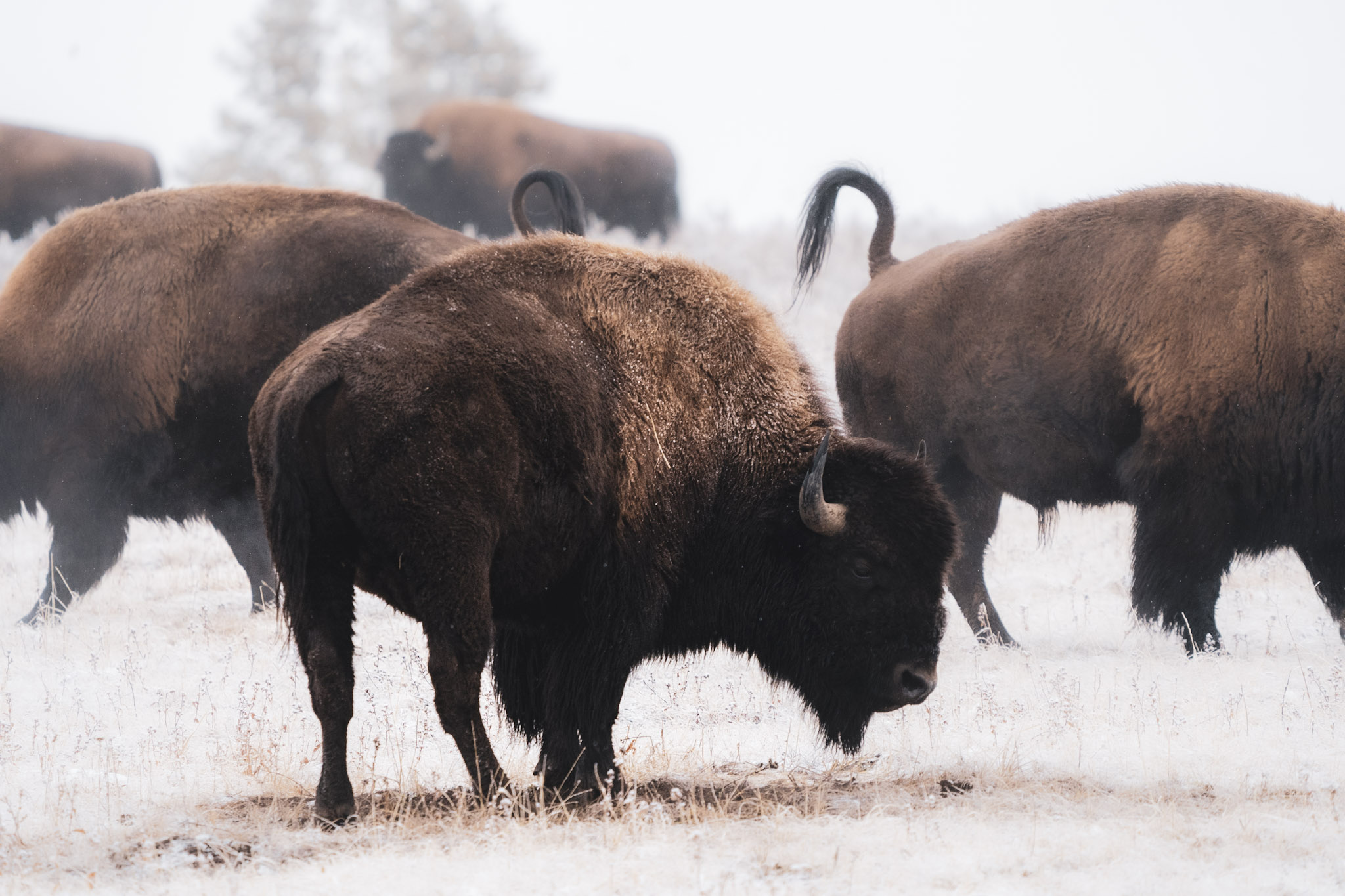
Leaders from Roam Free Nation, a Native-led buffalo restoration advocacy group, say the new funding doesn't focus enough free-roam restoration efforts.
“We want the fences to come down and the lines in the sand to be erased,” Stephany Seay, co-founder of Roam Free Nation, told Native News Online. “It’s so simple, but the government and stakeholders make it so complicated. You could take the $5 million and put it towards safe passage infrastructure or brucellosis vaccines for cattle, for example.”

State and treaty hunts have taken the most significant toll on the buffalo population this year.
The killing of Yellowstone National Park buffalo was extensive this winter due to the deep snow and cold weather, forcing as many as 1,600 buffalo to migrate outside of the park, where they don’t have protection from hunting.
Hundreds of buffalo moved into the Gardiner Basin and were either killed in the firing line style hunt on the park boundary or trapped inside Yellowstone’s Stephen Creek bison trap for slaughter or domestication through quarantine.
“We went into the season with 6,000 buffalo and about 1,700 of them were wiped out, mostly by hunting,” Seay said. “It was a really bad year for the buffalo.”
Saey said the firing line-style hunts take a toll on the migratory memory of buffalo.
“The buffalo can’t access the new habitat they have been granted because they are always met with a wall of rifles,” Seay explained. “It’s taking a heavy toll on migratory memory even, as female buffalos carry all the knowledge and teach the youngsters, and they are the ones that get hit hardest during the hunt. You often find their calves laying in gut piles.”
Other barriers
Bison are the only wildlife in the state that is regulated by the Montana Department of Livestock. Currently, there is a law in Montana that gives the department authority over wild bison when they migrate into the state.
“The state of Montana has a zero tolerance for wild migratory buffalo,” Seay said. “They have set up tolerance zones where the buffalo are not allowed to roam past the northern edge of the Gardiner Basin. If people were to step aside, these buffalo would naturally restore themselves throughout the lands that are their birthright.”
American bison once numbered 60 million in North America, but they were nearly driven to extinction in the 19th century due to uncontrolled hunting and a U.S. policy of eradication. Today, there are an estimated 15,000 bison in the United States.
The buffalo herds of Yellowstone country are the nation’s last continuously wild, migratory bison. They are currently being considered for Endangered Species Act listing by the U.S. Fish & Wildlife Service.
“We would like to see a day where there are millions of buffalo roaming all over Montana, where there could be sustainable hunts someday,” Seay said. “Right now, it’s just not possible.”
More Stories Like This
Southern Sierra Miwuk Nation Gets 900-Acres ofLand BackChilkat Indian Village Tells New Palmer Mine Owners They Are “Not Welcome” in Chilkat Valley
Tribes, Coastal Group Ask Army Corps to Revoke Permit for Texas Export Terminal
Michigan Tribes Tell Supreme Court: Don’t Bail Out Enbridge
Alaskans Raise More Than $1 Million For Communities Devastated by Typhoon Halong
Help us defend tribal sovereignty.
At Native News Online, our mission is rooted in telling the stories that strengthen sovereignty and uplift Indigenous voices — not just at year’s end, but every single day.
Because of your generosity last year, we were able to keep our reporters on the ground in tribal communities, at national gatherings and in the halls of Congress — covering the issues that matter most to Indian Country: sovereignty, culture, education, health and economic opportunity.
That support sustained us through a tough year in 2025. Now, as we look to the year ahead, we need your help right now to ensure warrior journalism remains strong — reporting that defends tribal sovereignty, amplifies Native truth, and holds power accountable.
 The stakes couldn't be higher. Your support keeps Native voices heard, Native stories told and Native sovereignty defended.
Stand with Warrior Journalism today.
Levi Rickert (Potawatomi), Editor & Publisher