- Details
- By Native News Online Staff
Climate change continues to impact all of us, yet most climate adaptation planning tools fail to address the needs, cultures, perspectives, or values of Indigenous and Tribal communities.
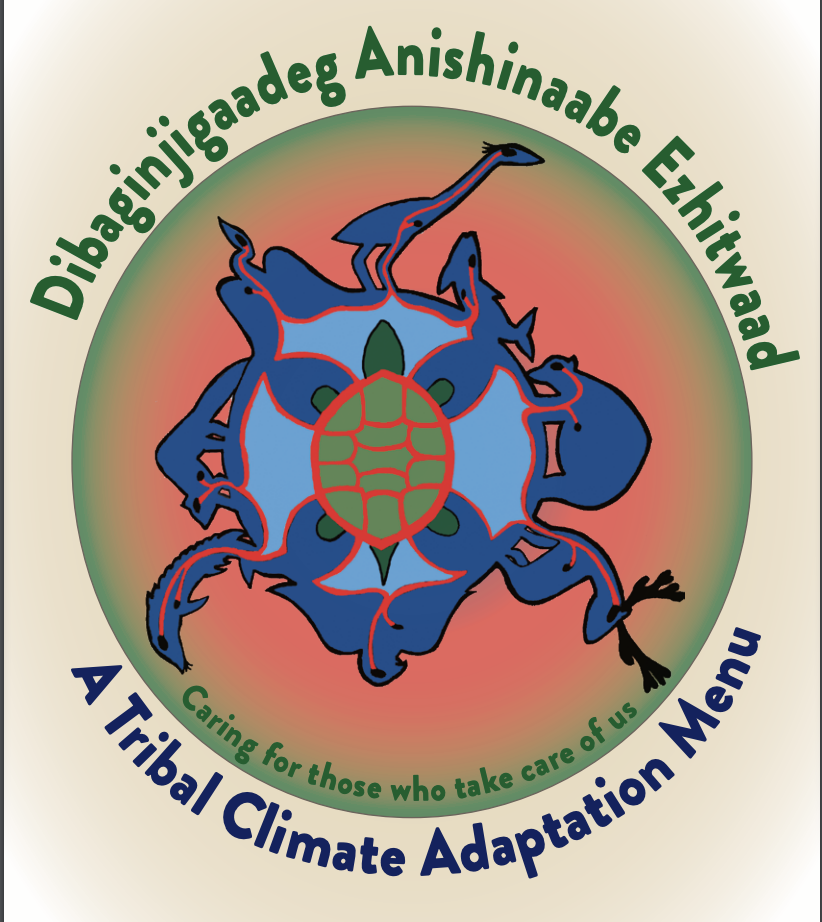
In response to that problem, the Climate Change Response Framework, a collaboration between multiple Federal, state and local agencies working “to incorporate climate change considerations into natural resource management,” has released a “Tribal Climate Adaptation Menu” to provide a framework to integrate Indigenous and “traditional knowledge, culture, language, and history into the climate adaptation planning process.”
The Tribal Climate Adaptation Menu is based on Ojibwe and Menominee concepts, languages, perspectives, and values, and was designed to be adapted by other Tribal and Indigenous communities, cultures, and languages as well as non-Indigenous partners.
It was developed by multiple collaborators from academic, government, intertribal, and Tribal entities in the Great Lakes region. It is “an extensive collection of climate change adaptation actions for natural resource management,” according to the U.S. Department of Agriculture website.

Climate Change Response Framework is a collaboration with the Bureau of Indian Affairs, the National Park Service, the Natural Resources Conservation Service, the Northeast Climate Adaptation Science Center, U.S. Department of Agriculture, USDA Forest Service, U.S. Fish and Wildlife Service, and the U.S. Geological Survey, and many state and local governments and organizations.
The Menu is available for download on the Great Lakes Indian Fisheries and Wildlife Commission (GLIFWC) website.
More Stories Like This
Trump signs law that revokes some limits on drilling in Alaska’s National Petroleum ReserveSouthern Sierra Miwuk Nation Gets 900-Acres ofLand Back
Chilkat Indian Village Tells New Palmer Mine Owners They Are “Not Welcome” in Chilkat Valley
Tribes, Coastal Group Ask Army Corps to Revoke Permit for Texas Export Terminal
Michigan Tribes Tell Supreme Court: Don’t Bail Out Enbridge
Help us defend tribal sovereignty.
At Native News Online, our mission is rooted in telling the stories that strengthen sovereignty and uplift Indigenous voices — not just at year’s end, but every single day.
Because of your generosity last year, we were able to keep our reporters on the ground in tribal communities, at national gatherings and in the halls of Congress — covering the issues that matter most to Indian Country: sovereignty, culture, education, health and economic opportunity.
That support sustained us through a tough year in 2025. Now, as we look to the year ahead, we need your help right now to ensure warrior journalism remains strong — reporting that defends tribal sovereignty, amplifies Native truth, and holds power accountable.
 The stakes couldn't be higher. Your support keeps Native voices heard, Native stories told and Native sovereignty defended.
Stand with Warrior Journalism today.
Levi Rickert (Potawatomi), Editor & Publisher