- Details
- By Jenna Kunze
This month, we’re compiling questions that our readers are asking us about Indian Boarding Schools and offering answers as reported by our team.
Today’s reader question about Indian Boarding Schools comes from Linda B., who asked us:
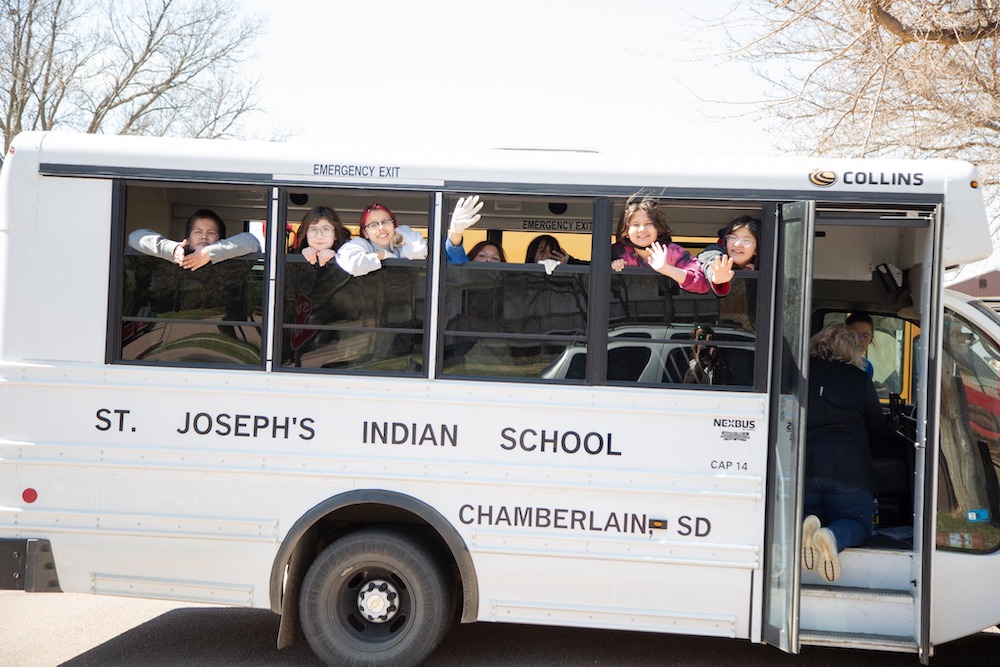
Are the current-day facilities — such as St. Joseph’s Indian School in South Dakota — better or in the same category of the federally funded ones mentioned in the article?
Our reporter Jenna Kunze, who has written nearly half of our 100-plus stories about Indian Boarding Schools, provides this answer:
Currently, the federal Bureau of Indian Education funds or operates 183 schools across the United States—including four off-reservation boarding schools—though the schools do not function as they once did.
“The most important thing to understand right now is that it is not the express purpose of the United States federal government to operate the schools to forcibly assimilate kids,” Assistant Secretary for Indian Affairs Bryan Newland said last month, adding that most of the schools funded by the Bureau of Indian Affairs are operated directly by tribes. “So the difference is at the core of the school's mission, which is to empower Indian kids in their communities… and not to forcibly assimilate kids and not to take them from their families without their consent.”
St. Joseph’s Indian School, formerly known as Chamberlain Indian School, was an off-reservation boarding school funded by the federal government from 1898 to 1909. It was later sold to the Catholic Church, who still run the facility as a boarding school for Native American youth today. The school made headlines in 2016 when officials sent out disparaging fundraising letters meant to appear as though they were authored by children.
If you have a question about Indian Boarding Schools, please submit them to [email protected] or use the online form that can be found at the bottom of stories such as this one. Want to help support our continued reporting on this important topic? Become a recurring donor for $5 or $10 a month, or make a one-time donation.
Tell Us What You Think
More Stories Like This
50 Years of Self-Determination: How a Landmark Act Empowered Tribal Sovereignty and Transformed Federal-Tribal RelationsTunica-Biloxi Chairman Pierite Elected President as Tribal Nations Unite Behind New Economic Alliance
NCAI, NARF Host Session on Proposed Limits to Federal Water Protections
“Our Sovereignty Is Not Optional”: Tulalip Responds to ICE Actions
Denied Trip to Alcatraz, Leonard Peltier Tells Sunrise Gathering: “My Heart Is Full”
Help us defend tribal sovereignty.
At Native News Online, our mission is rooted in telling the stories that strengthen sovereignty and uplift Indigenous voices — not just at year’s end, but every single day.
Because of your generosity last year, we were able to keep our reporters on the ground in tribal communities, at national gatherings and in the halls of Congress — covering the issues that matter most to Indian Country: sovereignty, culture, education, health and economic opportunity.
That support sustained us through a tough year in 2025. Now, as we look to the year ahead, we need your help right now to ensure warrior journalism remains strong — reporting that defends tribal sovereignty, amplifies Native truth, and holds power accountable.
 The stakes couldn't be higher. Your support keeps Native voices heard, Native stories told and Native sovereignty defended.
Stand with Warrior Journalism today.
Levi Rickert (Potawatomi), Editor & Publisher