



- Details
- By James Brooks - Alaska Beacon
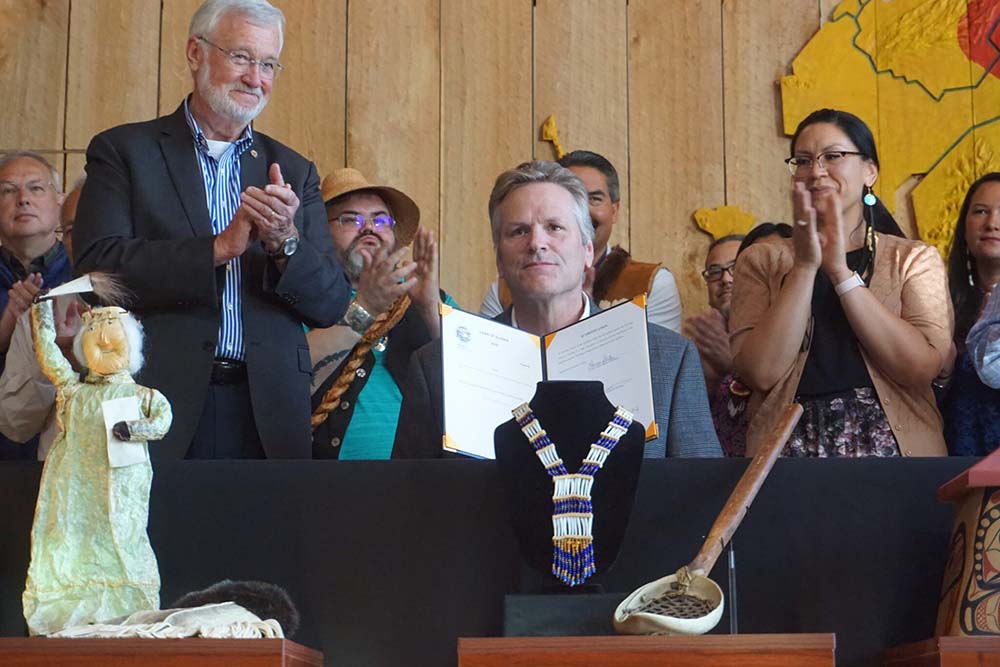
Alaska Gov. Mike Dunleavy on Thursday, July 29 signed legislation that requires the State of Alaska to formally recognize its 229 federally recognized Native tribes.
Though the bill does not significantly change the relationship between the state and the sovereign tribal governments within its borders, Rep. Tiffany Zulkosky, D-Bethel, said the measure is an “important first step toward healing and recognizing our past.”
The State of Alaska has historically opposed tribes’ efforts to exert sovereignty, denying their existence, Zulkosky said.
But in recent years, the state has begun relying on tribes to provide a variety of services, including public safety and education, in rural Alaska.
“How can the state talk about expanding relationships with tribes when it has never taken the most fundamental, basic step by recognizing them in our legal code?” Zulkosky said.
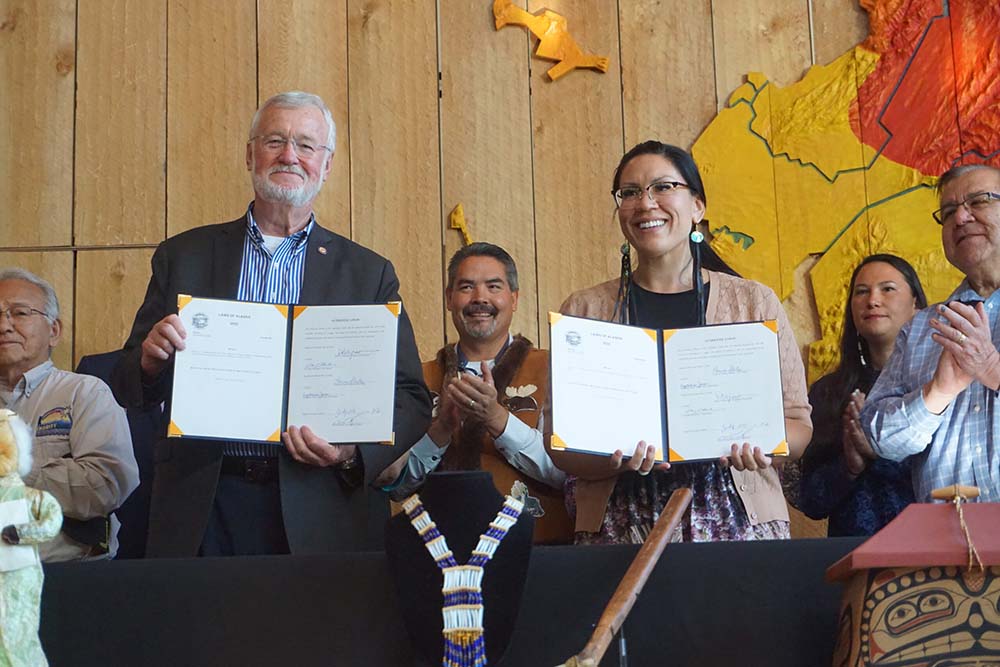 Sen. Gary Stevens and Rep. Tiffany Zulkosky, sponsors of legislation on tribal education and on state recognition of tribes, hold up the bills signed by Gov. Mike Dunleavy at a July 28 ceremony at the Alaska Native Heritage Center. The ceremony attracted a large crowd, including Native leader Emil Notti and Sen. Lyman Hoffman, standing on the stage with Stevens and Zulkosky. (Photo by Yereth Rosen/Alaska Beacon)
Dunleavy called the bill a “significant milestone” and “a good day for all of us.”
After signing the recognition bill, he signed a separate piece of legislation that creates a tribal-state education compact that may encourage the growth of tribally operated schools.
“This is a historic opportunity to embrace our unique Alaska Native heritages, providing a means for local tribal governments to determine their own path for educating young Alaskans,” said Sen. Gary Stevens, R-Kodiak and the sponsor of the bill. “I’m proud to have contributed to and be a part of this historic occasion.”
Both bills were signed in an enthusiastic ceremony at the Alaska Native Heritage Center in Anchorage. Tribal leaders, legislators and Alaska Native corporation leaders were on hand and praised both bills, which passed the House and Senate earlier this year by wide margins.
“The cultural survival of our Indigenous people is dependent on our ability to maintain our values, practice our traditions, and maintain freedom to live our lives well with dignity and respect for each other,” said Julie Kitka, president of the Alaska Federation of Natives. “We have strengthened our tribal governments and have initiated multiple efforts to continue our path to self-determination and self-governance. The formal recognition through this legislation is an historic step for us to have a successful relationship with the state.”
Shortly after the governor signed the tribal-recognition bill, Lt. Gov. Kevin Meyer issued a formal statement saying that a tribal-recognition ballot measure will be removed from this fall’s general-election ballot.
Alaska’s constitution allows the cancelation of a ballot measure if the Legislature passes a substantially similar bill.
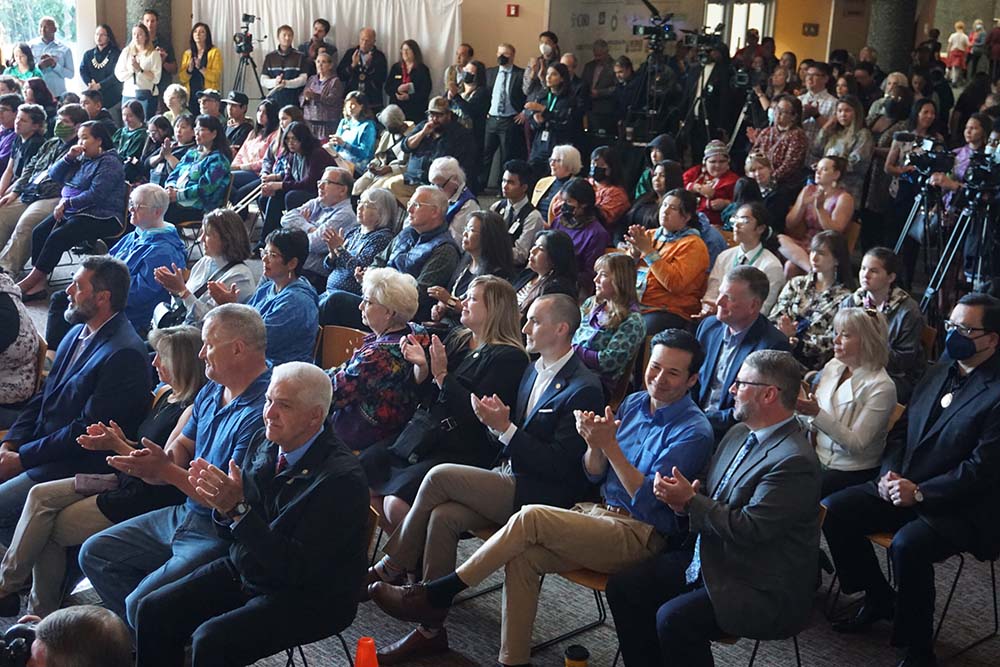 The audience at the July 28 ceremony for signing of bills on tribal recognition and establishing a system tribal-state compacting system for education applauds for Native leader Willie Hensley. Hensley was one of the speakers at the signing ceremony, held at the Alaska Native Heritage Center. Several legislators were in attendance. (Photo by Yereth Rosen/Alaska Beacon)
This story originally appeared at the Alaska Beacon. Republished by Native News Online under Creative Commons.
Help us defend tribal sovereignty.
At Native News Online, our mission is rooted in telling the stories that strengthen sovereignty and uplift Indigenous voices — not just at year’s end, but every single day.
Because of your generosity last year, we were able to keep our reporters on the ground in tribal communities, at national gatherings and in the halls of Congress — covering the issues that matter most to Indian Country: sovereignty, culture, education, health and economic opportunity.
That support sustained us through a tough year in 2025. Now, as we look to the year ahead, we need your help right now to ensure warrior journalism remains strong — reporting that defends tribal sovereignty, amplifies Native truth, and holds power accountable.
 The stakes couldn't be higher. Your support keeps Native voices heard, Native stories told and Native sovereignty defended.
Stand with Warrior Journalism today.
Levi Rickert (Potawatomi), Editor & Publisher