



- Details
- By Darren Thompson
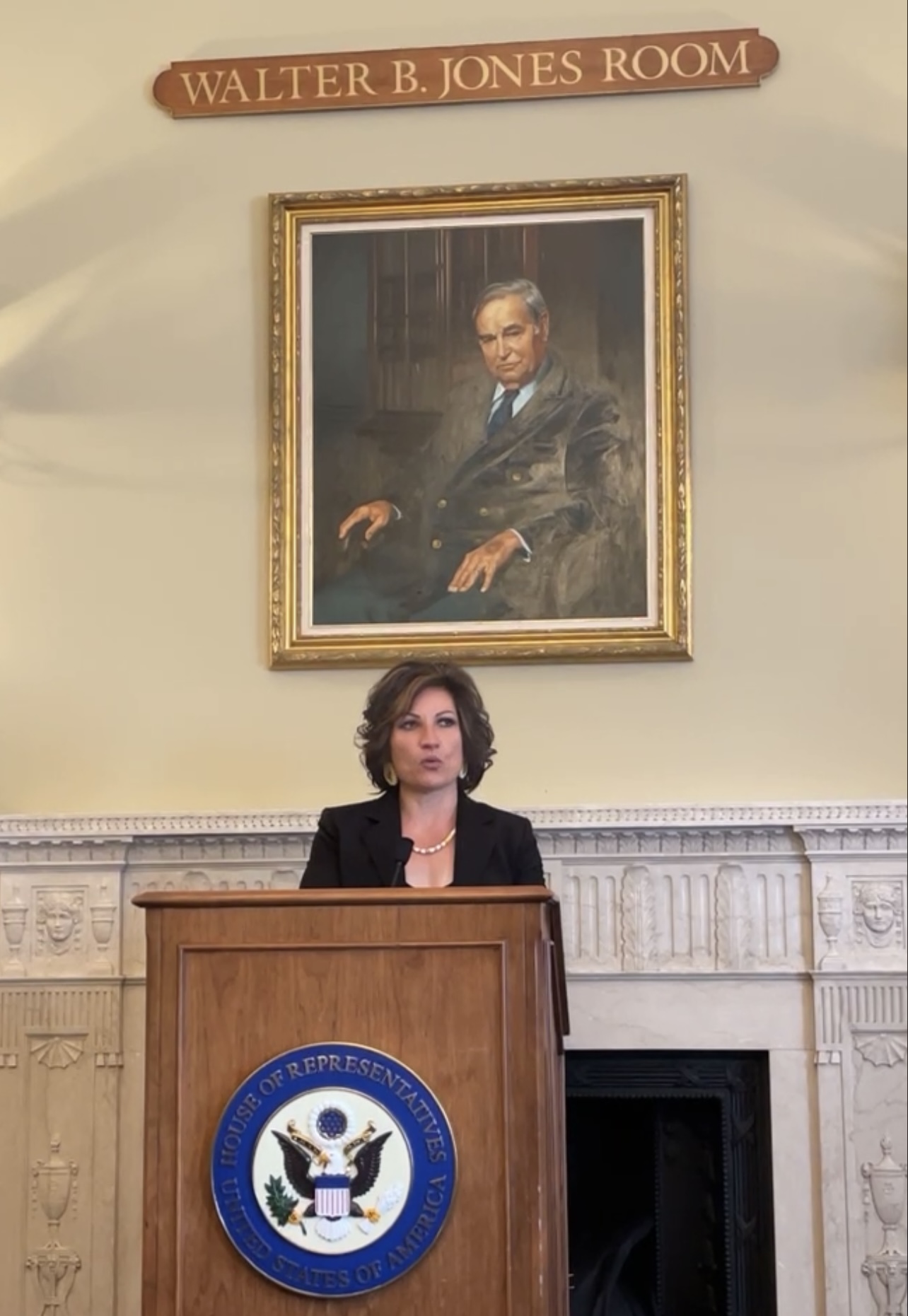
Washington—History was made today when the Chair of the Natural Resources Committee of the U.S. House of Representatives, Raúl M. Grijalva (D-Ariz.), announced in a press conference that the Requirements, Expectations, and Standard Procedures for Effective Consultation with Tribes (RESPECT) Act has full committee markup by the U.S. House Natural Resources Committee.
The bill establishes the framework for formal processes that ensure consultation with Tribal Nations as an integral part of the Federal decision-making process when Federal actions impact Tribal lands and interests. It makes Tribal consultation mandatory for Federal agencies.
This is the first time in congressional history where legislation requiring the federal government to consult with tribes has made it to full committee markup. Full committee markup is the formal step a committee takes to advance a bill to the floor. Committees rarely hold a markup unless the bill in question is expected to receive majority support on that vote.
Want more Native News? Get the free daily newsletter today.
“The U.S. Government will stand by its promise to honor Tribal sovereignty,” Grijalva said in a press conference on Monday. “Consulting with Tribes is not the nice thing to do, it is the right thing to do. It means federal agencies can no longer notify Tribes, they have to respect the government-to-government relationship as it says in the U.S. Constitution.”
If passed, the bill will codify consultation and coordination by the United States Government with federally recognized Tribal Governments. H.R. 3587, the RESPECT Act, aims, “To prescribe procedures for effective consultation and coordination by Federal agencies with federally recognized Tribal Governments regarding Federal Government actions that impact Tribal lands and interests to ensure that meaningful Tribal input is an integral part of the Federal decision- making process.”
The bill was introduced to the U.S. House of Representatives in May 2021 and referred to the House Natural Resources Subcommittee on Indigenous Peoples of the United States for discussion. Grijalva previously introduced the RESPECT in 2010, but it has never received a full committee markup.
The RESPECT Act currently has 18 cosponsors and is endorsed by numerous Tribes and Tribal organizations, including the National Indian Education Association, the Native American Finance Officers Association, the Tribal Law and Policy Institute, the Global Indigenous Council, the Great Plains Tribal Chairmen’s Association, the National Native American Bar Association, Earthworks, the Self-Governance Communication & Education Tribal Consortium, the United South and Eastern Tribes Sovereignty Protection Fund and the Rocky Mountain Tribal Leaders Council.
“I believe as a Tribal leader that the U.S. Government absolutely has to consult with Tribal Nations,” said Walker River Paiute Tribal Chairman Amber Torres at Monday’s press conference. “Excuse me as I get emotional, this bill has so much meaning to Indian Country. I don’t want to receive a letter, or an email, I want true meaningful, face-to-face dialogue with timelines and next steps agreed upon by both parties.”
During the Trump administration, there were several decisions made without consulting with Tribes including the approval of the Dakota Access Pipeline, the authorized construction of the border wall, and proposed budget cuts to the Bureau of Indian Affairs.
Since Executive Order 13175 was signed in November 2000, there have been other memorandums supporting tribal consultation, but those are only applicable to Executive branch activities and can be revoked at any time. If passed, the RESPECT Act advances government-to-government relationships because it codifies Tribal consultation for all Federal government agencies.
“The effort has been a long effort,” said Grivalda of the RESPECT Act. “But there’s one thing this act does not do—erase history. We can’t turn back the harshness of colonization and the broken promises of treaties.”
Native News Online reported in November 2021, that the state of Minnesota codified consultation with Tribal governments, requiring state agencies to implement Tribal consultation policies in consultation with Minnesota Tribal governments. Several other states have passed legislation requiring state governments to consult with Tribal governments including Arizona, New Mexico and Montana, but Minnesota’s law is the most extensive to date.
House Speaker Nancy Pelosi (D-CA) is scheduled to call the bill to be read on the floor in the next several weeks. After that it will be up to a vote. A companion bill has yet to be introduced in the Senate.
More Stories Like This
Native News Weekly (August 25, 2024): D.C. BriefsUS Presidents in Their Own Words Concerning American Indians
Two Murdered on Colville Indian Reservation
NDAA passes House; Lumbee Fairness Act Advances
NFL, Vikings to Host Native All-American Game, Youth Flag Clinic
Help us defend tribal sovereignty.
At Native News Online, our mission is rooted in telling the stories that strengthen sovereignty and uplift Indigenous voices — not just at year’s end, but every single day.
Because of your generosity last year, we were able to keep our reporters on the ground in tribal communities, at national gatherings and in the halls of Congress — covering the issues that matter most to Indian Country: sovereignty, culture, education, health and economic opportunity.
That support sustained us through a tough year in 2025. Now, as we look to the year ahead, we need your help right now to ensure warrior journalism remains strong — reporting that defends tribal sovereignty, amplifies Native truth, and holds power accountable.
 The stakes couldn't be higher. Your support keeps Native voices heard, Native stories told and Native sovereignty defended.
Stand with Warrior Journalism today.
Levi Rickert (Potawatomi), Editor & Publisher