- Details
- By Native News Online Staff
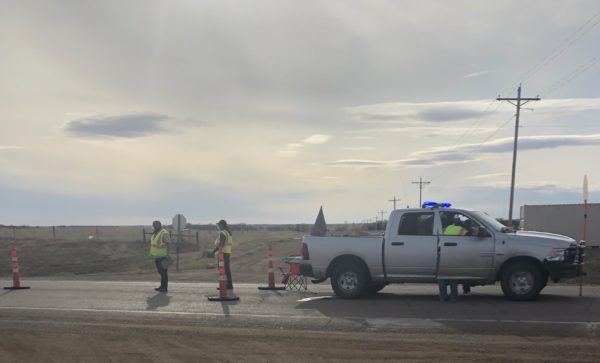
EAGLE BUTTE, S.D. — Two days after a deadline set by South Dakota Governor Kristi Noem expired, the Cheyenne River Sioux Tribe and Oglala Sioux Tribes still have their roadside checkpoints in place and wait for Noem’s next move.
Noem had sent the two tribes letters demanding they shut down their checkpoints by Sunday or face legal action.
The tribes maintain the checkpoints are necessary to keep outsiders from bringing the deadly coronavirus onto their respective reservations. Citing the sovereignty of tribal governments to enact their own laws, tribal officials are defying the governor’s request by keeping the checkpoints in place.
The skirmish continues, even as Oglala Sioux Tribe President Julian Bear Runner announced he was issuing an executive order for an emergency lockdown on the Pine Ridge Reservation until noon on Wednesday. The order comes after the Oglala Sioux Tribe tweeted last evening about the first two positive cases of Covid-19 among tribal members.
The tribes are not alone in pushing back against Noem. On Sunday, a bipartisan group of 17 South Dakota lawmakers sent a letter to Noem,disputing her claim the state has jurisdiction of the tribes to force them to take down the checkpoints. The group of lawmakers included five American Indian members of the state legislature.
The lawmakers criticized the governor’s sending of letters and say she should have been less confrontational. They said Noem should have had more conversations with the tribes before sending the letters.
“We could have helped facilitate conversations and given your office unique insight as to the history, culture, protocols, and vernacular of how to work together with Tribal governments. You elected, however, not to contact us and sent an ultimatum to both tribes,” the lawmakers’ letter said.
The governor said she has been holding conversations with the two tribes during a press conference she held to provide an update on the COVID-19 pandemic. She did not address the checkpoint showdown during her statement, but was asked numerous questions relating the controversial issue.
Noem said she has gotten reports that some essential services were not being allowed to enter the reservations. She mentioned non-Native ranchers, who lease land on the reservations, have been turned away.
When asked by Native News Online if ranchers are not being allowed to get to their ranches, Cheyenne River Sioux Tribe Chairman Harold Frazier said: “Not true.”
Oglala Sioux Tribe’s spokesperson Chase Iron Eyes says he is looking into the matter and would confirm or deny the allegation.
The president of the South Dakota Retailers Association Nathan Sanderson says he has heard several retail in and around the Cheyenne River Indian Reservation have reported they are having difficulty in getting deliveries because of the tribal checkpoints.
Sanderson did concede he has not heard any trucks being turned around, but has heard some truckers don’t even try to make deliveries because they fear they would be turned around.
As of Tuesday morning, the checkpoints remain intact and there has been no notification that Noem has followed through with her threat to take legal action.
More Stories Like This
Native News Weekly (August 25, 2024): D.C. BriefsUS Presidents in Their Own Words Concerning American Indians
Two Murdered on Colville Indian Reservation
NDAA passes House; Lumbee Fairness Act Advances
NFL, Vikings to Host Native All-American Game, Youth Flag Clinic
Help us defend tribal sovereignty.
At Native News Online, our mission is rooted in telling the stories that strengthen sovereignty and uplift Indigenous voices — not just at year’s end, but every single day.
Because of your generosity last year, we were able to keep our reporters on the ground in tribal communities, at national gatherings and in the halls of Congress — covering the issues that matter most to Indian Country: sovereignty, culture, education, health and economic opportunity.
That support sustained us through a tough year in 2025. Now, as we look to the year ahead, we need your help right now to ensure warrior journalism remains strong — reporting that defends tribal sovereignty, amplifies Native truth, and holds power accountable.
 The stakes couldn't be higher. Your support keeps Native voices heard, Native stories told and Native sovereignty defended.
Stand with Warrior Journalism today.
Levi Rickert (Potawatomi), Editor & Publisher