- Details
- By Kaili Berg
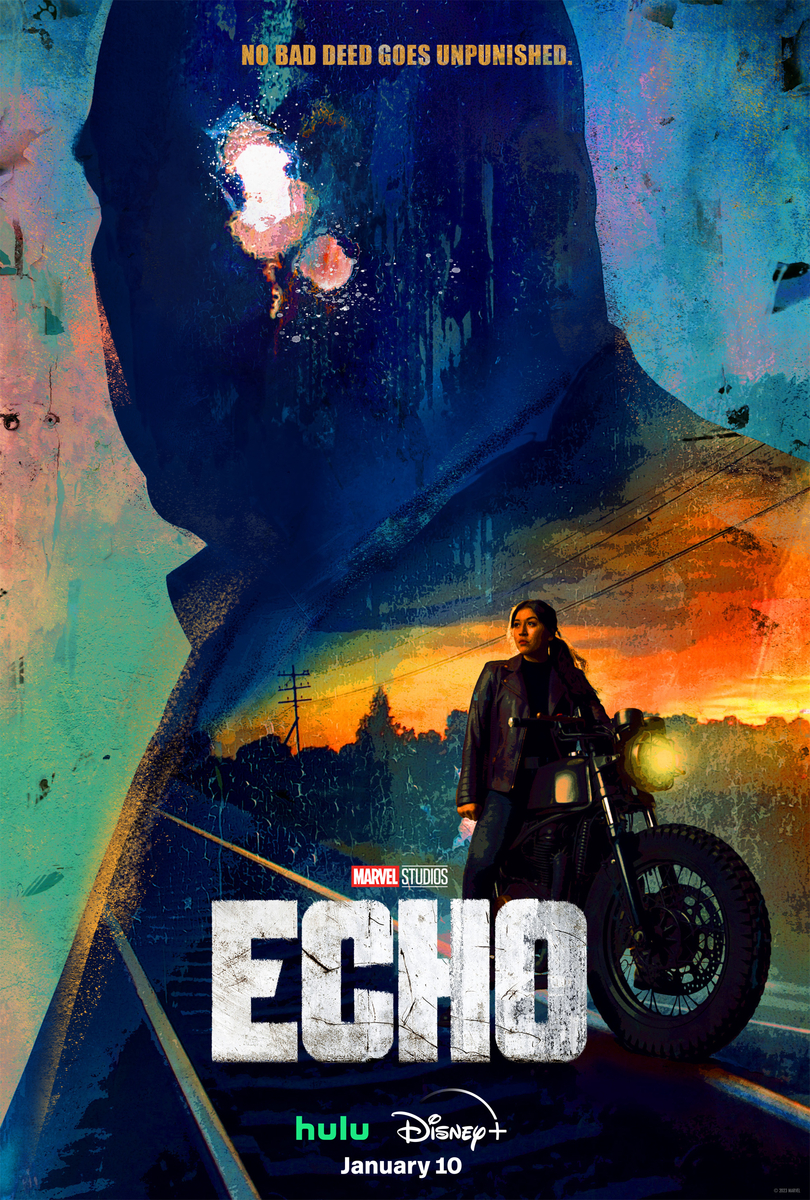
Marvel Studios' new show Echo is a thrilling new approach to the storytelling comic book fans have come to love from the Marvel Cinematic Universe (MCU).
The upcoming series' lead character is a deaf amputee Native American anti-hero who was last seen in the Marvel series Hawkeye.
Echo be the first time a Marvel Series has a TV-MA rating, which means the program is specifically designed to be viewed by adults and, therefore, may be unsuitable for children under the age of 17. It will also be the first Marvel Studios series to debut simultaneously on Disney+ and Hulu beginning January 10.
Native News Online had the chance to sit down with Echo executive producer Richie Palmer to discuss his involvement in the series, Indigenous representation, shooting his favorite scene, and how actors brought their own personalities to the show.
Editor's note: This interview has been edited for clarity and length.
Native News Online: How did your involvement in the show Echo come about and what drew you to it?
Richie Palmer: We are all big fans of the character Maya Lopez at the studio. I can get very specific with you because she comes from an awesome run of Daredevil comics in the late 90s that I actually remember reading when they were coming out. Those single issues were a very famous run illustrated by Joe Costa and written by David Mack, who has done awesome covers. This was a very iconic period at Marvel comics. [These] characters really stood out and were always a favorite of ours behind the scenes. [We were always] saying, "Wouldn't it be great if we could tell the story of Maya Lopez one day?" It was always a question of how to do it; how do we tell a story about Maya Lopez that isn't going to get bogged down by the rest of the MCU (Marvel Cinematic Universe); and how can we take this character from the comics that we see a lot of potential in and bring her to screen and really tell a story about her and her family and not get it so wrapped up in everything else going on in the larger universe.
NNO: How has Indigenous representation changed during your career so far?
RP: It has definitely grown, and when you have a show like Echo or Reservation Dogs, these shows are bringing things to the forefront that five to 10 years ago wouldn't have been. It has been a real growing experience for us here at Marvel. I hope that Maya Lopez bringing her Native culture to screen in such a grand way because of what we can do at Marvel, I hope that we can also do with other relatively obscure characters from the comics and bring them to the forefront and put them in the spotlight of the Marvel Universe, and with that honor and culture that comes with some of these characters.
NNO: Why is it important to include Indigenous people not only in the cast but in the storylines as well?
RP: We couldn't pick a character like Maya Lopez and put her on screen and not authentically represent who she is as a person. In the comics, her background is a little inconsistent, I would say, so we decided to make her Choctaw because we had writers from all different backgrounds and tribal affiliations in our writer's room. It was our Choctaw writer, Steven Paul Judd, who kept bringing very personal stories to the table, and we wanted to tell the stories he was telling. We had to make sure that we were honoring the Choctaw culture if we were going to tell these stories. We met with the Choctaw Nation, Chief Baton, and his team, and it was an instant partnership. It was so important just because we needed to tell a very entertaining story with a very complex character that was deaf and Choctaw. We needed to make sure that we got those things right. If we don't get those things right, then nobody is going to care about the fun story we are trying to tell with this fun character. It all just went hand in hand, and it was really important that we got those aspects of the character correct.
NNO: Were any of the actors involved in the writing of the language in the series? It has this rich but unexpected comedic nature that I really love about it.
RP: All the actors, especially when using ASL, brought their own personality to their characters. They were all there in terms of dialogue and shorthand, making sure that everything felt authentic to each specific character. We had a producer on set named Doug Ridloff, who was deaf and worked with all the actors to each have their own way of signing. The whole thing was a collaboration where we were working on all the actors' scenes, which kept it loose and fresh and authentic to real humans.
NNO: What was your overall experience producing Echo, and what was your favorite thing about the process?
RP: It was amazing, and we learned a lot. Seeing over the course of making the show what it means to people really grounds you and reminds you of the kind of power that we have and how responsible you have to be with it. For me, it was working with great people like Sydney Freeland, our cinematographers, costume designers, and the production side — we had such a great team on this one.
Everybody was from different backgrounds, and it was truly a special time. A very special sequence we got to do was shoot a powwow. We put on a real powwow and flew in people who are real powwow dancers, drummers, and emcees. We brought in real people and put on a real powwow over five nights. It was unlike anything I have ever experienced before in my life.
More Stories Like This
Chickasaw Holiday Art Market Returns to Sulphur on Dec. 6Center for Native Futures Hosts Third Mound Summit on Contemporary Native Arts
Filmmakers Defend ‘You’re No Indian’ After Demand to Halt Screenings
A Native American Heritage Month Playlist You Can Listen to All Year Long
11 Native Actors You Should Know
Help us defend tribal sovereignty.
At Native News Online, our mission is rooted in telling the stories that strengthen sovereignty and uplift Indigenous voices — not just at year’s end, but every single day.
Because of your generosity last year, we were able to keep our reporters on the ground in tribal communities, at national gatherings and in the halls of Congress — covering the issues that matter most to Indian Country: sovereignty, culture, education, health and economic opportunity.
That support sustained us through a tough year in 2025. Now, as we look to the year ahead, we need your help right now to ensure warrior journalism remains strong — reporting that defends tribal sovereignty, amplifies Native truth, and holds power accountable.
 The stakes couldn't be higher. Your support keeps Native voices heard, Native stories told and Native sovereignty defended.
Stand with Warrior Journalism today.
Levi Rickert (Potawatomi), Editor & Publisher