- Details
- By Elyse Wild
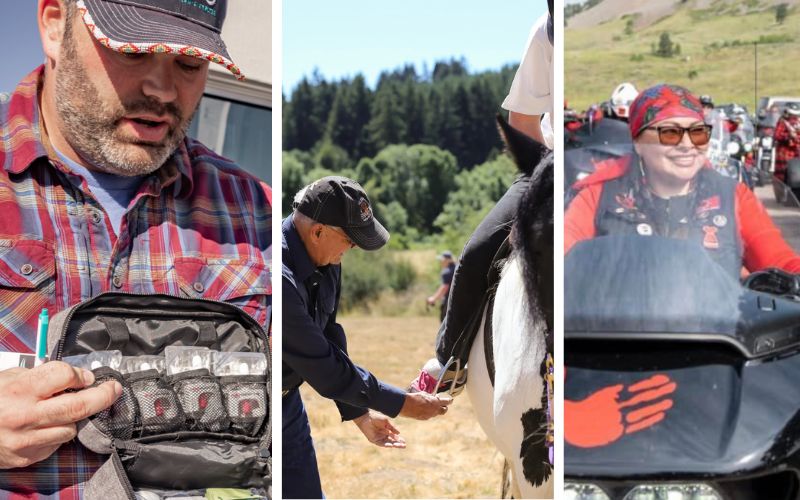
While covering the overdose crisis and Missing and Murdered Indigenous People (MMIP), there are a few stories that captured my heart this year.
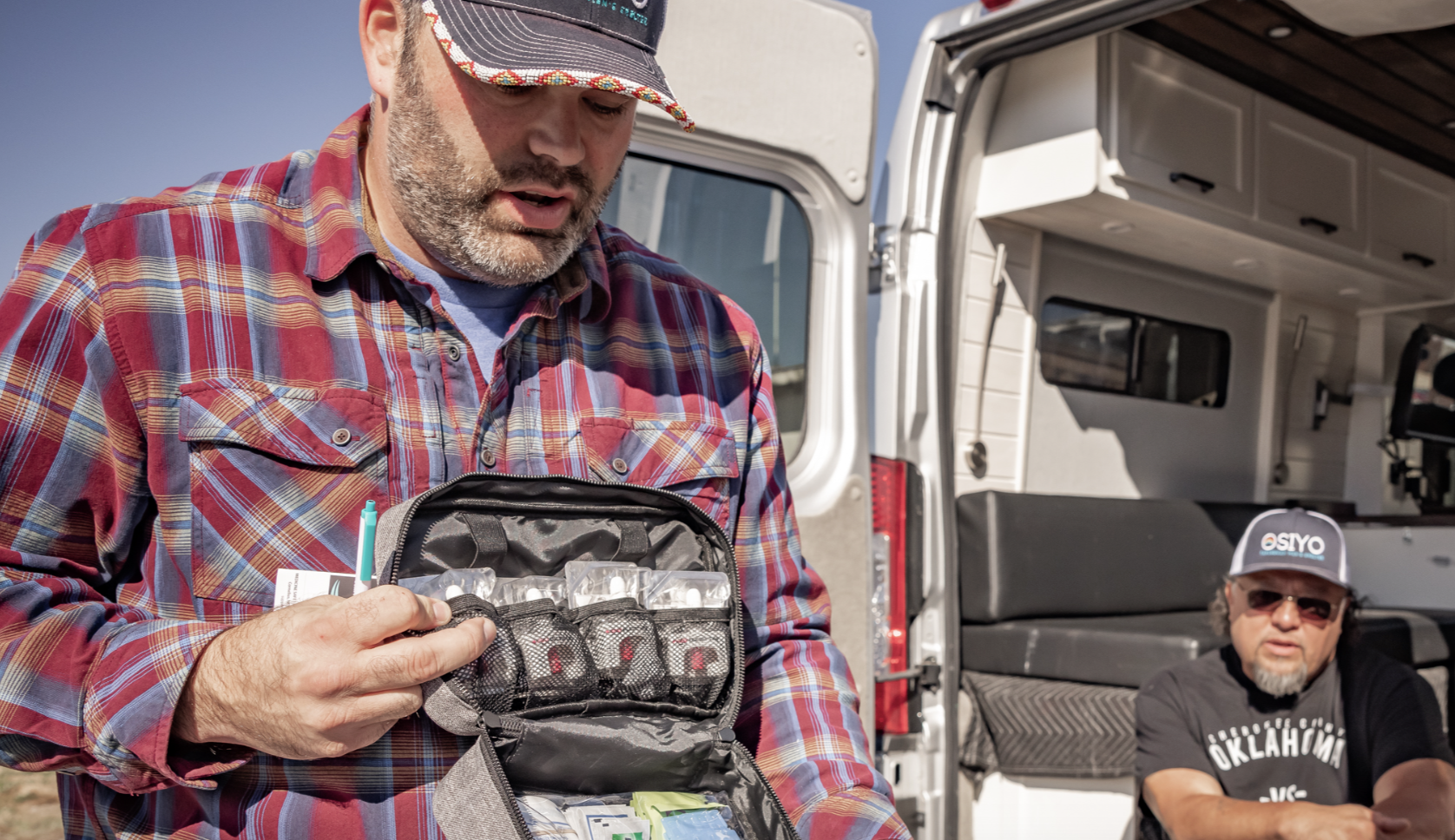 Coleman Cox shows items offered at the Cherokee Nation harm-reduction van in Vinita, Oklahoma, on 7 November 2023. (Photograph/Shane Brown for Native News Online)
This winter, Native News Online and The Guardian co-published an article I wrote that takes readers to the Cherokee Nation for a ride in the tribe’s mobile harm reduction unit, a van bringing life-saving overdose reduction supplies to areas of the reservation hit hardest by the opioid crisis.

The article spotlights how Native communities were flooded with prescription opioids by pharmaceutical companies and how innovative, Native-led solutions are adapting critical public health strategies to the unique challenges of reservations.
I met people who had faced the worst of themselves in active addiction. Through support from their tribe and connecting to cultural practices once lost, they’ve become beacons of healing in their communities.
‘You Can’t Gangster a Horse’ | Native Youth Connect with Culture to Break Cycles of Addiction
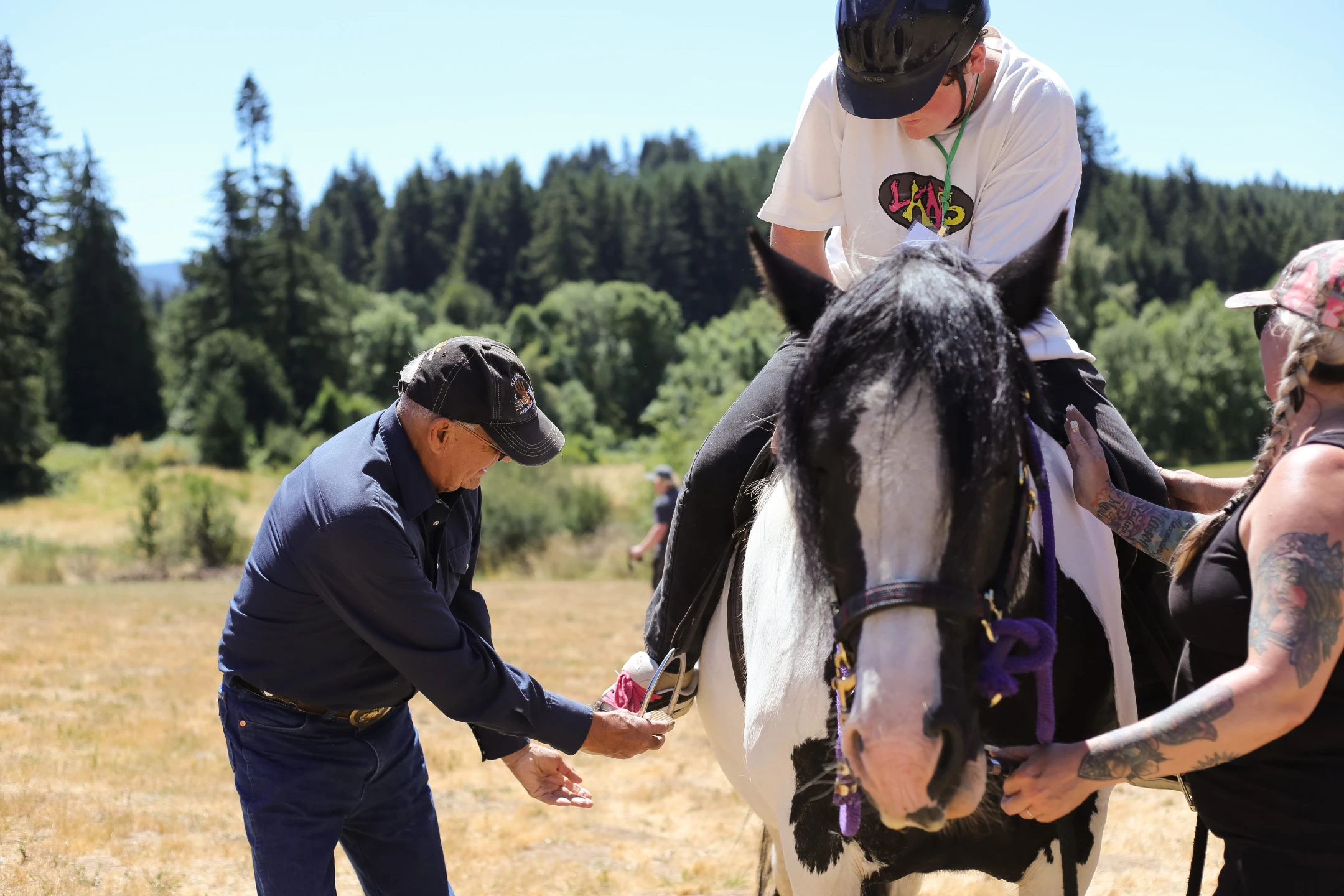 Spence at a demonstration on Native equine therapy at powwow grounds in the Grand Ronde Valley, introducing attendees to the principles of Native horsemanship. (photo/Elyse Wild)
I was fortunate this year to receive a grant from the Pulitzer Center for Crisis Journalism for a three-part series that examines how tribal communities are proving that blending Indigenous practices with Western medicine creates more effective addiction treatment for their citizens.
Each article examines a component of the addiction care spectrum — prevention, harm reduction, and recovery — through tribal programs and Native-run organizations.
The first article in the series took me to the Native American Rehabilitation Association of the Northwest in Oregon. I spent an afternoon observing a group of at-risk Native American teenage boys in a 90-day youth residential treatment program as they engaged in horse therapy designed around Native traditions and values. Led by 83-year-old elder Jon Spence (Gros Ventre tribe), the boys groomed the horses, walked them, and rode. He taught them how to connect their energy and spirit to the large, powerful animals. Watching the tough facade of boys who had endured the unthinkable fade away with the horses — and Spence — is something I will always carry with me.
SACRED RIDE | Medicine Wheel Riders Travel 2,211 Miles for MMIP Awareness
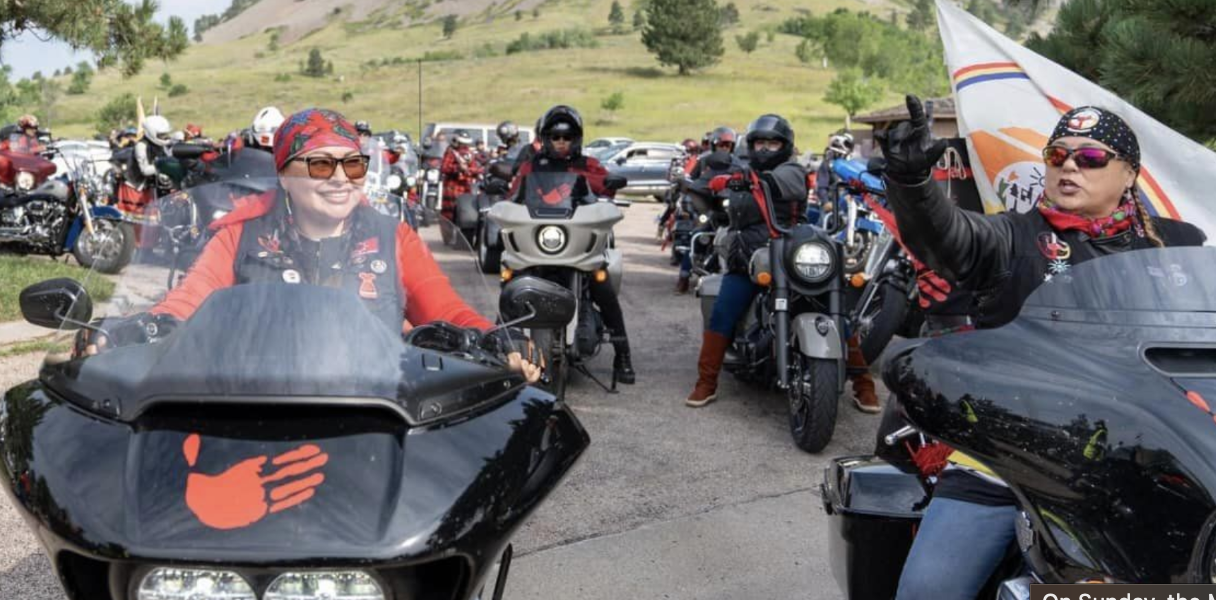 (courtesy photo)
This summer, I wrote a profile on the Medicine Wheel Riders, a group of Native women who ride their motorcycles more than 2,200 miles across the West in honor of relatives lost to the Missing and Murdered Indigenous Peoples (MMIP) crisis. Colorful ribbons, each bearing the name of an MMIP, stream from their bikes as they make their way to the final leg of their journey: Bear Butte in Sturgis, S.D., a sacred ground for ceremony and prayer for many Native American tribes since time immemorial. The story demonstrates the healing power of ceremony and the ongoing fight to bring justice to Native people in a system wrought with inequities and failures to address the basic needs of public safety in Indian Country.
More Stories Like This
Native News Weekly (August 25, 2024): D.C. BriefsUS Presidents in Their Own Words Concerning American Indians
NDAA passes House; Lumbee Fairness Act Advances
NFL, Vikings to Host Native All-American Game, Youth Flag Clinic
Senate Committee on Indian Affairs Passes 12 Bills to Strengthen Tribal Communities
Help us defend tribal sovereignty.
At Native News Online, our mission is rooted in telling the stories that strengthen sovereignty and uplift Indigenous voices — not just at year’s end, but every single day.
Because of your generosity last year, we were able to keep our reporters on the ground in tribal communities, at national gatherings and in the halls of Congress — covering the issues that matter most to Indian Country: sovereignty, culture, education, health and economic opportunity.
That support sustained us through a tough year in 2025. Now, as we look to the year ahead, we need your help right now to ensure warrior journalism remains strong — reporting that defends tribal sovereignty, amplifies Native truth, and holds power accountable.
 The stakes couldn't be higher. Your support keeps Native voices heard, Native stories told and Native sovereignty defended.
Stand with Warrior Journalism today.
Levi Rickert (Potawatomi), Editor & Publisher