- Details
- By Levi Rickert
Opinion. One line in a press release from New Mexico Sen. Ben Ray Luján (D) this past week stopped me cold.
“One hundred percent of maternal deaths among American Indian and Alaska Native women were found to be preventable.”
I read it again to make sure I read it correctly.
The statistic emerged from a sweeping effort led by Luján, a member of the Senate Committee on Indian Affairs, who convened 55 experts to examine maternal mortality in Indian Country. Their work examined workforce inequities, access to care, data sovereignty and chronic funding shortfalls that continue to endanger Native women.
Please support our year-end campaign. CLICK HERE TO DONATE.

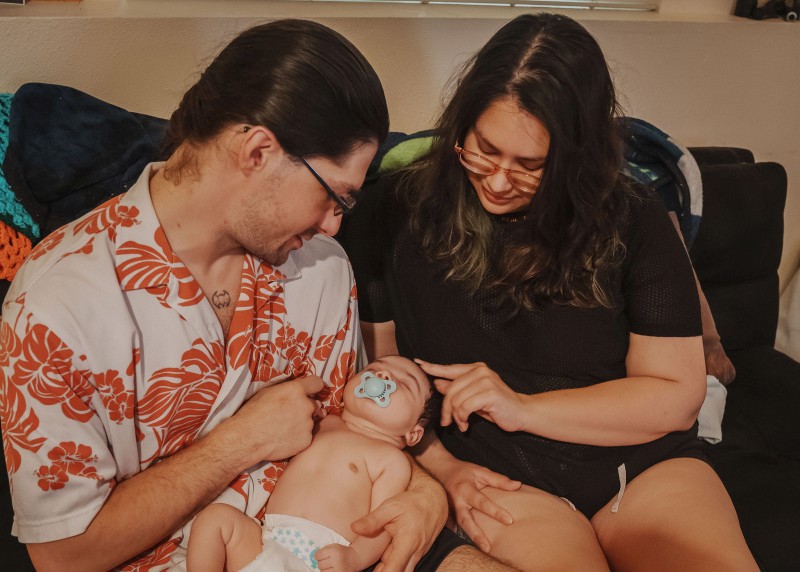
The convening produced five reports on maternal mortality, documenting a crisis that is both deadly and entirely avoidable. American Indian and Alaska Native women are two to three times more likely than non-Hispanic white women to die from pregnancy-related causes. For those over age 30, the risk rises to four to five times higher. Geography only deepens the divide.
For generations, Native women have given life under health systems that were never built to keep them safe. The finding that these deaths are preventable should horrify the nation.
In Indian Country, it simply confirms what families have been saying all along.
The deaths of Native women are not accidents. They are the predictable outcomes of federal neglect, broken trust responsibilities, and health systems that continue to marginalize Indigenous people.
When experts state that 100 percent of maternal deaths among American Indian and Alaska Native women were preventable, the implication is devastating: these mothers should still be here.
Their children should still have their mothers. Their families should not be left to grieve losses that never had to happen.
The federal government has a trust obligation to provide health care to Native people. Yet the Indian Health Service remains chronically underfunded, understaffed and overstretched. Many Native women must travel hours to receive prenatal or emergency obstetric care. Others encounter facilities without specialists, limited postpartum follow-up or culturally unsafe environments where their concerns are dismissed or ignored.
Pregnancy does not end at childbirth. For Native women, the weeks and months following delivery are among the most dangerous. Postpartum hemorrhage, hypertension, cardiometabolic conditions and mental health challenges are often missed or inadequately treated. Too many Native mothers fall through the cracks once they leave the hospital—if they are fortunate enough to deliver in one.
These outcomes are not simply medical failures; they are policy failures.
For decades, federal Indian policies disrupted Indigenous systems of care that once supported mothers before, during and long after birth. Traditional midwifery, community birthing practices and kinship-based support were pushed aside by institutions that did not understand—or respect—Native ways of knowing. What replaced them was underfunded, inaccessible and often harmful.
Equally troubling is how Native women are erased in data. Misclassification and racial aggregation continue to hide the true scope of maternal mortality among American Indian, Alaska Native and Native Hawaiian women. When Native women disappear from the data, they disappear from funding formulas, policy priorities and lifesaving interventions.
Data sovereignty is not an academic concept—it is a matter of life and death.
The solutions are not mysterious. Native experts, midwives, clinicians and advocates have laid them out clearly.
We must invest in Indigenous-led maternal health systems that are rooted in culture, community and sovereignty. That includes strengthening the Indian Health Service and Urban Indian Organizations, expanding the Native maternal health workforce and supporting traditional and community-based midwifery models. Tribal nations must have the authority—and resources—to design systems that work for their people.
Congress must also act. Reports and hearings are not enough. Sustained federal funding, accountability measures and enforcement of trust responsibilities are required. Maternal health cannot be addressed through short-term grants or pilot programs that disappear just as progress begins. Pilot programs, when proven effective, must be funded long-term.
Protecting Native women’s health during and after pregnancy is not a partisan issue. It is a moral obligation. How a nation treats its mothers reflects its values. Right now, the United States is failing Native mothers.
Related: The Rise of Indigenous Doulas
Related: First Foods
Every preventable death represents a life full of promise, a family forever altered, and a community diminished. Native women are the backbone of our nations. When they are not protected, our future is at risk.
We do not need more confirmation that the system is broken. We need the political will to fix it—by listening to Native women, funding Native solutions, honoring tribal sovereignty and finally fulfilling promises that are long overdue.
Native mothers deserve to survive pregnancy. They deserve to thrive after it. And they deserve a health care system that values their lives as much as it values the lives they bring into the world.
Thayék gde nwéndëmen — We are all related.
More Stories Like This
Colorado cannot heal until it confronts Sand Creek honestlyTechnology Rooted in Tradition is Strengthening Cherokee Nation
The Lumbee Tribe of North Carolina: #575
Tribes Do Not Need a Greenlight to Build Renewable Energy
Help us defend tribal sovereignty.
At Native News Online, our mission is rooted in telling the stories that strengthen sovereignty and uplift Indigenous voices — not just at year’s end, but every single day.
Because of your generosity last year, we were able to keep our reporters on the ground in tribal communities, at national gatherings and in the halls of Congress — covering the issues that matter most to Indian Country: sovereignty, culture, education, health and economic opportunity.
That support sustained us through a tough year in 2025. Now, as we look to the year ahead, we need your help right now to ensure warrior journalism remains strong — reporting that defends tribal sovereignty, amplifies Native truth, and holds power accountable.
 The stakes couldn't be higher. Your support keeps Native voices heard, Native stories told and Native sovereignty defended.
Stand with Warrior Journalism today.
Levi Rickert (Potawatomi), Editor & Publisher