- Details
- By Chez Oxendine
For buffalo rancher Jason Byrd, a good stew is a story told with corn, beans, squash and bison — the “Three Sisters” and the animal that has carried his people for centuries.
Byrd grew up on the Blackfeet Reservation in Montana, with the smell of simmering meat and vegetables filling his grandmother’s kitchen. She taught him that the Three Sisters weren’t just food, they were family, he told Native News Online.

Corn stood tall, beans climbed and gave strength, squash spread wide to protect the soil.
Together, they made each other stronger.
“Those lessons weren’t just about farming,” Byrd said. “They were about how we live. We’re stronger when we stand together.”
Buffalo, too, is more than protein for Native Americans. The animal represents sovereignty, survival and a reminder of the herds that once thundered across the plains. Today, the Byrd family ranches buffalo on a small, private ranch - not only to sell meat but to keep alive a relationship that defines their life as Blackfeet people..
“When I cook bison stew, I’m not just feeding my children,” Byrd said. “I’m teaching them who they are.”
A recipe rooted in tradition
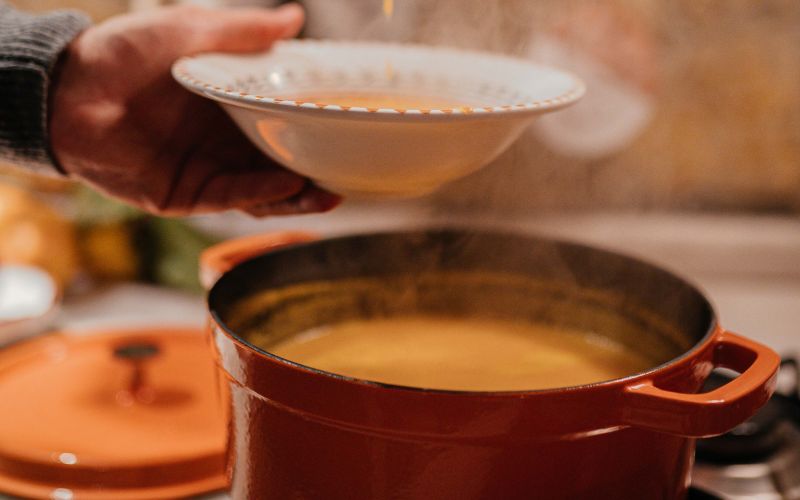
The stew Byrd grew up with is simple, but it carries generations in its pot. He starts with bison meat, cut into chunks. His grandmother always boiled it once, drained the water, and started fresh — a way to clean the meat and begin with clarity, he said. Corn cobs went in next, not just the kernels, because every part had something to give. Bay leaves and salt followed, and the pot simmered for hours.
Onions and garlic, browned in fat, joined the stew. Mushrooms and beans came later, adding depth and strength. Squash was the last vegetable to go in, its sweetness balancing the earthiness of the beans. When the meat was tender, it was sliced and returned to the pot.
Finally, the corn kernels and greens were stirred in, brightening the stew before serving.
It was never about exact measurements. Byrd said it was about using what was available, respecting what the land gave, and cooking long enough for flavors to come together.
The three sisters in Native culture
For Byrd’s family, the act of making a bison dish like the Three Sisters stew is as much about the ritual and connecting with their heritage as it is about making dinner.
Corn, beans and squash are called the Three Sisters because they grow together in harmony, Byrd said. Corn provides a stalk for beans to climb. Beans fix nitrogen in the soil, feeding the corn. Squash spreads its broad leaves, shading the ground and keeping moisture in.
The Three Sisters symbolize cooperation and resilience, Byrd said. They remind communities that survival depends on relationships — with the land, with each other, with animals..
A modern table, an old story
Today, Byrd tends buffalo on land his family has cared for across generations. His children help with the herd, and when they sit down to eat bison stew, he tells them the same stories his grandmother told him. They learn that food is history, that every bite carries memory.
A good stew with the Three Sisters and bison isn’t a recipe unique to Byrd’s family, of course. Chefs use it to showcase Indigenous cuisine anywhere in the world where it is served.. Home cooks adapt it with beef or venison, if bison is in short supply.
But those, too, are stories, Byrd said.
“You make do with what’s on hand, but if you’re using food grown in your community, by or for your people, you’ve got that connection to home,” Byrd said. “You’re sharing that part of your background with your family and whoever else is with you. It’s important.”
Ingredients
- 2–3 pounds bison stew meat (or beef, venison, mutton, goat, etc.)
- Salt (to taste)
- 4 ears of corn (kernels reserved, cobs used for broth)
- 3 bay leaves
- 1 ounce dried mushrooms, roughly crushed
- 1 pound dried beans
- 1–2 pounds winter squash, cut into chunks
- 2 tablespoons bison fat, beef fat, butter, or oil
- 1 large yellow onion, chopped
- 3 cloves garlic, minced
- 1 pound greens (lambsquarters, amaranth, spinach, kale, or chard)
- Green alder pepper (optional)
How to make it
- Cut 2–3 pounds of bison meat into chunks. Boil once, drain, then cover with fresh water.
- Add corn cobs, bay leaves and salt. Simmer for an hour.
- Brown onion and garlic in fat, add to the pot.
- Stir in dried mushrooms and beans. Simmer for another hour.
- Add squash chunks. Cook until the meat is tender.
- Slice meat, return to pot. Discard cobs.
- Add corn kernels and greens. Cook for 5 minutes. Adjust seasoning.
More Stories Like This
National Indian Health Board Urges Congress to Extend Enhanced Premium Tax Credits$1.25 Million Grant Gives Hope to Tolowa Dee-ni' Nation Amid Housing Crisis
HHS Repeals Nursing Home Staffing Requirements, Citing Relief for Tribal Facilities
Native Americans Face Second-Highest Gun Death Rate in U.S., New Study Shows