



- Details
- By Johns Hopkins Center for Indigenous Health
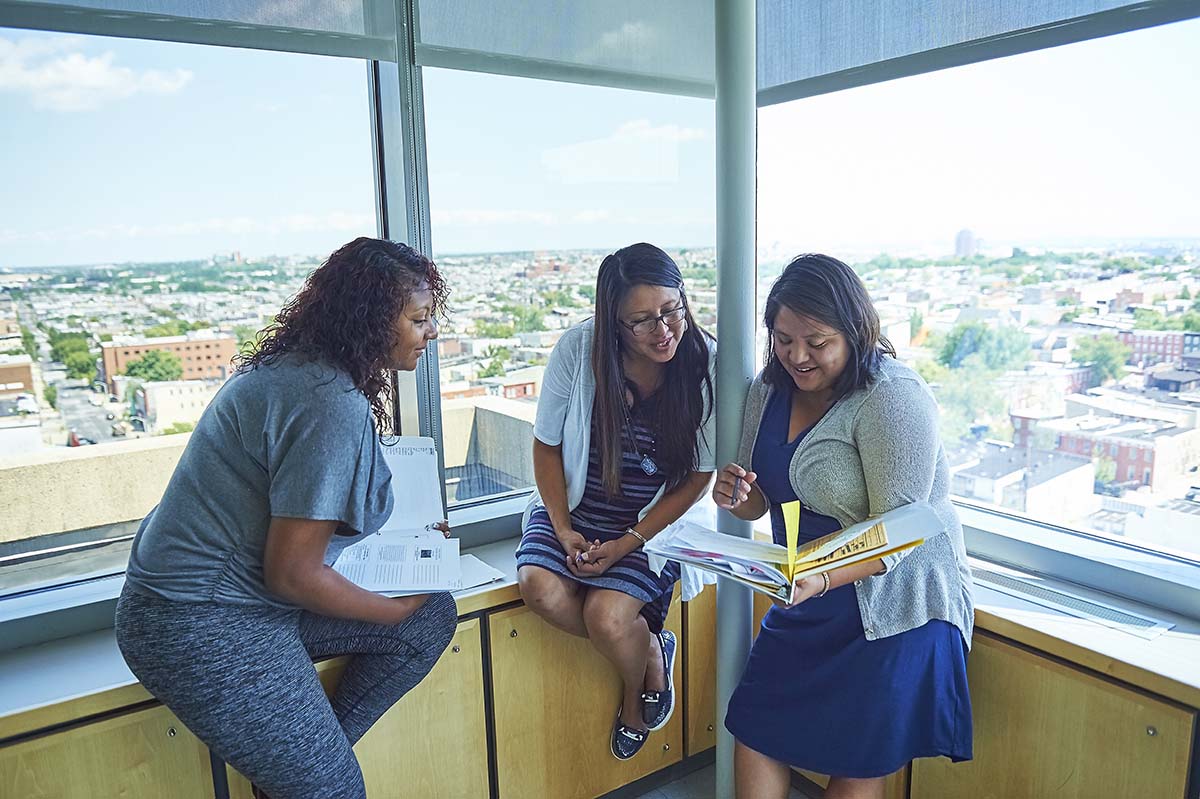
The nation’s first Indigenous-focused Doctor of Public Health (DrPH) and a corresponding Indigenous concentration in the Master of Public Health (MPH) program will open for applications in 2026 at the Johns Hopkins Bloomberg School of Public Health. These groundbreaking graduate programs, offered through the Johns Hopkins Center for Indigenous Health, will prepare future leaders to address the health priorities of Indigenous peoples through culturally informed, community-driven solutions.
The Bloomberg School’s Center for Indigenous Health has trained over 4,000 Indigenous scholars representing more than 50 tribal communities since the inception of its training program more than two decades ago. Its popular week-long online graduate courses, offered annually as Summer and Winter Institutes, offer learners of all backgrounds opportunities to enhance their skills whether taken for non-credit learning or for academic credit. Credit courses can be counted towards MPH and DrPH programs as well as the Public Health Training Certificate for American Indian Health Professionals.
Faye McMillan, DHSc, MIH, MC-SCL, the Center’s Director of Education and Training, is Wiradjuri -- the largest Aboriginal group in central New South Wales, Australia. She works hand in hand with Donald Warne, MD, MPH the Center’s Co-Director, Director of the Center’s Great Plains Hub in South Dakota, and a member of the Oglala Lakota tribe, to develop the forthcoming graduate programs while continuing to oversee Institute courses. “I keep hearing the words joy and love used in our learning, which blends Indigenous world views with Western public health methodologies so that students walk away with real-world applications,” said Dr. McMillan.
This year’s Winter Institute, open for registration now through December 30th, includes two courses:
- An Interdisciplinary Approach to Understanding the Health of American Indians Introduces public health through an Indigenous lens, making it an excellent starting point for those new to this content. Dates: January 5-9.
- Indigenous Harm Reduction Examines harm reduction approaches and lived examples of harm reduction work happening within Indigenous contexts. Dates: January 12-16.
Courses follow a condensed week-long format guided by leading experts in Indigenous Health. Learners get access to guest lectures, small group activities, and opportunities for building relationships and peer networks.
“Students often remark that Institutes feel more like an immersion experience than a typical academic course,” said Dr. McMillan. “No one is here by accident – we remind students of this throughout our Institute courses.”
JHCIH’s education programs cultivate community and culturally grounded leadership
As the reputation of the Institutes has grown over the years, so has their reach. “I'm always excited by the backgrounds of students who participate, whether it’s health, social justice, climate, education,” said Dr. McMillan.
The Center’s courses bring together Indigenous students and allies from across the world – benefitting from a wide variety of lived experiences and professional knowledges. Facilitators prioritize gathering and incorporating feedback from participants to ensure the learning environment is responsive.
"The Institute was beautiful and inspiring,” shared Brooke Betsuie (Navajo) about her winter 2025 experience. “It taught me to leverage my cultural teachings and beliefs to build resilience and lasting public health programs for Indigenous communities. The stories shared by Indigenous faculty encourage students like me to succeed in higher education and professional realms.”
The journey to launching the nation's first Indigenous Health DrPH Program
When Dr. Donald Warne joined the Center as Co-Director in 2022, he supercharged a long-held vision: creating a pathway for students to complete a Doctorate in Public Health (DrPH) in Indigenous Health. Among the most advanced professional qualifications in public health, the DrPH program will prepare early- to mid-career public health professionals to excel in leadership roles focused on the health of Indigenous peoples. The DrPH program will begin accepting applications in 2026 alongside a Master of Public Health with an Indigenous concentration, both focused on Indigenous-led solutions.
“This innovative DrPH in Indigenous Health—the first of its kind in the world—will equip public health professionals to strengthen Indigenous communities by leading change and shaping policy at the highest levels,” said Dr. Warne.
For more information:
- DrPH and MPH programs, contact Dr. Faye McMillan: [email protected]. using the subject line: “DrPH or MPH INDH student inquiry”.
- Winter Institute Courses: www.cih.jhu.edu/education-training/graduate-programming/
Help us defend tribal sovereignty.
At Native News Online, our mission is rooted in telling the stories that strengthen sovereignty and uplift Indigenous voices — not just at year’s end, but every single day.
Because of your generosity last year, we were able to keep our reporters on the ground in tribal communities, at national gatherings and in the halls of Congress — covering the issues that matter most to Indian Country: sovereignty, culture, education, health and economic opportunity.
That support sustained us through a tough year in 2025. Now, as we look to the year ahead, we need your help right now to ensure warrior journalism remains strong — reporting that defends tribal sovereignty, amplifies Native truth, and holds power accountable.
 The stakes couldn't be higher. Your support keeps Native voices heard, Native stories told and Native sovereignty defended.
Stand with Warrior Journalism today.
Levi Rickert (Potawatomi), Editor & Publisher