- Details
- By Levi Rickert
Opinion. This past Wednesday, the federal government delivered a brutal and familiar reminder of the violence Native people have endured for centuries, when multiple videos surfaced showing a federal agent using deadly force on a Minneapolis street. It shows a U.S. Immigration and Customs Enforcement (ICE) agent fired three shots into a maroon Honda Pilot, killing the woman sitting behind the wheel.
Her name was Renee Nicole Good. She was 37 years old. She was a mother of three. She was white. She was not armed.
In a video released Friday by the federal government, Good wears a knit stocking cap and a flannel shirt with a red hoodie underneath. She smiles. She remains calm. She talks to ICE officer Jonathan Ross, a 10-year veteran of the agency.
“That’s fine, dude, I’m not mad at you,” she says.
Moments later, Ross fires three shots into her vehicle. At least one round strikes her in the face.
Her vehicle appears to roll slowly forward before the shots are fired. After the gunfire, the car crashes into a parked vehicle. Ross remains standing. He walks away. Renee Good dies alone in her car.
For Native people, nothing about this scene is new.
This is our history — more than 500 years of it.
From Sand Creek to Wounded Knee, from forced removals to boarding schools, federal authority has long wrapped violence in the language of “order,” “law” and “public safety.” After the Wounded Knee Massacre, where hundreds of Lakota men, women, and children were slaughtered, the federal government awarded some of the soldiers Medals of Honor. That tells you everything you need to know about how this federal system — and the current administration operating it — defines heroism.
Within hours of Good’s killing, the Trump administration launched a public relations campaign to justify her death.
Homeland Security Secretary Kristi Noem labeled Good a “domestic terrorist.” President Trump said Good “violently, willfully and viciously ran over the ICE officer.”
A video shows a dog in the back seat of her SUV. Her glove compartment contains stuffed animals. This is what the government calls terrorism.
This is how the machine works. First comes the bullet. Then comes the narrative spin.
More than 77 million Americans — including a sizable number of Native people — voted for Donald Trump for many different reasons. Many voted for lower grocery prices. Some voted to end foreign wars or release the Epstein files. Others wanted someone who would shake up Washington.
Most of them didn’t vote for this. They didn’t vote for federal agents shooting mothers in the face on Minneapolis streets.
The question is not whether voters intended this. The question is whether they are willing to accept it now.
For MAGA supporters, for non-MAGA Trump voters, and for Native people who cast a ballot hoping for economic relief, peace or disruption of a broken system: is this acceptable?
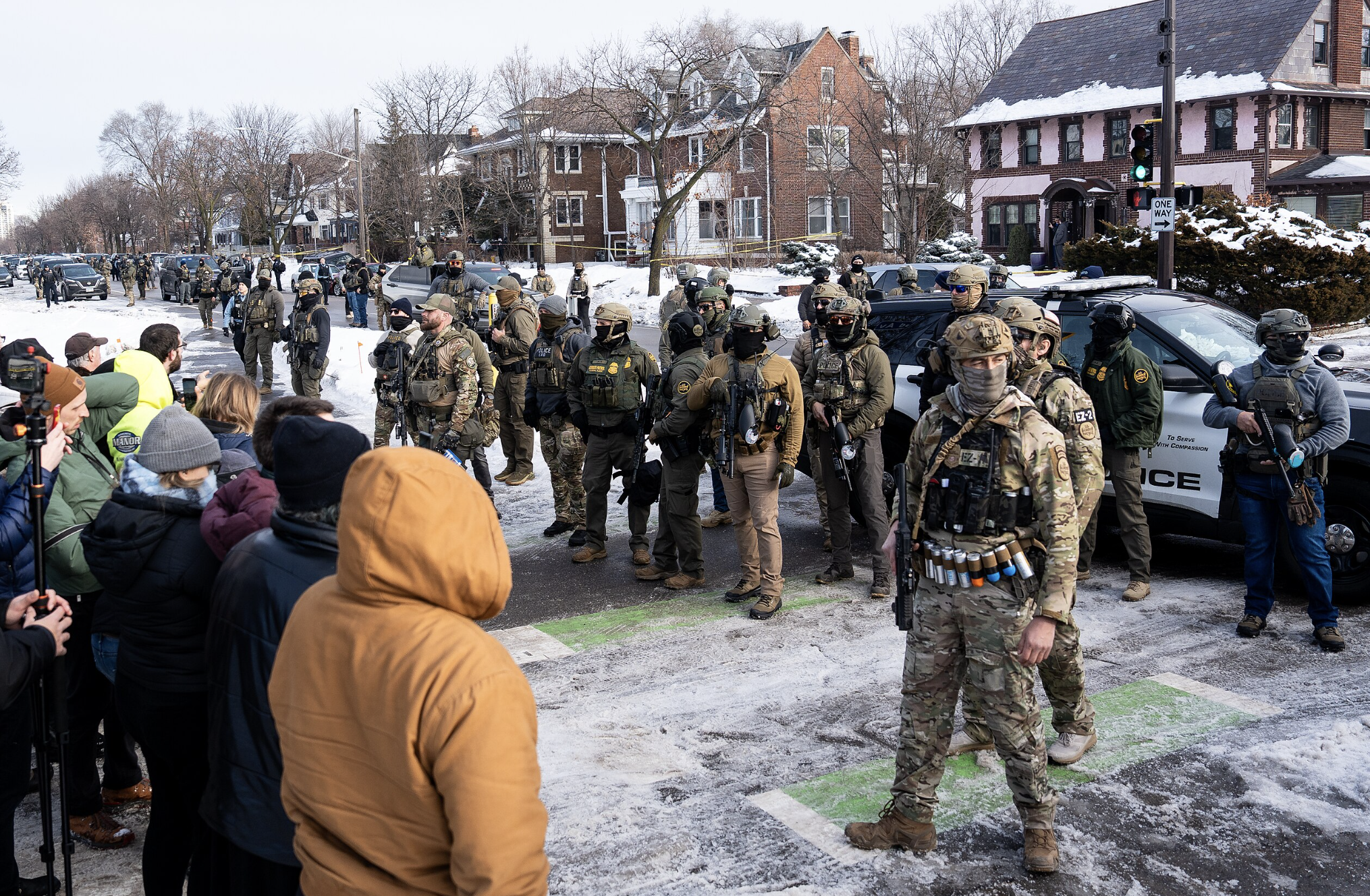
As the week went on, ICE operations intensified throughout the Twin Cities. It soon spilled into the Native community — some 35,000 strong in the metropolitan area.
Late Thursday night, Oglala Sioux Tribe President Frank Star Comes Out announced on social media that four enrolled tribal members were recently detained by ICE in Minneapolis. According to the tribe’s president, the men were homeless and living under a bridge near the Little Earth housing complex in south Minneapolis when they were taken into custody by ICE agents.
The Bois Forte Band of Ojibwe in northern Minnesota urged its members to be vigilant and to carry their tribal identification cards at all times.
“Band members should always remember that they have the right to remain silent when questioned by law enforcement, including ICE, and can demand a valid judicial warrant before law enforcement enters their home,” the Bois Forte statement said.
In 2026, in the United States of America, tribal governments are advising their citizens how to survive encounters with federal agents.
Renee Good's death should terrify every person watching how federal power is being used in this country — regardless of skin color, regardless of race or immigration status. When a government empowers agents to kill first and justify later, no one is safe.
Renee Good was a U.S. citizen. She was someone's neighbor. And now, she's dead.
The Trump administration is making choices every day—choices about how much force to use, about who gets labeled a terrorist, about which lives matter and which don't. These are not the inevitable result of "getting tough on immigration." These are decisions.
Many people will respond the same way: “I don’t want this to happen, but…”
But borders have to be enforced. But officers have hard jobs. But the country can’t be lawless.
This is where accountability slips away. Because once the violence is real, once it is defended by the administration in power, the “but” stops being a concern and starts being a permission structure. It’s how people distance themselves from outcomes they would never choose, yet quietly allow.
This is the America Native people have known since the first Europeans arrived.
We know how this story goes. We know what happens when dehumanization becomes policy and violence becomes procedure. We know that once a government teaches its agents to see people as targets instead of human beings, atrocities become not only possible, but inevitable.
Renee Good’s death is not an anomaly. It is a warning.
The only question is whether this country is finally ready to listen — and whether those who support this administration are willing to say: not in our name.
Thayék gde nwéndëmen - We are all related.
More Stories Like This
Tribal Economic Development Programs in the Federal Contracting Environment: What They Are, and What They Are NotWhy Redefining Public Health Degrees Would Harm Native and Rural Communities
The SAVE America Act Threatens Native Voting Rights — We Must Fight Back
The Presidential Election of 1789
Cherokee Nation: Telling the Full Story During Black History Month
Help us defend tribal sovereignty.
At Native News Online, our mission is rooted in telling the stories that strengthen sovereignty and uplift Indigenous voices — not just at year’s end, but every single day.
Because of your generosity last year, we were able to keep our reporters on the ground in tribal communities, at national gatherings and in the halls of Congress — covering the issues that matter most to Indian Country: sovereignty, culture, education, health and economic opportunity.
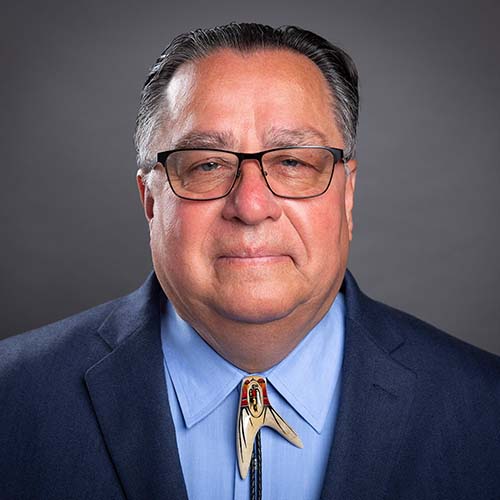
That support sustained us through a tough year in 2025. Now, as we look to the year ahead, we need your help right now to ensure warrior journalism remains strong — reporting that defends tribal sovereignty, amplifies Native truth, and holds power accountable.
 The stakes couldn't be higher. Your support keeps Native voices heard, Native stories told and Native sovereignty defended.
Stand with Warrior Journalism today.
Levi Rickert (Potawatomi), Editor & Publisher