



- Details
- By Rhonda Krouse, for the Arizona Dept. of Health
During the summer months, it’s crucial to be aware of the increased risk of rabies. Rabies is an illness you get from an infection with the rabies virus, which can be transmitted to humans primarily through bites or scratches from infected animals. With the recent surge in rabies cases in Navajo County, especially among gray foxes, it’s important for everyone to take precautions and stay informed about the risks associated with this deadly disease.
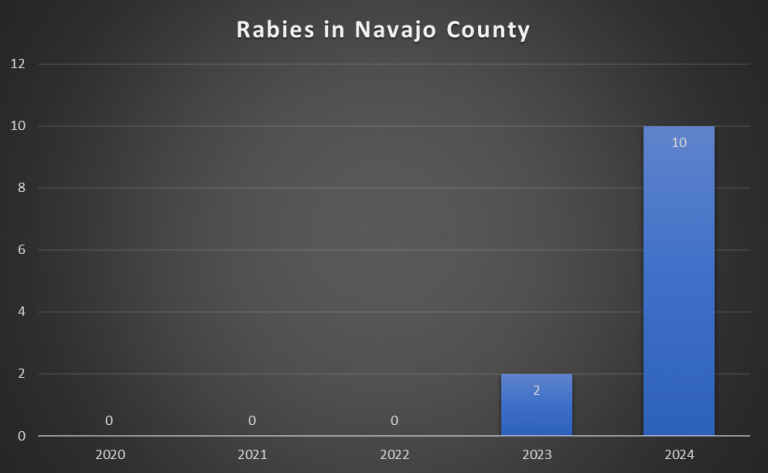
In 2023, one domestic dog and one fox tested positive for rabies in Navajo County. In 2024, the number of positive rabies cases has increased significantly, with nine foxes testing positive. These statistics highlight the escalating concern surrounding rabies in the area and the need for more education and awareness of this virus. We are currently awaiting test results for several animals to determine if they have been infected with rabies.
There is a higher risk of transmission to domestic animals and humans leading to potential health risks.

Seek immediate medical care if you may have been exposed to rabies. Rabies is preventable if you receive a rabies vaccine quickly after exposure, but is fatal if not treated before symptoms start. Rabies causes symptoms including seizures, hallucinations and paralysis. Report any bite or contact exposures immediately to animal control and health officials.
Don’t feed, touch, nurse to health, or adopt wild animals, stray dogs, or cats.
Be sure your dogs, cats, and ferrets are up to date on their rabies vaccinations. Vaccinated pets serve as a buffer between rabid wildlife and humans. Protect them, and you may reduce your risk of exposure to rabies. If your pet encounters a wild animal with a high risk of rabies infection including foxes, coyotes, skunks, raccoons, or bats, contact a veterinarian immediately. Wear gloves when touching or transporting your pet for care.
Unfortunately, due to an increase in positive rabies cases, the gray fox population on the mountain is facing a serious threat. An increase in rabies can impact the local wildlife population, with potential effects on the ecosystem. Furthermore, an increase in rabies can impact human-animal interactions, leading to changes in behavior and potential conflicts with wildlife. It’s important for public health, wildlife agencies and communities to address the increase in rabies cases to safeguard residents and visitors alike.
Stay safe and keep an eye on your surroundings when spending time outdoors. If you see an animal acting aggressively or erratically, contact animal control and/or the Arizona Game and Fish Department at 623-236-7201.
Rhonda Krouse is currently Code Enforcement Division Manager for Navajo County and oversees animal care and control, the medical examiner and environmental health. She has more than twenty years of experience as a first responder including as a dispatcher, law enforcement officer, emergency manager and currently reserves as a firefighter and emergency medical technician. She has several degrees including one in Fire Science, one in Criminal Justice and a bachelor's degree in Emergency Management.
Help us defend tribal sovereignty.
At Native News Online, our mission is rooted in telling the stories that strengthen sovereignty and uplift Indigenous voices — not just at year’s end, but every single day.
Because of your generosity last year, we were able to keep our reporters on the ground in tribal communities, at national gatherings and in the halls of Congress — covering the issues that matter most to Indian Country: sovereignty, culture, education, health and economic opportunity.
That support sustained us through a tough year in 2025. Now, as we look to the year ahead, we need your help right now to ensure warrior journalism remains strong — reporting that defends tribal sovereignty, amplifies Native truth, and holds power accountable.
 The stakes couldn't be higher. Your support keeps Native voices heard, Native stories told and Native sovereignty defended.
Stand with Warrior Journalism today.
Levi Rickert (Potawatomi), Editor & Publisher