- Details
- By Jenna Kunze
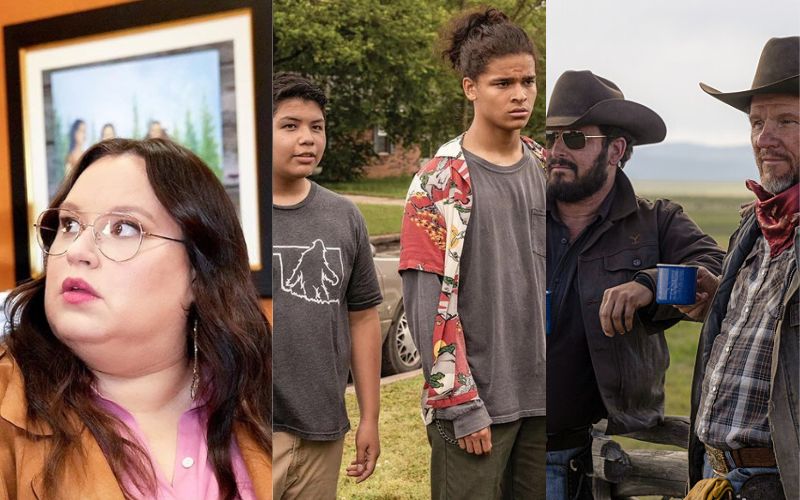
The study, conducted in partnership with the USC Norman Lear Center’s Media Impact Project, analyzes the portrayal of 104 Native characters across 51 series that aired with new episodes between 2020 and 2022. Specifically, the study focused on three series: Rutherford Falls, Reservation Dogs, and Yellowstone.

Overall, the study found that about half of the Native characters represented in scripted TV were poor or working class, and less than 20% committed nonviolent crimes or an act of physical violence.
Additionally, researchers conducted a study surveying 1,200 viewers on the impact of each series on audiences’ knowledge, beliefs, and behaviors.
The study’s results highlight the contrasting impacts of two Native-led shows, Rutherford Falls and Reservation Dogs, against the non-Native-led Yellowstone. Viewers of the former two shows were significantly more likely to agree with policy that supports and centers Indigenous voices, such as the removal of Native American imagery from sports teams and the government’s duty to uphold treaty and trust responsibilities.
Additionally, Reservation Dogs viewers—a show that featured a storyline in season two about a Native teenager placed in a non-Native youth home—were more likely to support the Indian Child Welfare Act (ICWA), a policy aimed at keeping Native American children with Native American families, recently upheld by the U.S. Supreme Court.
Viewers of Yellowstone were less likely to support the U.S. upholding treaty obligations that allow Native Americans to control their own lands, and more likely to feel discomfort with the idea that some practices, such as sacred ceremonies, are not meant to include everyone.
“Not only was viewing series with prominent Native characters associated with knowledge of and beliefs about Native communities, but also with support around very concrete present-day issues, such as ICWA or ending the use of Native appropriation in sports,” Soraya Giaccardi, Senior Researcher at USC Norman Lear Center’s Media Impact Project and lead author of the report said in a press release.
The study also found that involving Native talent both in front of and behind the camera is crucial to a series’ success. Of the 51 series analyzed, two-thirds had no Native talent behind the scenes, yet those that did received better audience reception.
Also, series featuring larger Native ensembles garnered greater critical acclaim, according to the study. While the report paints a mostly positive picture of current on-screen Native representation, researchers caution that this progress could be at risk if the current surge in Native storytelling ends.
Many of the series examined have since concluded, with only four confirmed renewals including Native talent behind the scenes.
In conclusion, the study says that “there is significant room for improvement in representation of Native talent behind the scenes.” Despite an average of 10 Native characters per series, only one in three had any Native writers, directors, or executive producers.
“This analysis reaffirms our long-held belief that when non-Native people tell our stories – even those that may be well-intentioned – there’s a high risk that these stories will ultimately diminish Native autonomy or further stereotypes of our communities,” said Crystal Echo Hawk, Founder and CEO of IllumiNative.
More Stories Like This
Chickasaw Holiday Art Market Returns to Sulphur on Dec. 6Center for Native Futures Hosts Third Mound Summit on Contemporary Native Arts
Filmmakers Defend ‘You’re No Indian’ After Demand to Halt Screenings
A Native American Heritage Month Playlist You Can Listen to All Year Long
11 Native Actors You Should Know
Help us defend tribal sovereignty.
At Native News Online, our mission is rooted in telling the stories that strengthen sovereignty and uplift Indigenous voices — not just at year’s end, but every single day.
Because of your generosity last year, we were able to keep our reporters on the ground in tribal communities, at national gatherings and in the halls of Congress — covering the issues that matter most to Indian Country: sovereignty, culture, education, health and economic opportunity.
That support sustained us through a tough year in 2025. Now, as we look to the year ahead, we need your help right now to ensure warrior journalism remains strong — reporting that defends tribal sovereignty, amplifies Native truth, and holds power accountable.
 The stakes couldn't be higher. Your support keeps Native voices heard, Native stories told and Native sovereignty defended.
Stand with Warrior Journalism today.
Levi Rickert (Potawatomi), Editor & Publisher