- Details
- By Native News Online Staff
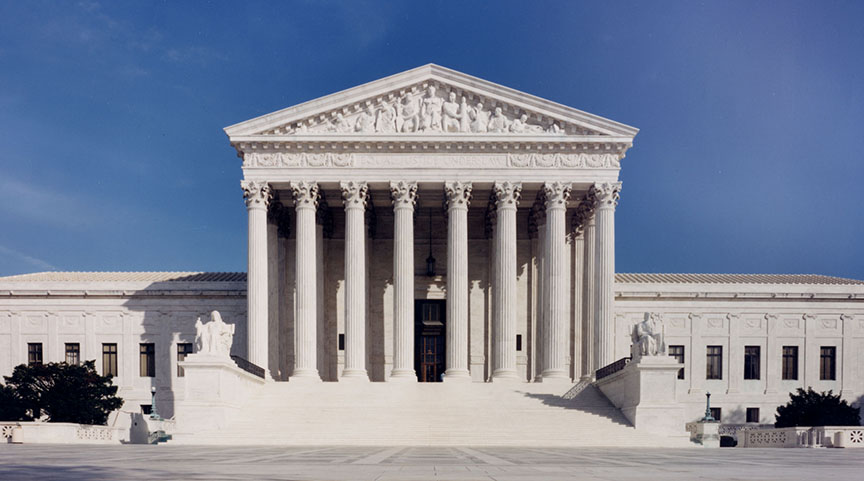
Native Vote. Today, the Spirit Lake Nation, the Turtle Mountain Band of Chippewa Indians, and several individual Native voters filed a petition for certiorari with the U.S. Supreme Court, formally requesting the Court to review their case in its upcoming term.
Represented by the Native American Rights Fund (NARF), Campaign Legal Center (CLC), the Law Office of Bryan L. Sells, LLC, and Robins Kaplan LLP, the plaintiffs have been fighting since 2022 to secure fair representation for Native American voters and to defend the integrity of the Voting Rights Act (VRA).

Their case challenges the State of North Dakota’s legislative map, arguing it dilutes the voting power of Native communities and violates Section 2 of the VRA.
“The current North Dakota voting map gives my community a chance to elect who we want to represent us — just like other communities across the state. It is fairer than the map the state originally put into place, and nobody is saying it’s not. Instead, the Eighth Circuit is saying that Native voters and Tribal Nations don’t even have the right to fight for a fair map. The idea that we don’t have the right to advocate for ourselves and for fair voting is undemocratic and goes against the principles that our country was founded on,” said Turtle Mountain Band of Chippewa Chair Jamie Azure.
“For years, Native voters in North Dakota have been fighting for adequate representation. It affects our day-to-day lives, our communities, and our well-being when we can’t elect a candidate to represent our interests. We deserve representation just like other communities around the state. It is shameful that, when we succeeded in court and got a fair map in place, the state turned its attack against the Voting Rights Act and a person’s right to vote free from discrimination. We need the Supreme Court to protect our fundamental right to vote and be heard,” said Spirit Lake Tribal Chair Lonna J. Street.
“It is unacceptable that we must go all the way to the United States Supreme Court just to defend our right to a fair map. Politicians should not be able to manipulate district lines to decide which voters get a voice. The court promised fairness, yet the State of North Dakota is choosing to waste time and taxpayer dollars fighting against the simple principle of equal representation,” said plaintiff Collette Brown (Spirit Lake Tribe).
“The decision by the Eighth Circuit Court of Appeals to take away our fair map is nonsensical. They claimed that we don’t have the ability to fight back against lawmakers who treat us unfairly, and that flies in the face of years of court decisions and legal proceedings. Of course the Voting Rights Act gives us certain rights, and of course we are able to sue to enforce them. That is the way that it has been since 1965,” said plaintiff Zachery S. King (Turtle Mountain Chippewa).
After the plaintiffs secured a favorable ruling in trial court, the U.S. Court of Appeals for the Eighth Circuit issued a sweeping and unprecedented decision in May, ruling that no private party — including individuals or organizations — can sue under Section 2 of the Voting Rights Act. If upheld, the ruling would effectively eliminate the primary tool used by voters to challenge racially discriminatory voting laws and maps.
This decision would leave enforcement of Section 2 solely in the hands of the U.S. Department of Justice, severely weakening the VRA’s protections. In July, however, the Supreme Court granted a stay of the Eighth Circuit’s ruling — temporarily preserving the fair map that the plaintiffs won at trial.
Now, the Tribal Nations and Native voters are asking the Supreme Court to hear the case and reaffirm both their right to vote and their legal standing to defend it.
“Section 2 of the Voting Rights Act provides a right to vote free from racial discrimination. But the U.S. Court of Appeals for the Eighth Circuit held that voters cannot sue to enforce that right. The decision is counter to the spirit of democracy and equal access to the vote, and it goes against decades of practice and case law from throughout the country. We expect the Supreme Court to reverse this anti-democratic, outlier decision,” said NARF Staff Attorney Lenny Powell.
“The protections of the Voting Rights Act should extend to all Americans,” said Mark Gaber, senior director for redistricting at Campaign Legal Center. “If the Eighth Circuit's ruling is allowed to stand, American voters will lose the right to defend themselves against racially discriminatory maps and voting laws. Private individuals and organizations must be allowed to continue bringing lawsuits to enforce Section 2 of the VRA because every voter must be able to make their voice heard and have their vote count.”
The Supreme Court now has the opportunity — and the responsibility — to uphold fair maps in North Dakota, honor long-standing legal precedent, and affirm that voters have the power to defend their rights in court.
More Stories Like This
50 Years of Self-Determination: How a Landmark Act Empowered Tribal Sovereignty and Transformed Federal-Tribal RelationsPrairie Band Potawatomi Nation Fires Executives After ICE-Related Contract Sparks Outcry
Tlingit Haida Tribal Business Corporation Clarifies Federal Contracting Work
Homeland Tour Offers Deeper Understanding, Appreciation of Chickasaw Roots
Klamath Tribes Seek to Reverse Judge’s Removal in Water Rights Case
Help us defend tribal sovereignty.
At Native News Online, our mission is rooted in telling the stories that strengthen sovereignty and uplift Indigenous voices — not just at year’s end, but every single day.
Because of your generosity last year, we were able to keep our reporters on the ground in tribal communities, at national gatherings and in the halls of Congress — covering the issues that matter most to Indian Country: sovereignty, culture, education, health and economic opportunity.
That support sustained us through a tough year in 2025. Now, as we look to the year ahead, we need your help right now to ensure warrior journalism remains strong — reporting that defends tribal sovereignty, amplifies Native truth, and holds power accountable.
 The stakes couldn't be higher. Your support keeps Native voices heard, Native stories told and Native sovereignty defended.
Stand with Warrior Journalism today.
Levi Rickert (Potawatomi), Editor & Publisher