



- Details
- By Darren Thompson
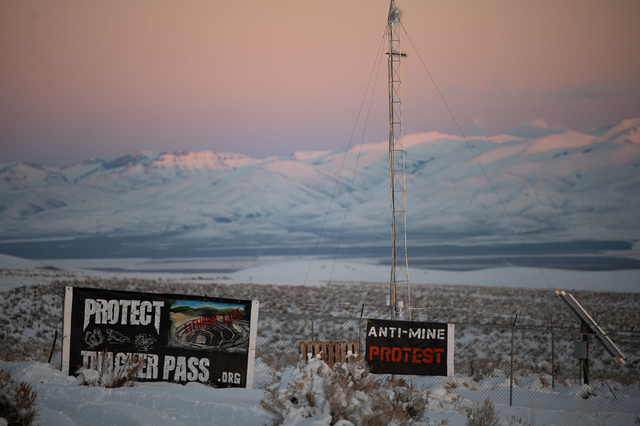
RENO, Nev. — A U.S. judge on Monday handed down a mixed ruling in the highly fraught Thacker Pass lithium mine case.
The ruling upheld the Bureau of Land Management’s (BLM) decision to approve the Thacker Pass lithium mine in northern Nevada but ordered the BLM to review the mining claims Lithium Americas, the company developing the mine, has in according with a 19th-century law that governs mining on public lands.
BLM, which issued a permit for the mine in 2020, had faced legal challenges from conservation organizations, a local rancher, and several tribes to stop the project.
U.S. District Court Judge Miranda M. Du wrote in her order on Monday that the court “affirms BLM's decision, rejecting arguments that the Project will cause unnecessary and undue degradation to the local sage grouse population and habitat, groundwater aquifers, and air quality in violation of Federal Land Policy…”
In oral arguments on Jan. 5, 2023, attorneys for the plaintiffs said that BLM failed to fully analyze the mine’s impacts on the environment and did not fully consult with tribes. The court disagreed and cited that BLM reasonably consulted with the Burns Paiute Tribe and Reno-Sparks Indian Tribe.
“We have expected this decision for some time,” Arlan Melendez, Chairman of the Reno-Sparks Indian Colony, said in a statement on Feb. 7. “This does not mean consultation was done correctly and it does not mean this fight is over. We will be continuing to advocate for this sacred site.”
Thacker Pass is called Peehee Mu’huh, or Rotten Moon, in Paiute because, in 1865, federal cavalry killed men, women and children and then left their bodies to rot.
Du wrote in her order on Monday, “None of the tribes who spoke to BLM’s consultant who prepared the Ethnographic Assessment identified the Thacker Pass area as either sacred or a massacre site.”
According to the court order, federal land managers sent letters to consult with the Fort McDermitt Paiute and Shoshone Tribe, the Summit Lake Paiute Tribe and the Winnemucca Indian Colony in December 2019, but BLM did not receive responses before the approval decision was released in 2020.
People of Red Mountain is an Indigenous organization of traditional knowledge keepers and members of the Fort McDermitt Paiute and Shoshone Tribe. They have been opposing the Thacker Mine project since 2021 and say that the lawsuit is a matter of protecting their culture and sites considered sacred to them.
“Federal Justice Miranda Du and her decision with the Thacker Pass lithium mine has just slithered into the malicious patterns of American law and a corporate-priority government,” People of Red Mountain said in a statement to Native News Online. “People of color are not treated with respect and equality in United Corporations of America, and capitalism is the number one threat to our climate future.
“Our hearts are heavy in hearing the decision that Judge Du did not revoke the permits for the Thacker Pass lithium mine. Indigenous Peoples’ sacred sites should not be at the expense of the climate crisis the U.S. faces.”
Last week, Native News Online reported that automaker General Motors is investing $650 million in Lithium Americas if it clears the permit process.
More Stories Like This
Join Michigan Tribal Nations in Opposing Line 5 TunnelApache Stronghold Pushes Back on Trump's Weigh in on Oak Flat Transfer
Federal Court Halts Transfer of Oak Flat to Mining Company Amid Ongoing Lawsuits
Federal Judge Clears Way for Oak Flat Land Transfer, Despite Apache Sacred Site and Environmental Concerns
Federal Judge Overturns Trump-Era Decision to Open Pacific Marine Monument to Commercial Fishing
Help us tell the stories that could save Native languages and food traditions
At a critical moment for Indian Country, Native News Online is embarking on our most ambitious reporting project yet: "Cultivating Culture," a three-year investigation into two forces shaping Native community survival—food sovereignty and language revitalization.
The devastating impact of COVID-19 accelerated the loss of Native elders and with them, irreplaceable cultural knowledge. Yet across tribal communities, innovative leaders are fighting back, reclaiming traditional food systems and breathing new life into Native languages. These aren't just cultural preservation efforts—they're powerful pathways to community health, healing, and resilience.
Our dedicated reporting team will spend three years documenting these stories through on-the-ground reporting in 18 tribal communities, producing over 200 in-depth stories, 18 podcast episodes, and multimedia content that amplifies Indigenous voices. We'll show policymakers, funders, and allies how cultural restoration directly impacts physical and mental wellness while celebrating successful models of sovereignty and self-determination.
This isn't corporate media parachuting into Indian Country for a quick story. This is sustained, relationship-based journalism by Native reporters who understand these communities. It's "Warrior Journalism"—fearless reporting that serves the 5.5 million readers who depend on us for news that mainstream media often ignores.
We need your help right now. While we've secured partial funding, we're still $450,000 short of our three-year budget. Our immediate goal is $25,000 this month to keep this critical work moving forward—funding reporter salaries, travel to remote communities, photography, and the deep reporting these stories deserve.
Every dollar directly supports Indigenous journalists telling Indigenous stories. Whether it's $5 or $50, your contribution ensures these vital narratives of resilience, innovation, and hope don't disappear into silence.
 The stakes couldn't be higher. Native languages are being lost at an alarming rate. Food insecurity plagues many tribal communities. But solutions are emerging, and these stories need to be told.
Support independent Native journalism. Fund the stories that matter.
Levi Rickert (Potawatomi), Editor & Publisher