



- Details
- By Chickasaw Nation Media
SULPHUR, Okla. – At the Chickasaw Nation, collaborations come in many shapes and sizes.
One of these collaborations is the planted butterfly gardens in and around the Chickasaw Nation.
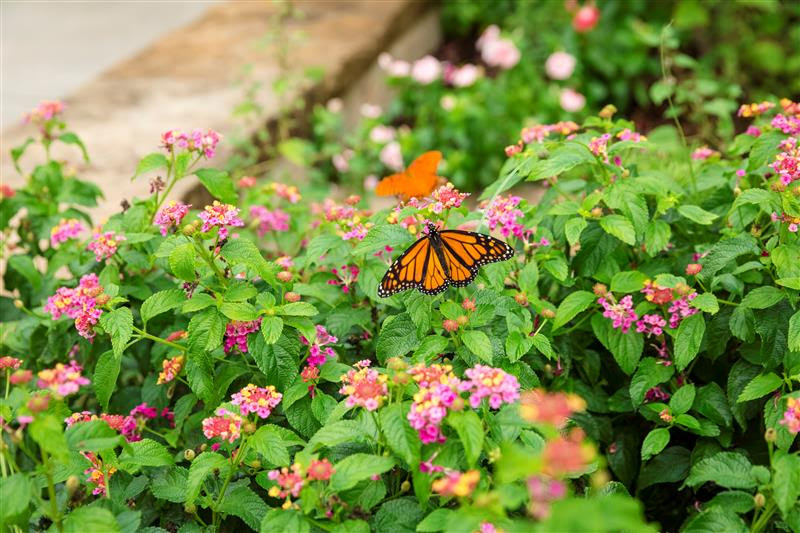
Thousands have become familiar with the Chickasaw Nation Butterfly Garden located at the Chickasaw Cultural Center in Sulphur. The garden is a butterfly-friendly habitat filled with the endangered monarch butterfly’s favorite foods, especially milkweed. Large butterfly statues and educational panels highlight the plight and restoration efforts of destroyed habitats.

In efforts to increase habitat and natural foods available to butterflies during their annual migration from Mexico to Canada, the Chickasaw Nation has harvested hundreds of thousands of native butterfly friendly seeds. While keeping several for its own seed bank, the Chickasaw Cultural Center grows thousands of seeds to be distributed to Chickasaw citizens and organizations willing to plant them.
The hatulhpushik (butterfly) is meaningful within Chickasaw culture. Butterflies represent perseverance and the ability to adapt and change. Butterflies also serve as the symbol of the annual Dynamic Women of the Chickasaw Nation Conference.
Since 2015, the Chickasaw Nation has worked with numerous First American tribes to establish butterfly friendly habitats throughout Oklahoma. This effort increases the availability of food critical to monarch butterfly survival.
While the Chickasaw Cultural Center hosts the crown jewel of a network of gardens sponsored by the Chickasaw Nation and other First American tribes, there are many gardens maintained by the Chickasaw Nation. These include sites at the Chickasaw White House, Boggy Depot Park, WinStar golf course and Chickasaw Nation Headquarters.
In addition to plants being made available to Chickasaw citizens and other First Americans, the Chickasaw Nation distributes seeds and plants to individuals and community nonprofits at no charge. The nonprofit organizations include museums in Wynnewood, Lawton and Seminole, along with a beautification endeavor near the Sugg Clinic in Ada.
The Wynnewood Historical Society’s garden – located at the historic Eskridge Hotel Museum – is designed to help all butterflies that call southern Oklahoma home.
Former Education Supervisor at the Oklahoma Department of Wildlife Conservation Luann Waters, has worked with and represented the Wynnewood Historical Society for more than 20 years. She first became aware of the Chickasaw Nation’s aim to protect and increase food for monarch butterflies while attending a butterfly seminar at the Chickasaw Cultural Center.
“I explained the historical society was considering a butterfly garden. I asked if they would come over and look at the site,” Waters said. “Thalia Miller made a trip to see the site. She asked if we’d like plants from the Chickasaw Nation. The plants were brought over and planted by Thalia and Rhonda Sellers.
“When they came out, they brought enough plants to fill the flower beds along our fence line. They put them in the ground, and then I took it over,” Waters said. “It was like a godsend. I knew they knew their plants and all the help received was appreciated.”
The Wynnewood Historical Society began its butterfly garden more than five years ago. The garden is now certified as a “Monarch Waystation” by Monarch Watch, and it is certified as a wildlife habitat by the National Wildlife Federation.
“The help did not stop after the initial visit. Representatives from the Chickasaw Nation would later come back and provide additional help and recommendations to keep the plants alive and well,” Waters said.
As a waystation and habitat site, the garden “provides food, water, shelter as monarchs migrate through North America.” The garden supports other butterflies and provides a habitat for them to raise their young as well.
“This garden gives monarch butterflies a chance to stop en route as they migrate back and forth from Canada to Mexico,” Waters said. “To receive certification, you must fill out an application and explain the habitat you have. It feels like a badge of honor for us to have these certifications — to have this location recognized.”
According to Waters, butterfly gardens do not have to take up large spaces or take a lot of time to maintain. As little as 6 feet of space planted with the right flora will attract butterflies. As native plants to Oklahoma, an hour or less a week is needed to maintain these gardens.
While plants from the milkweed family make up most of the vegetation in the Wynnewood Historical Society’s butterfly garden, they also have tickseed, ironweed and butterfly weed, among others. Waters indicated that while monarchs are a major concern for the garden, they plant to provide habitats for all butterflies.
“Tickseed will bring in all different sorts of butterflies,” Waters said. “Bumblebees just love it. Hummingbirds also come to the tickseed. It’s not just a one species kind of plant.”
From 2015 to 2017, the Chickasaw Nation collaborated with six First American tribes to establish 50,000 milkweed plants throughout Oklahoma to increase the availability of the food critical to monarch butterfly survival. The Tribal Alliance of Pollinators includes the Chickasaw, Muscogee (Creek), Seminole, Eastern Shawnee, Osage, Miami and Citizen Potawatomi. The Chickasaw Nation continues this partnership and plants milkweed throughout its reservation.
Celebrating the power of pollinators
The Chickasaw Cultural Center, 867 Cooper Memorial Road, is set to host a National Learn about Butterflies Day event March 14. Guests will have the opportunity to explore a butterfly tent, receive caterpillars and participate in other butterfly themed activities. These will include a pollinator board activity, plant giveaways and make and take activities. Butterfly cookies will be available at the Aaimpa’ Café and butterfly themed items will be available for purchase. The Anoli’ Theater will also show a butterfly themed movie. The Chickasaw Cultural Center is open Tuesday Saturday from 10 a.m.-5 p.m. and is closed Sunday and Monday. For more information, contact the Chickasaw Cultural Center at (580) 622-7130 or visit ChickasawCulturalCenter. com.
More Stories Like This
From Dishwasher to Award-Winning Chef: Laguna Pueblo's Josh Aragon Serves Up Albuquerque's Best Green Chile StewRob Reiner's Final Work as Producer Appears to Address MMIP Crisis
Vision Maker Media Honors MacDonald Siblings With 2025 Frank Blythe Award
First Tribally Owned Gallery in Tulsa Debuts ‘Mvskokvlke: Road of Strength’
Zuni Youth Enrichment Project and Partners at Ho’n A:wan Productions Launch 8th Annual Delapna:we Project
Help us defend tribal sovereignty.
At Native News Online, our mission is rooted in telling the stories that strengthen sovereignty and uplift Indigenous voices — not just at year’s end, but every single day.
Because of your generosity last year, we were able to keep our reporters on the ground in tribal communities, at national gatherings and in the halls of Congress — covering the issues that matter most to Indian Country: sovereignty, culture, education, health and economic opportunity.
That support sustained us through a tough year in 2025. Now, as we look to the year ahead, we need your help right now to ensure warrior journalism remains strong — reporting that defends tribal sovereignty, amplifies Native truth, and holds power accountable.
 The stakes couldn't be higher. Your support keeps Native voices heard, Native stories told and Native sovereignty defended.
Stand with Warrior Journalism today.
Levi Rickert (Potawatomi), Editor & Publisher