- Details
- By Native News Online Staff
The University of Nebraska–Lincoln’s Center for Great Plains Studies and the Otoe-Missouria Tribe will receive a three-year, $1.58 million grant from the Mellon Foundation to embark on initiatives that honor past and present Indigenous peoples in Southeast Nebraska.
The state of Nebraska gets its name from the Otoe-Missourias (two Otoe-Missouria words “Ni Brathge” meaning “water flat”, according to the tribe’s website). The tribe lived in the area—along with Iowa, Missouri, and Kansas—until the U.S. government eventually pushed them off their land and first moved tribal members onto a reservation in 1854, and then later to the state of Oklahoma, where they remain today.
Planned activities for the project include a survey of area residents, an audit of current commemorations, a lecture series on decolonizing museums slated for spring 2024, and updates to commemorative signage in area parks and roadsides, among other activities.
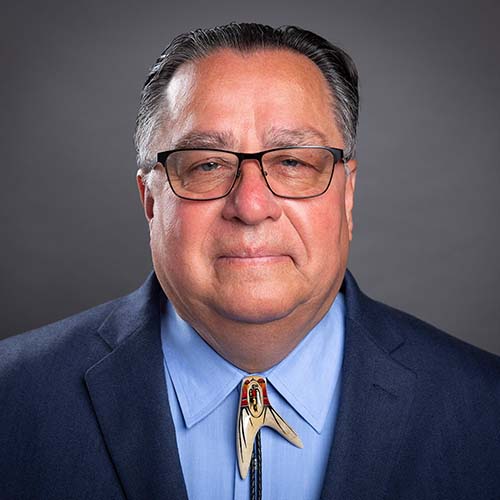
Otoe-Missouria Chairman John Shotton called the project “very important [in] reconnecting the Otoe-Missouria Tribe with our former homelands in Nebraska,” in a statement.
 Make A Donation Here
Margaret Jacobs, Charles Mach Professor of History and director of the center, will serve as co-director and principal investigator for “Walking in the Footsteps of our Ancestors.” As a historian of Native peoples, she was working on the multimedia project “Reconciliation Rising” several years ago and was surprised to learn the history of the Otoe-Missouria Tribe and its connection to Southeast Nebraska.”
Christina Faw Faw Goodson, a member of the Otoe-Missouria Tribe and Native language specialist with the National Indian Education Association, will co-direct the project with history professor Margaret Jacobs.
“I believe this project has the power to create lasting connections between the people and communities of Southeastern Nebraska and our Jiwere-Nut’achi people in Oklahoma and throughout the world,”Faw Faw Goodson said in a statement.
"Walking in the Footsteps of Our Ancestors: Re-Indigenizing Southeast Nebraska." This is a unique program that will bring together multiple partners to commemorate Native culture and history in the area.”
More Stories Like This
50 Years of Self-Determination: How a Landmark Act Empowered Tribal Sovereignty and Transformed Federal-Tribal RelationsTunica-Biloxi Chairman Pierite Elected President as Tribal Nations Unite Behind New Economic Alliance
NCAI, NARF Host Session on Proposed Limits to Federal Water Protections
“Our Sovereignty Is Not Optional”: Tulalip Responds to ICE Actions
Denied Trip to Alcatraz, Leonard Peltier Tells Sunrise Gathering: “My Heart Is Full”
Help us defend tribal sovereignty.
At Native News Online, our mission is rooted in telling the stories that strengthen sovereignty and uplift Indigenous voices — not just at year’s end, but every single day.
Because of your generosity last year, we were able to keep our reporters on the ground in tribal communities, at national gatherings and in the halls of Congress — covering the issues that matter most to Indian Country: sovereignty, culture, education, health and economic opportunity.
That support sustained us through a tough year in 2025. Now, as we look to the year ahead, we need your help right now to ensure warrior journalism remains strong — reporting that defends tribal sovereignty, amplifies Native truth, and holds power accountable.
 The stakes couldn't be higher. Your support keeps Native voices heard, Native stories told and Native sovereignty defended.
Stand with Warrior Journalism today.
Levi Rickert (Potawatomi), Editor & Publisher