



- Details
- By Professor Victoria Sutton
Guest Opinion. Being a federally recognized tribe in the United States officially recognizes the political relationship between the sovereign nation of a tribe and that of the United States of America.
This relationship is the foundation of land ownership in America, and it enabled the fledgling U.S. government to “buy” land through treaties, which it used to encourage settlement (Manifest Destiny) and to pay Revolutionary War soldiers with 100 to 1,000 acres of land in land bounties because there was little money to pay soldiers. The government then continued to use Indian lands to pay for other wars, including the Indian Wars.
Please support our year-end campaign. CLICK HERE TO DONATE.

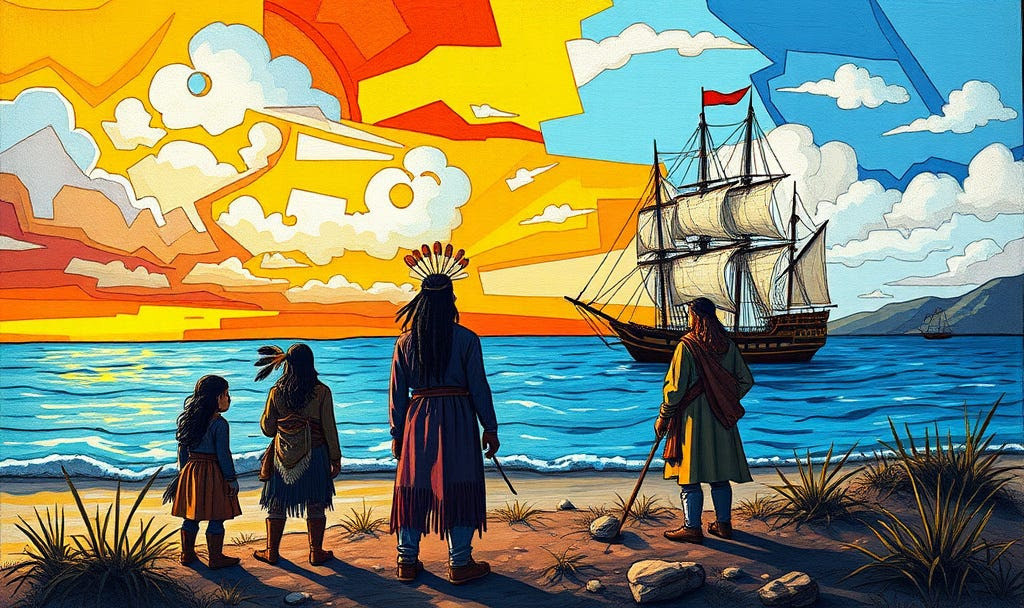
The tribes of first contact are on the East Coast, from New England to Florida, and then New Mexico—all Spanish contact in the 16th century. Then came English colonization, and since the English were the victors, history is written from that perspective, often leaving out the Spanish completely. The 16th and 17th centuries were periods of enslavement of Lumbee ancestors, and it is estimated that 250,000 Natives were enslaved and shipped to other countries, including the Caribbean, Spain, and Portugal. Some of the enslaved Natives made their way back to the Virginia and North Carolina colonies.
The tribes of first contact were enslaved, shipped away, died of smallpox, or were killed, making land acquisition without treaties easy. By 1871, Congress, in my view, unconstitutionally ended the president’s Article II treaty-making power with Indian tribes.
The Lumbee Tribe survived all of this and found refuge in the swampy areas of North Carolina and South Carolina, and were recognized by the state of North Carolina in 1885. The federal government also made frequent visits to the Tribe, and excavations and reports from the Smithsonian accumulated knowledge of the history of the people and their artifacts. Reports were written analyzing the feasibility of state recognition versus federal recognition as early as the 1880s (the McMillian Report).
Finally, in 1956, the Tribe took the political opportunity to choose its own name, and that is the year the U.S. Congress passed a law federally recognizing the Lumbee Tribe as Indians. But this was the Termination Era, when the federal government had a policy of eliminating tribal governments, and so the bill lacked any of the usual benefits and opportunities of fully federally recognized tribes.
Once the Termination Era was over, the Tribe sought full federal recognition, but with legislation that said the Tribe could not have the benefits of a federally recognized tribe, no amount of executive rulemaking could overcome legislative lawmaking. That is the way the Constitution favors the will of the people that comes from the Legislature.
That is why a memo from the Department of the Interior, the cabinet agency that houses the Bureau of Indian Affairs, released a memorandum from its solicitor in 2016 saying that they interpreted the statute to mean that the Lumbee could seek recognition through the executive branch. However, as before, no amount of executive rulemaking can overcome legislative lawmaking. It was surprising that this memo passed scrutiny within the Department of the Interior. Assistant Secretary for Indian Affairs Kevin Washburn, a fellow law professor whom I greatly respect (and who was in line to become president of the law professors’ association, AALS), was involved. This was an astonishingly narrow interpretation of the statute, if not outright wrong, but I believe it was an attempt to help us out of an untenable situation—a kind of purgatory in which the Tribe was neither fully recognized nor unrecognized, with no legal pathway to resolve it other than legislatively.
Knowing there was only a legislative solution to the problem, competing interests and tribal enemies insisted that the Lumbee Tribe go through the executive branch’s Office of Federal Recognition (OFR), knowing full well that it was a dead end because legislation precluded full recognition. These dark forces used vast amounts of lobbying and funding to block efforts by the Lumbee Tribe to make a legislative change. Since the Office of Federal Recognition was established in 1978, only 18 tribes have succeeded in gaining recognition, and decades often pass during consideration. To illustrate the absurdity of this process, the tribe of Pocahontas—the Pamunkey Tribe—was denied federal recognition until it was legislatively granted (not through the OFR process) in 2015.
Here is one of my favorite political cartoons that captures the Office of Federal Recognition process precisely, and the fact that it is from almost 25 years ago tells you how long the process has been seen as dysfunctional.
Why President Trump likes the Lumbee Tribe
President Trump ran for president in 2016 and won, in large part due to the Lumbee Tribe, which is one of the most bipartisan tribes in America and can tip decidedly conservative. The Tribe also tipped the scales toward Trump in 2020 and 2024, leading to a victory for the Trump team in North Carolina, a key swing state. Seeing this voting profile, President Trump promised to give the Tribe federal recognition. But in seeking votes, a long line of presidential candidates before him had also promised federal recognition to the Lumbee Tribe, including Kamala Harris (both as a vice-presidential and presidential candidate) and Joe Biden—but no steps were taken to fulfill those promises. On one of the first days of the Trump administration in 2025, the president signed an executive order directing his administration to find a pathway to federal recognition for the Lumbee Tribe. That alone was the most any president had done to follow through on such a promise. This time might be different.
Senators from North Carolina had also promised to introduce legislation to recognize the Lumbee Tribe. This was done multiple times by well-meaning U.S. senators. For example, Sen. Elizabeth Dole made the introduction of this legislation the first act of her Senate service, yet never got the bill out of committee.
It is surreal
Sen. Tom Tillis of North Carolina was the latest to introduce legislation to recognize the Lumbee Tribe in 2024. He was not taking no for an answer, but the bill never got to a vote. Then, with synergy from President Trump, the Lumbee Fairness Act was added to the National Defense Authorization Act of 2026 (NDAA). The NDAA passed the House on Dec. 10, 2025, by a vote of 312–112, and then passed the Senate unchanged on Dec. 17, 2025, by a vote of 77–20. The next day, President Trump signed the bill into law, and the Lumbee Tribe—People of the Dark Water—became the 575th federally recognized Native American tribe.
The phrase I kept hearing from Lumbee tribal members was “it is surreal” after working for the last 137 years for federal recognition. It is about more than benefits; it is about identity and confirming culture, history, and worldview. The Lumbee Tribe, though denied federal recognition for so long, never lost sight of holding to heritage and unity as a tribe.
It is a surreal moment.
To read more articles by Professor Sutton go to: https://profvictoria.substack.
Professor Victoria Sutton (Lumbee) is a law professor on the faculty of Texas Tech University. In 2005, Sutton became a founding member of the National Congress of American Indians, Policy Advisory Board to the NCAI Policy Center, positioning the Native American community to act and lead on policy issues affecting Indigenous communities in the United States.
Help us defend tribal sovereignty.
At Native News Online, our mission is rooted in telling the stories that strengthen sovereignty and uplift Indigenous voices — not just at year’s end, but every single day.
Because of your generosity last year, we were able to keep our reporters on the ground in tribal communities, at national gatherings and in the halls of Congress — covering the issues that matter most to Indian Country: sovereignty, culture, education, health and economic opportunity.
That support sustained us through a tough year in 2025. Now, as we look to the year ahead, we need your help right now to ensure warrior journalism remains strong — reporting that defends tribal sovereignty, amplifies Native truth, and holds power accountable.
 The stakes couldn't be higher. Your support keeps Native voices heard, Native stories told and Native sovereignty defended.
Stand with Warrior Journalism today.
Levi Rickert (Potawatomi), Editor & Publisher